Down Jacket Branding Guide
Branding Options for Custom Down Jackets
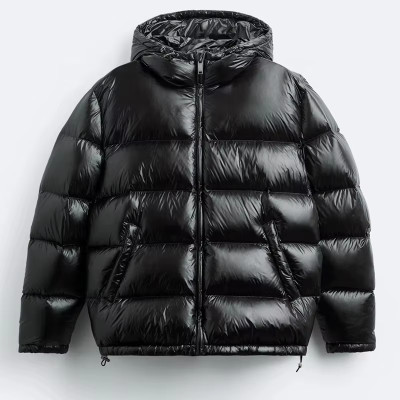
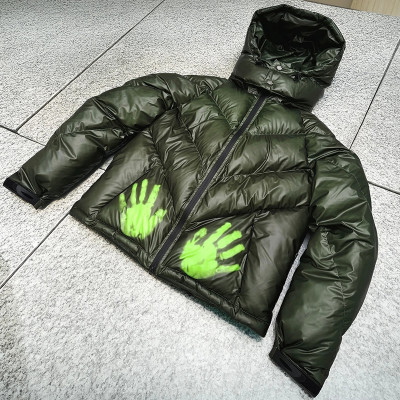
Branding options for custom down jackets include embroidery, heat transfer, screen printing, woven labels and patches, applied to specific placements such as the chest, sleeve, hood, back and collar, with each technique chosen around the jacket's shell fabric, baffle structure and fill. For brands developing private label down jackets, the practical question is not which option is "best" in the abstract, but which combination of technique, placement and material set fits your price point, order size and quality expectations. This guide maps the full branding system for down jackets — the logo technique matrix, placement rules, label and material combinations, cost impact, and compliance notes — based on how a Dongguan B2B jacket factory actually produces branded down jackets for US and EU brands. You can also browse our down jacket manufacturing guides for related topics such as fill power and MOQ planning.
The Logo Technique Matrix for Down Jackets
Down jackets are structurally different from woven shirts or knitwear, and that changes branding decisions. The shell is usually a lightweight nylon or polyester ripstop, often 20D to 40D, with a durable water repellent (DWR) finish. The garment is quilted into baffles that hold down fill, which means the surface is not flat and the fabric has limited stitch tolerance before puckering or down leakage at needle holes becomes a risk. Four logo techniques dominate private label down jacket programs, and each one behaves differently on this kind of fabric.
4
Core Logo Techniques for Down Jackets
3
Standard Placement Zones per Jacket
2-4
Weeks Added for Complex Branding Sampling
| Technique | Best For | Shell Fabric Fit | Durability | Relative Cost |
|---|
| Embroidery | Premium chest or back logos, small text | Mid to heavy shells (30D+) | Very high, wash resistant | Medium to high |
| Heat transfer | Detailed multi-color logos, gradients, small sizes | All shell weights, including 20D | High when film quality is good | Low to medium |
| Screen printing | Large flat logos, simple color blocks | Mid to heavy shells | Medium, depends on ink type | Low per piece at volume |
| Woven label / patch | Heritage look, sleeve or chest badges | All shell weights | High if sewn with reinforced stitch | Low to medium |
Tip: For lightweight 20D shells, avoid dense embroidery on the upper chest where the down baffle sits directly behind the fabric. Heat transfer or a woven patch gives the same brand presence without needle holes that can lead to down leakage.
Most brands do not pick a single technique. A typical private label program uses embroidery or heat transfer for the main chest logo, a woven label at the inner neck, a heat transfer brand mark on the hood or sleeve, and printed care and content labels inside. The combination is decided by design intent, shell fabric, order volume and target price. We cover each technique in detail below, including the real production considerations a factory evaluates before quoting. If you are still defining the garment itself, start with our guide on custom down jacket manufacturing, then return here to lock the branding system.
Embroidery on Down Jackets
Embroidery is the most established premium branding option for down jackets. A stitched logo gives depth, texture and a quality signal that transfers well to product photography and shelf display. For down jackets specifically, embroidery works best on the chest, upper back or sleeve when the shell fabric is 30D or heavier, because the fabric has enough structure to hold dense stitching without puckering.
Two construction details matter more than the logo artwork itself. First, the embroidery area should sit on a section of the jacket that is not directly over a thick down baffle. If the logo is placed on a quilted zone, the needle can compress the baffle, create uneven tension, and the stitches can pull through to the down chamber. Factories typically advise brands to position embroidery on non-quilted panels or on baffle seams where the fabric is double-layered. Second, the backing material matters. A water-soluble or tear-away backing is standard; a permanent backing can show through on lightweight shells and add stiffness.
- Recommended shell weight: 30D and above for dense logos; 20D shells only for light, low-density embroidery
- Maximum practical stitch count: keep dense logos under roughly 12,000 stitches per 10 cm square to limit puckering
- Thread choice: polyester thread for color fastness and UV resistance; metallic thread only for accent details
- Backing: water-soluble backing for lightweight shells, tear-away for mid-weight shells
- Placement: chest, upper back, sleeve cap, or collar point; avoid deep quilted panels
Factory note: At Ginwen, embroidery sampling for a down jacket usually adds about 3 to 5 working days to the sample cycle. We digitize your logo file, run a stitch test on the actual shell fabric, and confirm density and placement before the sample is sewn into the jacket. Sample fees of USD 50 to 200 cover this branding test and are deducted from your bulk order.
For small brands ordering at our standard MOQ of 50 pieces per style, embroidery adds a per-piece cost that decreases with quantity because the digitizing fee is spread across the order. A chest logo of 10 by 10 cm typically adds between USD 1.50 and 4.00 per piece depending on stitch density and thread colors. Embroidery is the right choice when your logo is simple, your shell fabric is mid-weight, and you want a premium tactile finish that survives years of wear and repeated washing. It is also the most common choice for corporate orders and team jackets, where a clean embroidered chest mark is the expected standard.
Heat Transfer Branding
Heat transfer, also called heat press or thermal transfer, is the fastest growing branding option for down jackets because it solves the lightweight fabric problem. A logo is printed onto a film, then pressed onto the shell with heat and pressure. Because there are no needle holes, down leakage risk is eliminated at the logo site, and the technique works on 20D shells where embroidery would pucker. It also reproduces complex artwork — gradients, photographic elements, fine text and many colors — at a lower cost than embroidery.
Quality varies enormously between transfer films, and this is the main thing a brand should verify. Low-cost PVC or vinyl transfers crack and peel after a few washes, which damages brand perception quickly on a product customers keep for years. For down jackets, a good transfer system uses a polyurethane film with a soft hand feel, good stretch recovery, and wash durability of 30 to 50 home launderings. The factory should test the transfer on the actual shell fabric, because DWR coatings reduce adhesion and may require a pre-treatment or a specific film chemistry.
- Send vector artwork (AI, EPS or PDF) with colors specified as Pantone references
- Factory confirms film type based on shell fabric and DWR finish
- A test press is made on fabric swatches and checked for adhesion and stretch
- Placement is marked on the sample jacket and the transfer is applied
- Wash test confirms edge adhesion and color retention before bulk production
Watch out: Heat transfer on a heavily quilted puffer area can fail because the press cannot apply even pressure across the quilted surface. Keep transfers on flat panels: chest, sleeve, hood sides, or lower back. If your design must sit on a quilted zone, ask the factory to test a sample press first; some films bridge the quilting acceptably, most do not.
Heat transfer is the recommended default for most private label down jacket programs today. It is inexpensive at low volume, which matters at a 50-piece MOQ, it handles complex logos well, and it is gentle on lightweight shells. The main trade-off is perceived premium feel compared with embroidery, although matte soft-touch films close much of that gap. Many brands combine both: a heat transfer logo on the chest for detail and cost control, with embroidery reserved for the back or a small sleeve mark.
See our jacket product range for examples of shell fabrics and finishes used with different branding techniques, or contact our team to discuss which combination fits your design.
Screen Printing and Foil for Down Jackets
Screen printing is the traditional workhorse of apparel branding, and it has a specific role in down jacket production. A stencil is created for each color, ink is pushed through the mesh onto the fabric, and the ink cures to form the logo. Screen printing is at its best for large, flat logos with simple color blocks — think a big back print, a chest wordmark, or a repeat pattern on the lining. On a down jacket, the same lightweight-shell constraints apply: printed areas should sit on flat panels, and the ink must be compatible with DWR-treated fabrics.
The main advantage of screen printing is unit cost at volume. Once screens are made, each additional piece costs very little in materials and labor, so it is the cheapest per-piece option for orders in the hundreds or thousands. The main limitation is setup cost and color count. Each color needs its own screen, and screen charges are typically paid once per design. For a small brand ordering 50 pieces, screen printing only becomes economical if the same design repeats across many styles or seasons, or if the logo is large enough that the per-piece saving justifies the screen investment.
Plastisol Ink
Opaque, durable, and forgiving on synthetic shells. Sits on the surface with a slight rubbery feel. The standard choice for down jacket shells, with good wash resistance after proper curing.
Water-Based Ink
Softer hand feel and no plastic feel, but less opaque on dark shells and more demanding on DWR surfaces. Best reserved for light fabrics or linings where softness matters.
Foil and Metallics
Metallic foil applied over a printed adhesive base gives a reflective statement logo. Popular on fashion puffer styles, but foil can crack at crease points, so placement matters.
High-Density Print
Multiple layers of ink build a raised, rubber-like logo that mimics a patch without stitching. Gives a premium tactile effect on the chest with no needle holes at all.
For private label down jacket programs, screen printing is most often used for large back designs and seasonal graphics rather than small brand marks. If your logo is detailed or multi-colored, heat transfer usually beats screen printing on cost and quality at low volume. If your design is a bold statement graphic, screen printing on the back panel is the classic choice. A factory will advise on ink selection based on your shell: DWR-coated fabrics sometimes need a pre-treatment or an adhesion promoter, and the factory should run a wash test on a sample print before bulk.
Woven Labels and Patches
Woven labels and embroidered patches are the third pillar of down jacket branding. A woven label is produced by weaving the logo directly into the label tape, which is then folded and sewn into the garment or applied as a badge. Woven labels are the standard for inner neck labels, side seam labels and wash care labels, but they are increasingly used as visible outer branding — a woven chest badge or a sleeve flag label gives a heritage, outdoor or workwear character that embroidery does not quite match.
For down jackets specifically, woven patches have an advantage that matters at the production line: they are sewn on as a separate piece, so they do not compress the down baffles behind them, and they can be positioned on quilted panels with less risk than embroidery. A woven badge on the sleeve or chest also reads as premium in product photography. The trade-off is that the label itself is the logo, so your artwork must translate to the woven format — fine text and gradients do not reproduce well; bold shapes and limited colors do.
- Main label: woven neck label with brand name and size, folded edge or cut edge depending on style
- Care label: printed or woven content label with washing, drying, ironing and chemical symbols
- Side seam label: small woven flag with brand or collection name, often at the left side seam
- Outer badge: woven or embroidered patch sewn on chest, sleeve or back with reinforced stitching
- Hang tag: printed card with logo, price, barcode and storytelling copy, attached to the jacket
Material note: Labels are usually polyester, nylon, or a cotton-poly blend. For down jackets, labels that sit against the skin — the neck label in particular — should be soft and low-profile to avoid irritation under a hood or collar. Woven neck labels with a satin finish are the common premium choice; some brands opt for a heat-transfer neck print instead to remove the label entirely.
Patches add one more option for brands that want an interchangeable or collection-based identity: a patch can be designed once and reused across jackets, vests and accessories, which spreads development cost. Whether you choose woven, embroidered or printed patches, the factory should reinforce the attachment points, because outer patches on down jackets see heavy wear at the cuff and hem areas. Patch placement, size and stitch density should be confirmed on the sample jacket before bulk production starts.
Placement Rules for Down Jackets
Where branding goes on a down jacket is as important as how it is made. The quilted construction means that placement is not just a design decision — it is a technical decision that affects durability, appearance and production quality. The following placement map reflects standard practice in down jacket factories and is a useful starting point for your tech pack.
| Placement | Typical Size | Recommended Technique | Notes for Down Jackets |
|---|
| Left chest | 8-12 cm wide | Heat transfer or embroidery | Flat panel above the baffle line; the most standard brand position |
| Upper back | 15-30 cm wide | Heat transfer or screen print | Large flat area; avoid heavy embroidery over quilted zones |
| Sleeve | 6-10 cm | Heat transfer or woven flag | Keep above the elbow where the sleeve is flattest |
| Hood | 5-9 cm | Heat transfer | Hood fabric is often double-layer; test adhesion on the shell |
| Collar point | 4-7 cm | Embroidery or woven label | Small mark only; collar sees friction against the neck |
| Hem | 5-8 cm | Woven flag or heat transfer | Low visibility branding; avoid the drawcord tunnel |
Placement rule: Never run dense embroidery or a thick patch directly across a down baffle on a 20D-30D shell. The needle holes create down leakage points and the tension distorts the quilting. When a design must cross a quilted zone, switch to heat transfer, or reposition the logo to the nearest flat panel.
Two additional placement rules apply specifically to down jackets. First, keep branding away from the zipper placket on the chest: the placket fabric is doubled and the zipper tape sits close to the surface, which can distort a print or embroidery and cause the logo to buckle when the zipper is used. Second, if the jacket has a removable hood, decide whether the hood branding should exist at all — a hood that is worn in rain sees more water exposure, and some brands deliberately keep the hood clean to avoid premature wear of the logo. Your factory can mark placement guides on the sample so every production piece is identical.
Material and Label Combinations
A complete branding system for a custom down jacket is more than the outer logo. The full set of branded elements — outer logo, neck label, care label, side flag, hang tag, zipper pull, and sometimes an inner print — together create the unboxing experience and the perceived quality of the product. Planning these as a set at the design stage avoids mismatched labels and last-minute compliance surprises.
Label Set
- Woven neck label: brand, size, country of origin
- Printed or woven care label: fiber content, washing symbols
- Side seam flag: collection or line name
- Hang tag: story, materials, QR or barcode
Hardware Branding
- Zipper pull: branded metal or molded pull with logo
- Snap buttons: engraved or embossed logo
- Drawcord tips: branded aglets or printed cord
- Storm flap: hidden brand print on the inner flap
Inner Details
- Inner neck heat transfer: soft brand mark, no label
- Inner pocket print: size or message print
- Lining print: repeat brand pattern on the lining
- Embroidery inside hood: small hidden detail
Packaging
- Polybag with printed brand strip
- Custom hang tag with logo and story
- Sticker seal on the polybag
- Optional garment bag for premium lines
When you plan the material set, keep two rules in mind. First, consistency: the logo should appear in the same proportions and color across the outer mark, the labels and the hang tag, so the brand reads as one system. Second, compliance: care labels must state fiber content accurately, and any claims such as responsible down or recycled content must be backed by certification and traceability documents. A good factory will flag these requirements early and help you build the label set correctly the first time. See our guide on down jacket quality control for how label accuracy is checked at inspection.
Cost and MOQ Impact of Branding Choices
Branding is a small share of the total cost of a down jacket, but it is one of the most controllable parts, and choices here affect both unit price and development lead time. The numbers below are typical ranges for branded down jacket programs at a mid-size Chinese factory; your exact quote depends on logo size, colors, placement and quantity.
| Branding Element | Typical Setup / One-Time Cost | Per-Piece Impact | Lead Time Added |
|---|
| Embroidery digitizing + sample | USD 50-150 per design | USD 1.50-4.00 per piece | 3-5 working days |
| Heat transfer film + screens | USD 30-120 per design | USD 0.80-2.50 per piece | 2-4 working days |
| Screen printing screens | USD 20-60 per color | USD 1.00-3.00 per piece | 2-4 working days |
| Woven labels | USD 40-100 per design | USD 0.30-0.80 per piece | 7-10 days for label production |
| Custom zipper pull / hardware | USD 100-300 per mold | USD 0.50-2.00 per piece | 10-15 days for hardware |
Two cost rules apply across all techniques. First, setup costs are fixed per design, so they shrink per piece as order size grows — at our standard MOQ of 50 pieces per style the setup share is visible, and it drops sharply at 200 to 500 pieces. Second, branding choices affect the sample phase: plan 7-14 days for sample development including branding tests, and 25-40 days for bulk production, matching the standard timeline across our factory. If you are comparing suppliers, ask each factory for a separate branding quote line so the comparison is honest.
Cost control tip: Lock the branding plan before sampling. Changing a technique after the sample is approved — for example switching embroidery to heat transfer — restarts the sample and adds cost and time. A short branding brief with artwork files, placements and Pantone references saves a full sample round.
Compliance and Care for Branded Down Jackets
Branding touches compliance more than most brands expect, because labels carry legal and claim information. The care label must show fiber content, and for down jackets the fill must be declared accurately — down percentage, fill power if claimed, and whether the down is duck or goose. If your brand claims responsible sourcing, the certification must be real and traceable; buyers and regulators both check this. Our factory holds ISO 9001 for quality management, BSCI for social compliance, RDS for responsible down sourcing, and OEKO-TEX Standard 100 for restricted substances, and we verify that branded labels match these standards before bulk production.
- Fiber content and care symbols must match the actual shell, lining and fill materials
- Down fill claims (percentage, fill power, duck or goose) must be accurate on the label
- RDS claims require a valid RDS scope certificate covering the production site
- OEKO-TEX-certified materials should not be contradicted by unverified trim claims
- Country of origin labeling must follow the destination market rules (US and EU differ)
Wash durability is the second compliance-adjacent concern: a logo that cracks after three washes damages the brand and can trigger retail chargebacks. Ask the factory for wash test results on the branded sample — typically 5 to 10 industrial or home launderings — before approving bulk. This is standard practice in our sampling process, and the test report becomes part of the quality file for the order. If your brand sells in the EU, also confirm that the hang tag and labels use the required language or symbol formats for your target countries. When in doubt, raise the question in the inquiry stage: send us your branding brief and we will flag compliance requirements before sampling begins.
Frequently Asked Questions
What is the best branding method for a lightweight down jacket shell?
Heat transfer is the best default for 20D-30D shells because it adds no needle holes and reproduces detailed logos well. Use embroidery only on heavier shells or flat panels where puckering and down leakage are not a risk.
Can I embroider a logo on a quilted puffer jacket?
Technically yes, but it is risky on thin shells: needle holes can leak down and the tension can distort the quilting. If the design must sit on a quilted zone, use heat transfer, or place the embroidery on a flat panel or baffle seam.
What is the minimum order for branded custom down jackets?
Our standard MOQ is 50 pieces per style, which includes the branded sample and the full label set. Setup costs for branding are spread across the order, so unit price improves as quantity grows.
How long does branding sampling take?
Sample development including branding tests takes 7-14 days in total. Embroidery digitizing, transfer test presses and woven label production each add a few working days, and custom hardware such as branded zipper pulls adds 10-15 days.
Do you test logo durability before bulk production?
Yes. We run wash tests on the branded sample — typically 5 to 10 launderings — and check adhesion, color retention and stitching before bulk production starts. The test results are part of the quality file for your order.
What files do I need to send for branding?
Vector artwork (AI, EPS or PDF) with Pantone color references and placement diagrams. If you only have a high-resolution PNG or JPG, we can convert it for most techniques, though vector is always better for embroidery and woven labels.
Branding a custom down jacket is a system of choices — technique, placement, labels and materials — that should be locked before sampling begins. Embroidery, heat transfer, screen printing and woven labels each behave differently on lightweight shells and quilted construction, and the right mix depends on your fabric, logo complexity, volume and price target.
Ready to define your down jacket branding? Contact our team or submit your requirements with your artwork and shell fabric details for a free consultation. You can also browse our product catalog or read more manufacturing guides on our blog.