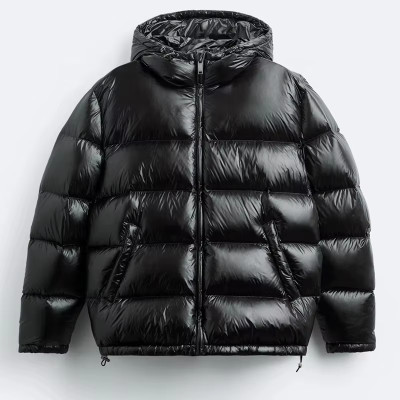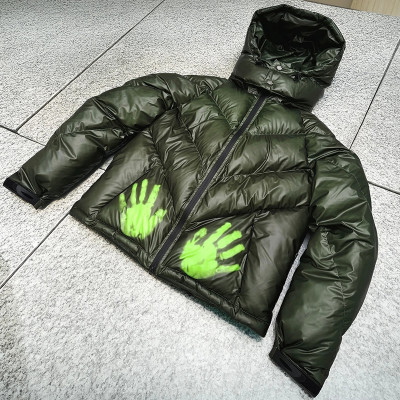
Custom Down Jacket Product Development
Custom Down Jacket Product Development: A Five-Milestone Framework for Brands
Custom down jacket product development is the sequence of decisions that turns a brand concept into a jacket that can actually be ordered, produced, and sold. At Ginwen, an OEM and ODM down jacket factory in Dongguan, China, that sequence is managed as five milestones: concept definition, technical package build, sample development, validation, and production handoff. Sampling runs 7 to 14 days per round, bulk production runs 25 to 40 days after approval, and the minimum order quantity is 50 pieces per style. This guide maps every milestone to its deliverables, its duration, and the gate criteria that must be met before the next stage begins, so brand owners and sourcing managers can plan a development calendar with real dates instead of guesswork. If you are still deciding how much of the design work to keep in house, our overview of OEM and ODM service explains where factory involvement usually starts.
Table of Contents
- The Five-Milestone Framework
- Milestone 1: Concept Definition
- Milestone 2: Technical Package
- Milestone 3: Sample Development
- Milestone 4: Validation
- Milestone 5: Production Handoff
- Cumulative Development Calendar
- Development Budget and Payment Gates
- Milestone Risks and Controls
- Frequently Asked Questions
The Five-Milestone Framework for Down Jacket Development
Most down jacket development problems are not technical problems. They are sequencing problems. A brand approves a silhouette before the fill weight is decided, or locks a fabric before the baffle geometry is tested, and the correction costs both money and calendar time. A milestone framework prevents that by forcing a decision order and by naming the exact document that closes each stage.
In this framework, a milestone is not a meeting. A milestone is a point in time where a defined deliverable exists on paper, has been reviewed by both the brand and the factory, and has been formally approved. Until the deliverable is approved, the next milestone does not start. That single rule removes the most common cause of rework in custom down jacket projects: parallel decisions that later contradict each other.
The five milestones below apply to both OEM projects, where the brand supplies an existing design, and ODM projects, where the factory develops the design from a reference or a mood direction. The difference is who owns each deliverable, not the sequence itself.
| Milestone | Primary Deliverable | Typical Duration | Gate Owner |
|---|---|---|---|
| 1. Concept Definition | Approved development brief and target cost band | 3-7 days | Brand |
| 2. Technical Package | Complete tech pack with BOM and measurement chart | 5-10 days | Brand and factory |
| 3. Sample Development | Fitting sample and construction comments | 7-14 days per round | Brand |
| 4. Validation | Approved pre-production sample and test records | 7-14 days | Brand and factory |
| 5. Production Handoff | Signed bulk order, size set, and shipping plan | 25-40 days to ship | Brand and factory |
Milestone 1: Concept Definition and the Development Brief
Concept definition answers five questions before any pattern is drawn: who wears the jacket, in what temperature range, at what retail price, in what silhouette, and in what quantity. When these five answers are missing, the factory is forced to guess, and guessing is what produces a sample that is technically correct but commercially wrong.
The deliverable at this milestone is a one or two page development brief. It does not need to be a design drawing. It needs to be a decision record that the factory can price against. A useful brief contains the end-use climate and activity, the intended retail price band, the silhouette and length, the fill type and approximate fill weight in grams, the fabric hand feel, the finish expectations, and the first order quantity per colorway.
Brand Deliverables
- End use, climate, and activity level
- Target retail price and margin structure
- Reference garments or mood direction
- Colorway count and first order quantity
Factory Deliverables
- Feasibility comment on silhouette and fill
- Indicative cost band per unit at MOQ 50 pieces
- Fabric and down recommendations with lead times
- Named development contact and weekly update rhythm
The gate criterion is simple: the brief is approved and the indicative cost band is acceptable to the brand. If the cost band is not acceptable, this is the cheapest possible moment to change the fill type, the fabric, or the construction. Changing fill weight after sampling is expensive because the pattern, the baffle layout, and the down quantity all change with it.
[IMAGE_PLACEHOLDER] English prompt for image: A brand founder and a down jacket factory development manager reviewing a printed development brief on a worktable, with down fill samples and fabric swatches laid out, clean industrial factory lighting, photorealistic, wide shotMilestone 2: Technical Package Build
The technical package, usually called a tech pack, is the document that makes a down jacket reproducible. Everything after this milestone is measured against it. A down jacket tech pack has more variables than a standard outerwear pack because fill behavior, baffle geometry, and down-proofing all interact.
At this milestone the brand confirms design intent and the factory converts it into engineering language. For ODM projects, the factory drafts the pack and the brand reviews it. For OEM projects, the brand's existing pack is checked for gaps and returned with a feasibility mark-up.
Core contents of a down jacket tech pack
- Flat sketches with front, back, and interior views
- Bill of materials listing shell fabric, lining, down fill, zippers, trims, and labels
- Fill specification with fill power, down-to-feather ratio, and grams per panel
- Baffle or quilt layout drawing with channel width and stitch density
- Point-of-measure chart for every size in the size range
- Construction details for seams, bindings, cuffs, hem, hood, and pockets
- Branding placement for labels, patches, embroidery, and prints
- Packing and labeling instructions per destination market
The measurement chart deserves special attention. A down jacket gains or loses apparent size depending on fill weight, so the point-of-measure must state whether measurements are taken flat, on a relaxed garment, or with the fill distributed. Ambiguity in this one column is responsible for a large share of fit disputes at the sample stage.
The gate criterion here is a tech pack that the factory signs as buildable at the agreed cost band, and that the brand signs as matching design intent. Both signatures matter. A factory-side signature without brand confirmation leads to a well-made jacket nobody ordered, and the reverse leads to a jacket that cannot be made profitably.
Milestone 3: Sample Development
Sample development is where the paper design becomes a wearable object. At Ginwen, a first fitting sample takes 7 to 14 days from approved tech pack to dispatch, depending on fabric availability and the complexity of the baffle layout. A simple channel-quilted jacket moves at the fast end; multiple panels with varied channel widths, mixed fabrics, or custom hardware move at the slow end.
Brands that want to see a finished construction before the first sample round can review the custom down jacket page, which shows the baffle and filling standard the sample is built against. The first sample is a fitting sample. Its job is to test silhouette, proportion, sleeve and body length, arm mobility, and fill distribution. It is not expected to be retail-perfect. Trim colors, label positions, and final stitch quality are refined in later rounds. Brands that expect a first sample to be a production standard usually end up paying for extra rounds anyway, because fit corrections change panel shapes.
Fitting Sample
Tests fit, proportion, and fill distribution. Produced in the closest available fabric. Comments are structural, not cosmetic.
Revised Sample
Applies fit corrections and confirms branding placement, trims, and colorway. This is normally the sample used for buyer presentations.
Pre-Production Sample
Made with the actual bulk fabric, down, and trims. It becomes the physical reference for bulk inspection on the line.
Size Set Sample
One garment per size in the range. Confirms that grading holds and that fill quantity scales correctly across sizes.
Sample fees at this stage typically run from USD 50 to USD 200 per style depending on materials and construction complexity, and the fee is normally deducted from the bulk order value once production is placed. The current terms are set out in our sample fee policy. Each additional round after the second is usually charged separately, which is the practical reason to consolidate comments into one clear list instead of sending corrections in several messages.
The gate criterion is an approved sample. Approval means the brand confirms fit, fill behavior, silhouette, and branding placement in writing, with the sample identified by round number. Once that sample is approved, it becomes the construction baseline for everything that follows, and changes after this point are treated as new development.
How to give sample comments that get results
- Group feedback by category: fit, fill, construction, branding, packaging
- State measurements as numbers, not as words such as slightly tight
- Mark each comment with its location on a photo or a sketch
- Separate must-fix items from optional improvements
- Send one consolidated comment set per round instead of sequential messages
Milestone 4: Validation, Testing, and Pre-Production Approval
Validation is the milestone most brands under-plan, and it is the one that protects the shipment. Validation has three parts: physical testing of materials, a pre-production sample in bulk materials, and a written pre-production approval. Skipping any of the three transfers risk from the development stage, where it is cheap to fix, to the bulk stage, where it is not.
What gets validated, and against what
| Validation Item | What Is Checked | Why It Matters Commercially |
|---|---|---|
| Down fill | Fill power, down to feather ratio, cleanliness, and origin documentation | Determines warmth claim and retail positioning |
| Shell and lining | Down-proof performance, hand feel, color consistency, shrinkage | Prevents leakage complaints and returns |
| Zippers and trims | Function under cold, pull strength, color matching to shell | Avoids field failures and warranty claims |
| Construction | Baffle integrity, stitch density, seam sealing where applicable | Controls loft retention after washing |
| Labels and compliance | Fiber content, care symbols, country of origin, brand marks | Required for customs clearance and retail listing |
Where a market requires documentation, validation is also where the paperwork is assembled. Ginwen holds ISO 9001 quality management certification, BSCI social compliance auditing, RDS for responsible down sourcing, and OEKO-TEX Standard 100 for materials tested against harmful substances. Brands that need these documents for retail onboarding should request the current scope certificates at this milestone rather than at shipping, because certificate review sometimes triggers a material substitution that is still affordable at validation and disruptive later.
The gate criterion at validation is a signed pre-production approval. Once signed, the pattern, the fill quantity, the materials, and the branding are frozen for the bulk run. Any change after this signature is not a correction, it is a new order, and it will normally reset the production slot.
Milestone 5: Production Handoff and Bulk Execution
Production handoff is the milestone where development ends and manufacturing begins. The deliverable is a complete production file rather than a single document: the approved pre-production sample, the final tech pack with all changes incorporated, the size set confirmation, the approved material sources, and the shipping plan.
Bulk production at Ginwen runs 25 to 40 days from the confirmed order and deposit to goods ready for shipment. The lower end applies to repeat styles with established materials and no pattern changes. The upper end applies to first-run styles, peak season bookings, or projects with customer-supplied materials that must pass incoming inspection before cutting.
Order Confirmation and Deposit
Production slot is booked on receipt of the confirmed purchase order and the 30 percent deposit.
Material Incoming Inspection
Shell, lining, down, and trims are checked against the approved specification before cutting begins.
Cutting and Panel Preparation
Panels are cut, marked, and bundled by size to keep fill quantities aligned with the size set.
Baffle Construction and Filling
Channels are sewn and down is filled by weight per panel, with in-line checks for leakage.
Assembly, Finishing, and Pressing
Final assembly, branding application, loose thread inspection, and steam finishing.
Final Inspection and Packing
Statistical inspection against the approved sample, then folding, bagging, and carton packing.
Total: 25 to 40 days from confirmed order to goods ready for shipment, followed by transit time chosen by the brand.
Payment structure follows the same logic. Ginwen works on 30 percent deposit with the order and 70 percent balance settled before shipment. That split protects both sides: the deposit commits materials and a production slot, and the balance is released only after the goods are inspected and ready to move. If you want the broader production sequence that sits around these milestones, the walkthrough in our guide to the design and craftsmanship process covers the shop floor side in more detail.
Cumulative Development Calendar
Durations are easier to plan when they are stacked into one calendar. The table below shows a typical first-run down jacket development cycle for a single style, assuming prompt feedback at each gate and no material delays. It is a planning baseline, not a commitment, but it is the baseline Ginwen uses when a brand asks whether a delivery window is realistic.
| Week | Activity | Milestone Gate |
|---|---|---|
| Week 1 | Development brief, feasibility comment, indicative cost band | Brief approved |
| Week 2 | Tech pack build, BOM, measurement chart, baffle layout | Tech pack signed |
| Week 3 to 4 | First fitting sample produced and shipped | Fit comments received |
| Week 5 to 6 | Revised sample with corrections and branding | Sample approved |
| Week 7 | Pre-production sample in bulk materials, test review | Pre-production approval signed |
| Week 8 to 13 | Bulk production, in-line checks, final inspection | Goods ready for shipment |
Development Budget and Payment Gates
Development spend is small compared with bulk cost, but it is the spend that determines whether the bulk cost is correct. Mapping the money to the milestones keeps a project honest about what has actually been committed.
Concept and Technical
- No tooling cost at MOQ 50 pieces per style
- Cost band confirmed before sample spend
- Material sourcing options priced in parallel
Sampling
- Sample fee USD 50 to USD 200 per style
- Fee deductible from the bulk order value
- Extra rounds quoted separately
Production
- 30 percent deposit with the confirmed order
- 70 percent balance before shipment
- Bulk window of 25 to 40 days
Compliance
- ISO 9001 quality management
- BSCI social compliance auditing
- RDS down and OEKO-TEX Standard 100 materials
Two budgeting mistakes recur. The first is treating the sample fee as sunk cost and therefore rushing the sample review to save rounds, which usually produces a bulk order that needs correction. The second is committing to a retail launch date before the validation milestone is scheduled, which forces the production team to compress the only stage where compressing creates defects. Both are avoided by treating the milestone calendar as the source of truth for the launch date.
Milestone Risks and the Controls That Prevent Them
Every development program has a small number of failure modes that account for most delays. Naming them in advance lets a brand build a check into the relevant gate instead of discovering the problem in the shipment.
- Undefined measurement basis. The tech pack does not state how measurements are taken, so fit comments contradict each other. Control: fix the measurement basis row before sampling starts.
- Fill weight changed after sampling. Warmth is adjusted late, forcing new baffle geometry and a new sample round. Control: confirm fill power and grams per panel at concept.
- Branding placement decided at validation. Logo size or embroidery position is finalized too late to test on a sample. Control: include branding in the technical package.
- Split feedback. Comments arrive in several messages over days, and the sample room produces a mixed revision. Control: one consolidated comment set per round.
- Certificate requests at shipping. Compliance documents are requested after bulk production, when a material change is no longer affordable. Control: review certificates at validation.
- Size set skipped. Grading is assumed rather than tested, and fill quantity per size drifts. Control: produce one garment per size before bulk.
These six controls cost almost nothing to apply at the right milestone and are expensive at the wrong one. That asymmetry is the entire argument for a staged development process: the cost of a change is lowest at the moment the decision is made.
Choosing a Development Partner for Down Jacket Programs
The framework above only works if the factory can hold the sequence and communicate at each gate. When evaluating a down jacket development partner, look for evidence that the milestones are already part of how they work, rather than promises that they can be arranged. The questions buyers ask most often during that evaluation are collected in our jacket manufacturing FAQ.
- Ask what a typical tech pack review returns, and how long it takes
- Ask how many sample rounds a first-run down style usually needs
- Ask who the named development contact is and how often updates are sent
- Ask how fill quantity is verified per panel and per size
- Ask for the current certification scope of the production site
- Ask what the in-line inspection points are during filling and assembly
- Ask how the approved sample is stored and referenced during bulk inspection
Ginwen works as an OEM and ODM partner for down jackets, puffer jackets, and other outerwear, with an MOQ of 50 pieces per style and sampling in 7 to 14 days. Brands that want to see finished constructions before starting development can review the custom down jacket and custom puffer jacket pages, and brands with technical requirements can compare the custom waterproof jacket construction. For a wider view of what the factory produces across the outerwear range, the product catalog shows the full line.
Frequently Asked Questions
How long does custom down jacket product development take from start to shipment?
For a single style with prompt feedback at each gate, plan on roughly 8 to 13 weeks: about 1 week for concept definition, 1 to 2 weeks for the technical package, 2 to 3 weeks across sample and validation rounds, and 25 to 40 days for bulk production and packing. Repeat styles with no pattern changes skip the early milestones and move directly to production.
What is the minimum order quantity for a first down jacket style?
Ginwen produces from 50 pieces per style. That minimum applies to new styles, colorways, and size sets alike, which allows a brand to test a silhouette commercially before committing to a larger run.
How many sample rounds should a brand budget for?
Most first-run down jackets are approved within two rounds: one fitting sample and one revised sample that incorporates corrections and branding. Complex constructions with varied baffle geometry or mixed fabrics sometimes need a third round. Each round is 7 to 14 days.
What does a sample cost, and is it refundable?
Sample fees typically range from USD 50 to USD 200 per style depending on materials and complexity. The fee is deductible from the bulk order value when production is placed. Additional rounds beyond the agreed number are quoted separately.
What are the payment terms for a development and bulk order?
The standard structure is a 30 percent deposit with the confirmed order and 70 percent balance before shipment. The deposit books the production slot and commits materials after the pre-production sample is approved.
Which certifications can be provided for down jacket orders?
Ginwen holds ISO 9001 for quality management, BSCI for social compliance, RDS for responsible down sourcing, and OEKO-TEX Standard 100 for materials tested against harmful substances. Certificates covering the specific production site can be supplied for retail and customs documentation.
Can a brand supply its own fabric or down?
Yes. Customer-supplied materials are accepted, with incoming inspection before cutting to confirm the specification matches the approved sample. Customer-supplied materials are one of the reasons a bulk window can extend toward the 40 day end of the range.
Who owns the design developed in an ODM project?
Ownership is set in the development agreement before work starts. In a private label ODM project, the brand sells under its own label and the development file is kept exclusive to that brand for the agreed market and period. Discuss exclusivity terms at the concept milestone, not after the sample is made.
Development is not a purchase, it is a decision sequence. Brands that treat the five milestones as gates finish with a jacket that matches the brief, a cost that matches the plan, and a production file that supports consistent bulk quality. Brands that compress the sequence usually recover the saved weeks later by fixing what was skipped. If you want a second opinion on where a new program should start, the team can review a development brief and return a milestone plan with indicative dates.
Custom down jacket product development becomes predictable when it is run as five milestones with named deliverables: concept definition, technical package, sample development, validation, and production handoff. Each milestone has a gate, each gate has an owner, and nothing moves until the deliverable is approved. With an MOQ of 50 pieces per style, sampling in 7 to 14 days, and bulk production in 25 to 40 days, the framework scales from a first capsule collection to a seasonal program.
Ready to start a down jacket development program? Send your brief and target cost and the team will return a feasibility comment with an indicative cost band. You can also contact the development team to discuss timelines, or review our sample fee policy before the first sample round.