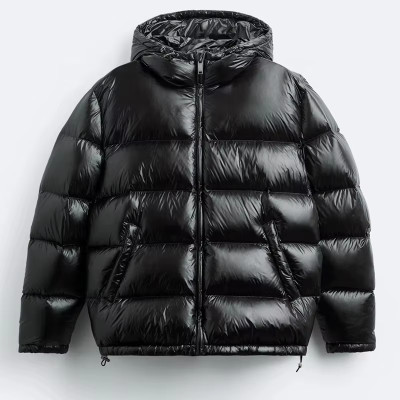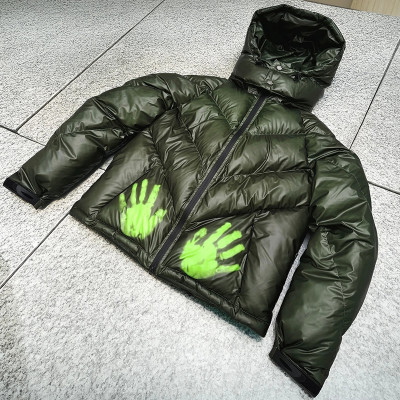
Custom Down Jacket vs Puffer Jacket: Key Differences for Fashion Brands
Custom Down Jacket vs Puffer Jacket: Understanding the Key Differences for Your Brand
Construction · Materials · Performance · Customization · Brand Value · OEM Manufacturing
In the competitive world of outerwear, the terms "down jacket" and "puffer jacket" are often used interchangeably, but for fashion brands developing their collections, understanding the nuanced differences is critical. These distinctions affect everything from product performance and target customer to pricing strategy and brand positioning. A custom down jacket represents a tailored, high-performance garment engineered to exact specifications, while a puffer jacket typically refers to a broader category of insulated outerwear that may or may not contain down. Making the right choice requires a clear understanding of construction, materials, and intended use.
This comprehensive guide breaks down the key differences between custom down jackets and standard puffer jackets. We'll explore construction methods, material specifications, performance characteristics, customization possibilities, and the strategic implications for your brand. Whether you're developing a technical outdoor line or a fashion-forward urban collection, this knowledge will help you make informed decisions about product development, manufacturing partnerships, and market positioning. Drawing on insights from professional manufacturers like Ginwen, we'll also examine how custom manufacturing can elevate either category to meet your brand's specific vision and quality standards.
1. Core Definition: What Makes a Garment a "Down Jacket" vs. a "Puffer"?
Understanding the fundamental distinctions in terminology and constructionAt the most basic level, the distinction comes down to insulation material. A down jacket is specifically insulated with natural down feathers—the soft, fluffy undercoating from ducks or geese. The quality is measured by fill power (loftiness) and down-to-feather ratio. A puffer jacket, however, is defined by its quilted construction that creates "puffy" compartments, which can be filled with various materials: down, synthetic fibers (like PrimaLoft or Thinsulate), or even cotton. All down jackets are puffers, but not all puffers are down jackets.
Custom Down Jacket: The Technical Definition
- Primary Insulation: Natural down (duck or goose) with specified fill power (e.g., 550FP, 700FP, 800+FP).
- Key Quality Metric: Fill power and down-to-feather ratio (e.g., 90/10 indicates 90% down, 10% feathers).
- Construction Focus: Engineered for maximum warmth-to-weight ratio; often uses baffle construction to prevent cold spots.
- Performance Characteristic: Exceptional compressibility, lightness, and longevity of insulation properties.
- Typical Use: Technical outdoor activities, cold weather performance, premium fashion where warmth and packability are paramount.
Puffer Jacket: The Category Definition
- Primary Insulation: Can be down, synthetic, or blended materials. The term refers to the style, not the fill.
- Key Quality Metric: Varies widely based on insulation type; synthetic fills measured in grams per square meter (GSM).
- Construction Focus: The quilted, compartmentalized look; can be sewn-through (simpler) or baffled.
- Performance Characteristic: Ranges from high-performance (if down-filled) to budget-friendly and water-resistant (if synthetic).
- Typical Use: Broad category from fast fashion to outdoor gear; defined by aesthetic more than specific performance claims.
For brands, this distinction matters in marketing, pricing, and customer expectations. A "custom down jacket" signals investment in premium materials and performance, while a "puffer" leaves the material specification open, allowing for different price points and use cases.
2. Construction and Insulation Technology: Baffles vs. Sewn-Through
How the internal structure affects performance, appearance, and costBeyond the insulation material itself, the construction method creates significant differences in performance and appearance. Custom down jackets often employ more sophisticated baffle constructions to maximize warmth, while many standard puffers use simpler sewn-through quilting. The choice between these methods affects not only the garment's technical performance but also its manufacturing complexity and cost.
| Construction Type | Typical Use in Down Jackets | Typical Use in Puffer Jackets | Performance Implications |
|---|---|---|---|
| Sewn-Through Quilting | Used in lightweight down jackets, summer-weight pieces, or fashion-focused items where absolute maximum warmth isn't critical. | Very common in affordable puffers of all insulation types. Creates the classic quilted diamond or rectangle pattern. | Creates slight cold spots at stitch lines. Lighter weight, more packable, but less warm for the weight compared to baffled. More affordable to manufacture. |
| Box Baffle Construction | Signature of high-end custom down jackets. Uses internal fabric walls to create 3D boxes that eliminate cold spots and allow down to loft fully. | Less common in standard synthetic puffers due to cost, but used in premium models. | Eliminates cold spots, provides superior warmth-to-weight ratio, allows down to loft to its full potential. More complex and expensive to manufacture. |
| Hybrid/Segmented Baffles | Common in custom technical pieces. May use box baffles in core body and sewn-through in sleeves for mobility. | Rare in mass-market puffers; indicates a more performance-oriented design. | Balances warmth, weight, mobility, and cost. Demonstrates sophisticated design thinking for specific use cases. |
| Offset/Shingle Baffles | Advanced technique in custom down jackets to maximize warmth with minimal weight. | Almost exclusively found in high-end down-filled puffers from technical outdoor brands. | Reduces heat loss through seams by staggering baffle stitch lines. Highest warmth efficiency, highest manufacturing complexity. |
A manufacturer like Ginwen, with 20+ years of experience and ISO 9001 certification, has the technical expertise to execute these various constructions consistently. For brands, the construction choice should align with the intended use: a fashion puffer might use simple sewn-through, while a technical down jacket for alpine use would demand box baffles.
3. Material Specifications: Down Quality vs. Synthetic Alternatives
The insulation decision that drives performance, ethics, and costThe insulation material is the heart of the garment and represents the most significant differentiator. Custom down jackets typically specify high-quality down with certified origins, while puffer jackets offer a broader range of material options. Understanding these material differences is essential for brands to make informed decisions about product positioning, cost structure, and marketing claims.
Down Insulation: The Custom Down Jacket Standard
- Fill Power (FP): Measures loftiness. Custom jackets often use 600FP+ for good balance, 800FP+ for premium lightweight warmth.
- Down-to-Feather Ratio: Higher down percentage (e.g., 90/10, 95/5) means better loft, warmth, and compressibility.
- Certifications: RDS (Responsible Down Standard) is increasingly standard, ensuring ethical sourcing.
- Type & Source: Goose down (generally higher FP) vs. duck down; European vs. Asian sources.
- Treatment: May be water-resistant treated (e.g., DownTek, DWR-treated) to maintain loft when damp.
- Brand Implications: Signals quality, performance, natural materials, and justifies higher price points.
Synthetic Insulation: Common in Puffer Jackets
- Material Types: Polyester-based fibers (PrimaLoft, Thinsulate, Thermolite) in various structures (short-staple, continuous filament).
- Weight/GSM: Warmth indicated by grams per square meter (e.g., 60g, 100g, 200g).
- Performance Characteristics: Retains warmth when wet (unlike untreated down), dries faster, but is less compressible and durable over time.
- Sustainability Options: Recycled polyester fills (e.g., PrimaLoft Bio, made from recycled materials).
- Cost Structure: Generally lower material cost than high-quality down, but high-end synthetics can be comparable.
- Brand Implications: Offers ethical alternative (vegan), consistent performance in damp conditions, and often a lower price entry point.
In custom manufacturing, brands can specify exact materials. A professional manufacturer will "recommend suitable fabrics and craftsmanship, confirm details" based on the intended use, as noted in Ginwen's service description. This collaborative approach ensures the material choice aligns with the design vision and performance requirements.
4. Shell Fabrics and Technical Features: Performance vs. Aesthetics
How outer materials and features differ between categoriesThe shell fabric and technical features often reflect the intended use of the garment. Custom down jackets destined for outdoor performance typically use high-tech, lightweight, and durable fabrics with advanced weather protection. Fashion-oriented puffer jackets may prioritize aesthetic qualities like sheen, texture, or drape, with weather resistance as a secondary consideration. The choice of shell fabric dramatically affects the garment's weight, packability, weather resistance, and overall hand feel.
- Fabric Weight & Denier: Custom down jackets often use lightweight (e.g., 10D-30D) ripstop nylon for packability. Puffers may use mid-weight (40D-70D) fabrics for durability and cost.
- Weather Protection: Down jackets frequently feature DWR (Durable Water Repellent) treatments and waterproof/breathable membranes (Gore-Tex, etc.) for serious weather. Many puffers have basic DWR or none.
- Down-Proof Construction: Critical for down jackets to prevent feather leakage (using tight weaves, microtex needles, specific thread). Less critical for synthetic puffers.
- Feature Sets: Custom down jackets often include technical features: adjustable hoods with wired peaks, underarm ventilation, powder skirts, dedicated goggle pockets. Puffers focus on fashion features: oversized fits, unique quilting patterns, decorative trims.
- Zippers & Hardware: Down jackets typically use water-resistant, durable zippers (YKJ, Vislon). Puffers may use standard coil zippers. Both benefit from quality hardware, but it's more critical in technical use.
- Fit & Pattern: Down jackets often have a more tailored, athletic fit to minimize dead air space. Fashion puffers explore boxy, oversized, or cropped silhouettes.
The customization process allows brands to mix and match these elements. A brand could create a fashion puffer with a technical fabric, or a down jacket with a fashion-forward fit. The manufacturer's expertise in "adjust[ing] the details of the pattern," as mentioned in client testimonials about Ginwen, becomes invaluable in these hybrid approaches.
5. Customization Scope and Manufacturing Implications
How the design and production process differs for tailored productsThe term "custom" implies a different manufacturing relationship and process. A custom down jacket is developed to a brand's exact specifications, often with extensive back-and-forth during sampling. A standard puffer jacket might be selected from a manufacturer's existing catalog with minor modifications. The customization scope affects development time, cost, minimum order quantities, and the manufacturer's required capabilities.
Custom Down Jacket Manufacturing
- Development Process: Full OEM or ODM cycle: design, tech pack creation, multiple sample iterations, material sourcing, fit refinement.
- Material Control: Brands specify and often approve exact materials (fabrics, down, trims) from selected suppliers or mills.
- Technical Collaboration: Close work with manufacturer's technical team on construction details, fit, and performance features.
- MOQ Flexibility: Professional custom manufacturers like Ginwen offer lower MOQs (e.g., 50 pieces) for development runs.
- Timeline: Longer lead times due to development and custom material sourcing (12-20 weeks typical).
- Cost Structure: Higher development costs amortized over production. Unit cost depends on materials and complexity.
- Outcome: A unique product that embodies the brand's specific vision, performance requirements, and quality standards.
Standard Puffer Jacket Production
- Development Process: Often starts with a manufacturer's existing sample or tech pack; modifications are limited to color, fabric, or minor details.
- Material Options: Choice from manufacturer's existing material library or standard suppliers.
- Technical Input: Less collaboration; manufacturer executes based on provided or selected specifications.
- MOQ Requirements: Often higher MOQs (500-1000+ pieces) as manufacturer leverages existing patterns and processes.
- Timeline: Shorter lead times (8-12 weeks) as patterns and materials are predefined.
- Cost Structure: Lower development costs, but less control over final specification. Economies of scale more significant.
- Outcome: A product that may be similar to other brands using the same manufacturer's base patterns.
For brands seeking differentiation, custom manufacturing provides control over every element. As Ginwen's service model describes, it's a process from initial request to "long-term cooperation docking continuous support," building a partnership rather than a transactional relationship.
6. Brand Positioning and Market Differentiation
How product choice aligns with business strategy and customer perceptionThe choice between developing a custom down jacket or a standard puffer jacket is not just a product decision—it's a strategic brand decision. It communicates values about quality, performance, sustainability, and price positioning to your target market. Understanding how each option aligns with different brand strategies is crucial for long-term success.
| Brand Strategy | Custom Down Jacket Alignment | Puffer Jacket Alignment |
|---|---|---|
| Premium/Luxury Positioning | Ideal. High fill power down, technical fabrics, and meticulous construction justify premium pricing. Storytelling around materials and craftsmanship. | Possible with premium materials and finishes, but the "puffer" category has broader associations. Requires clear differentiation in design and marketing. |
| Outdoor/Performance Focus | Natural choice. Down's superior warmth-to-weight ratio and compressibility align with technical needs. Baffle constructions and weather protection are expected. | Synthetic puffers suitable for wet conditions or as entry-level pieces. Down-filled puffers can work if technical features are emphasized. |
| Fashion/Streetwear Focus | Can be positioned as luxury fashion items. Oversized fits, unique fabrications, and designer details combined with down's performance. | Broad category with lots of competition. Success depends on unique design, fit, and styling. Lower price points allow for trend-driven cycles. |
| Sustainable/Ethical Branding | RDS-certified down, PFC-free DWR, recycled shell fabrics tell a strong story. However, animal-derived materials may conflict with vegan positioning. | Synthetic fills from recycled materials (e.g., recycled PrimaLoft) align with vegan and circular economy stories. New bio-based synthetics emerging. |
| Direct-to-Customer Value | Justify higher price with transparent cost breakdown: material quality, construction complexity, ethical certifications. Educate customers on value. | Offer accessible entry price. Emphasize style, versatility, and sufficient performance for typical urban use. Faster turnover possible. |
7. Ginwen's Approach: Custom Manufacturing for Both Categories
How a professional manufacturer supports brands across the spectrumGinwen's manufacturing model demonstrates how a single partner can support brands across the down jacket/puffer spectrum. Their ISO 9001 & BSCI certified systems provide the quality foundation for both categories. Their service offering—from ODM design help to OEM execution—allows brands to choose their level of customization and technical complexity.
For a brand developing a custom down jacket, Ginwen's 20+ years of experience in down-specific construction (baffles, filling, down-proof sewing) is critical. For a brand creating a fashion puffer, their ability to advise on "suitable fabrics and craftsmanship" and adjust patterns ensures the design vision is realized. Their low MOQ of 50 pieces makes both approaches accessible, allowing brands to test the market with small batches before committing to large production runs. The client testimonial praising their ODM solution and pattern adjustment help illustrates this flexible, collaborative approach.
Ginwen's Capabilities for Custom Down Jackets
- Technical Expertise: Experience with various baffle constructions, down filling precision, and weatherproofing techniques.
- Material Sourcing: Access to quality down (RDS-certified options) and technical fabrics appropriate for performance use.
- Quality Systems: ISO 9001 ensures consistent execution of complex constructions. AQL inspection validates batch quality.
- Development Support: Collaborative sampling process to perfect fit, features, and performance before bulk.
- Scalability: Same quality systems handle 50-piece development runs and 5,000-piece production orders.
Ginwen's Capabilities for Puffer Jackets
- Design Flexibility: ODM services to help develop unique silhouettes, quilting patterns, and style details.
- Material Variety: Access to both synthetic fills and down, plus a range of shell fabrics from basic to premium.
- Efficient Production: Streamlined processes for sewn-through quilting and other puffer-specific constructions.
- Fast Sampling: Quick-turn prototypes to evaluate design direction and fit.
- Cost Optimization: Advice on material and construction choices to meet target price points without sacrificing quality.
8. Making the Right Choice for Your Brand
A decision framework based on your business goals and resourcesChoosing between developing a custom down jacket or a puffer jacket depends on multiple factors: your brand positioning, target customer, price point, technical requirements, and development budget. There is no universally "right" choice—only the right choice for your specific context. The following decision framework can help clarify which direction aligns with your brand's current needs and capabilities.
- Define Your Customer & Use Case: Are you serving outdoor enthusiasts needing maximum warmth for alpine conditions, or urban dwellers wanting style with moderate insulation? Technical needs point to down; fashion needs may be met by either.
- Establish Your Price Point: Down jackets with high fill power and advanced constructions command higher prices. Synthetic puffers can hit lower price points. Ensure your product cost allows for target margins.
- Assess Your Development Budget & Timeline: Custom down jackets require more development time and sampling investment. If you need to get to market quickly with less upfront investment, a modified puffer from existing patterns may be better.
- Consider Your Sustainability & Ethics Story: Does your brand emphasize natural materials and responsible sourcing (favoring RDS down), or recycled materials and vegan options (favoring premium synthetics)?
- Evaluate Your Technical Requirements: Will the garment be used in wet conditions? (Synthetic may be better.) Is packability critical? (High-FP down excels.) Does it need to maintain loft over many years? (Quality down lasts longer.)
- Plan for Scalability: Can you meet the MOQ requirements? Custom down might start at 50 pieces; standard puffers often require 500+. Consider a manufacturer like Ginwen that supports low MOQ for both.
- Choose Your Manufacturing Partner Wisely: For down, ensure the manufacturer has specific expertise. For puffers, ensure they have design capability if you need ODM support. Certifications (ISO, BSCI) indicate quality systems.
Remember that these categories are not mutually exclusive. Many successful brands offer both: technical down pieces for their core performance line, and fashion puffers (sometimes with synthetic fill) for style-focused collections. The key is to make intentional choices that align with each product's role in your overall assortment.
Conclusion: Intentional Design Through Informed Choice
Using product differentiation to build a stronger brandThe distinction between a custom down jacket and a standard puffer jacket represents more than just materials and construction—it represents different approaches to product development, brand building, and customer engagement. Custom down jackets offer the opportunity to create signature products with superior performance, justified by premium materials and sophisticated construction. Puffer jackets offer versatility, accessibility, and the ability to respond quickly to fashion trends.
The most successful brands understand these differences and make intentional choices. They don't just make "a jacket"; they make a specific type of jacket for a specific customer need, with materials and construction that deliver on the promised value. By partnering with manufacturers who have the expertise to execute both categories well—and who offer the collaborative support to navigate the development process—brands can build product lines that are coherent, competitive, and true to their vision.
- ✅ Have I clearly defined the primary use case and customer for this garment?
- ✅ Does my price point support the material and construction costs of a custom down jacket?
- ✅ Do I have the development budget and timeline for custom sampling and material sourcing?
- ✅ Which insulation aligns with my brand's sustainability and ethics story?
- ✅ What level of technical performance (warmth, packability, weather resistance) is required?
- ✅ Can I meet the MOQ requirements for my chosen product type?
- ✅ Does my manufacturing partner have proven expertise in my chosen category?
- ✅ How will this product differentiate from competitors in the same category?
Frequently Asked Questions (FAQ)
Common questions about down jackets vs. puffer jacketsWhich is warmer: a down jacket or a synthetic puffer jacket?
For the same weight, high-quality down (700+ fill power) is warmer than synthetic insulation. Down creates more loft, trapping more air for its weight. However, synthetic insulation retains warmth better when wet, while down loses most of its insulating power when damp. For dry cold, down wins for warmth-to-weight. For damp or variable conditions, synthetic may perform more consistently.
Is a down jacket always more expensive than a synthetic puffer?
Generally, yes, but not always. High-quality down is a premium material, and the construction (baffles) is more complex, increasing cost. However, a basic duck down jacket with simple construction can be comparable in price to a premium synthetic puffer with advanced materials. The price difference reflects material costs, construction complexity, and brand positioning more than just the insulation type.
Can a puffer jacket be "custom" if it uses synthetic insulation?
Absolutely. "Custom" refers to the development process, not the materials. A brand can develop a completely custom synthetic puffer jacket with unique patterns, fabrics, features, and fit. The customization happens in the design, patterning, and specification—not just the insulation choice. Many outdoor brands create custom synthetic pieces for specific conditions where down is not suitable.
How do I care for a down jacket vs. a synthetic puffer?
Down jackets require special care: use a front-loading washer (no agitator), specific down detergent, and thorough drying (often with tennis balls) to restore loft. Synthetic puffers are generally easier: machine washable, and they dry faster. However, both benefit from proper care to maintain performance. Always follow the specific care instructions from the manufacturer.
Which is more sustainable: down or synthetic insulation?
This is complex. RDS-certified down is a natural, renewable material that can last decades with proper care, but it's animal-derived. Recycled synthetic fills (like PrimaLoft Bio) use post-consumer waste and are vegan, but are plastic-based and shed microfibers. The "most sustainable" choice depends on your brand's values: animal welfare, circular economy, longevity, or microfiber pollution. Many brands now offer both to cater to different customer values.
Can I switch from making puffers to making down jackets with the same manufacturer?
Yes, if the manufacturer has the expertise. Manufacturers like Ginwen that specialize in down construction can easily handle synthetic puffers, but the reverse isn't always true. Down requires specific skills: down-proof sewing, precise filling equipment, baffle construction. When evaluating a manufacturer, ask about their experience with both categories and request samples of each to assess their capability.
Final Thought
In the evolving landscape of outerwear, knowledge is the ultimate differentiator. Understanding the nuanced differences between custom down jackets and puffer jackets empowers brands to make intentional, strategic product decisions. These choices ripple through every aspect of the business—from development and costing to marketing and customer satisfaction. By partnering with manufacturers who not only execute but also educate and collaborate, brands can transform product development from a sourcing challenge into a competitive advantage.
Choose partners who understand the difference, so your customers can feel the difference.