Custom Manufacturing
Custom Streetwear Puffer Jacket Manufacturing
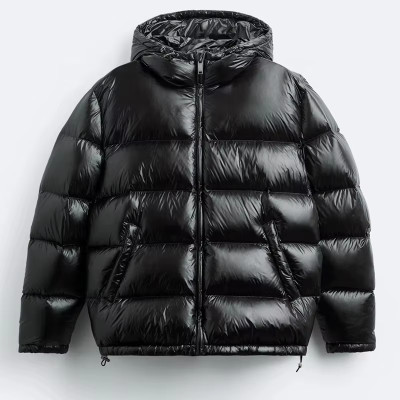
Custom streetwear puffer jacket manufacturing covers the full production process for oversized, cropped, and boxy quilted jackets with bold branding, technical fabrics, and statement hardware. A streetwear puffer differs from a standard puffer in pattern engineering, fabric selection, decoration methods, and the way small-batch MOQs are handled. This guide explains each step for fashion brands and streetwear labels sourcing custom puffer jackets, including silhouettes, materials, filling, branding techniques, sampling, pricing, and quality control, with the real factory numbers a buyer needs to plan a production run.
What Is Custom Streetwear Puffer Jacket Manufacturing?
Custom streetwear puffer jacket manufacturing is the production of quilted, insulated jackets built to a brand's own design, with the oversized proportions, graphic branding, and statement details that define streetwear aesthetics. Unlike outdoor puffers, which prioritize warmth-to-weight performance, streetwear puffers prioritize silhouette, surface texture, and visual impact, while still needing proper insulation, durable construction, and wearable comfort.
From a factory perspective, the differences show up in three areas. First, the pattern: streetwear puffers often use oversized body blocks, drop shoulders, and exaggerated sleeve volumes that change how baffle chambers are shaped. Second, the decoration: embroidery, screen printing, patches, and reflective transfers are more complex than a standard woven label. Third, the order profile: streetwear brands frequently launch capsules of 50 to 300 pieces per style, which requires a manufacturer willing to run small batches without inflating per-unit costs. Ginwen supports streetwear brands with a MOQ starting at 50 pieces per style, covering pattern development, sample approval, bulk production, and full branding.
50
Pieces MOQ per Style
7-14
Days for Sampling
25-40
Days for Bulk Production
Streetwear Puffer Silhouettes and Pattern Engineering
Silhouette is the first decision in a custom streetwear puffer project, because the pattern determines how the baffles, seams, and insulation behave on the body. The most common streetwear silhouettes are oversized, cropped, boxy, and longline, each with a different pattern grading strategy.
| Silhouette | Pattern Approach | Best For | Fit Notes |
|---|
| Oversized | +8 to +12 cm body ease, drop shoulder | Layered streetwear looks | Baffles widen with the block |
| Cropped | Shortened length, boxy chest | High-waist styling | Length stops above hip |
| Boxy | Square block, straight drop | Gender-neutral fits | Minimal waist shaping |
| Longline | Extended length, tapered hem | Fashion-forward outerwear | More baffle rows needed |
Pattern engineering for oversized puffers requires careful grading. When a body block grows by 10 cm, the sleeve cap, armhole depth, and neckline must all be adjusted together, or the jacket will hang awkwardly. Factories experienced with streetwear will grade oversized styles differently from standard outerwear, and they will check the fit on a live model or dress form during the sampling stage before bulk cutting begins.
Tip: Send your factory a fit reference jacket or a detailed size spec (chest, shoulder, sleeve length, body length) for your target silhouette. Streetwear sizing is not universal, and a clear spec prevents expensive re-cutting during bulk production.
Fabrics for Streetwear Puffer Jackets
Fabric choice drives both the look and the technical performance of a custom streetwear puffer. The shell must hold its shape through quilting, resist abrasion from daily wear, and carry the surface treatments streetwear is known for.
Nylon Taffeta
Crisp, lightweight, and smooth. The classic puffer shell that holds printed graphics well. Available in matte, glossy, and micro-ripstop finishes for different visual textures.
Ripstop Nylon
Reinforced with a crosshatch grid that stops tears from spreading. The standard for technical streetwear and outdoor-influenced puffers that need durability without heavy weight.
Reflective and Coated Fabrics
Retro-reflective laminates, metallic coatings, and PU-coated shells create the visual language of streetwear. Coated fabrics need tested seam construction to avoid cracking in cold weather.
Recycled Polyester
Made from post-consumer bottles and factory waste. Increasingly required by EU and US streetwear buyers who want sustainability claims backed by certification such as GRS.
Before bulk production, the factory tests the shell fabric for colorfastness, shrinkage, tear strength, and water resistance when a coating is used. These tests are especially important for streetwear fabrics with prints, coatings, or unusual finishes, because surface treatments can fail after repeated washing if the base fabric is not stable.
Filling: Down vs Synthetic for Streetwear
Streetwear puffers use both down and synthetic insulation, and the choice depends on the climate, the price point, and the brand story. Down offers the highest warmth-to-weight ratio and compresses well, but it requires careful baffle construction to prevent shifting. Synthetic insulation is easier to print on, performs better when wet, and is fully animal-free, which matters for vegan streetwear lines.
| Filling | Warmth | Wet Performance | Compression | Price |
|---|
| Duck down (80/20, 650-750 FP) | High | Weak when wet | Excellent | Medium |
| Goose down (750-850 FP) | Highest | Weak when wet | Excellent | High |
| Synthetic (polyester clusters) | Medium | Retains warmth | Good | Low-Medium |
| Hybrid (down core + synthetic sides) | High | Balanced | Good | Medium-High |
Down used in certified factories is RDS-certified, meaning it can be traced to ethical sourcing. If your brand plans to claim down fill power or RDS compliance in marketing, request the certificate and the fill-power test report during the sampling stage, and make sure the claims match the actual filling used in production.
Branding and Decoration Techniques
Branding is where a custom streetwear puffer becomes unmistakably yours. The decoration method affects the design, the unit cost, and the minimum quantity, so it should be chosen early in the project.
Embroidery
- 3D puff embroidery for raised logos
- Flat embroidery on chest and back
- Chest, sleeve, and back placements
- Thread color matching to your palette
Screen Printing
- Water-based and plastisol inks
- High-density and puff prints
- Front chest and back panel graphics
- Works best on smooth nylon shells
Patches and Labels
- Woven and embroidered patches
- Leather-look and TPU patches
- Woven labels, hang tags, neck labels
- Custom packaging and poly bags
Reflective and Specialty
- Reflective heat transfers
- Metallic foils and holographic prints
- Vinyl appliqué and bonded overlays
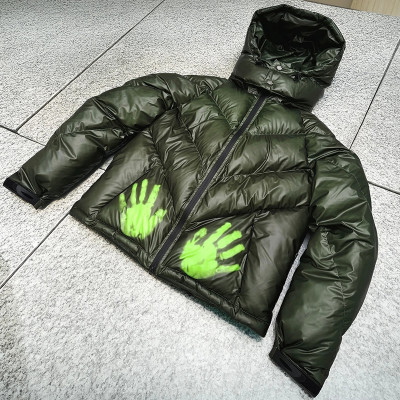
- Color-change and glow details
Plan decoration before sampling. Embroidery on puffer jackets requires the pattern to account for stitch-through insulation, and large back prints need enough panel space. Share your artwork in vector format early so the factory can flag placement or sizing issues before any sampling fee is spent.
Decoration also affects the MOQ picture. Embroidery and screen printing can run at the 50-piece MOQ, but some specialty finishes, such as custom woven patches or holographic foils, have higher minimums per colorway. Ask your factory for the minimum quantity per decoration method when you plan the collection, so a small order does not unexpectedly trigger a higher price.
Hardware and Details
Hardware completes the streetwear look and affects durability. The most common custom options are YKK or equivalent zippers with custom pulls, shock-cord toggles, snap buttons, and branded eyelets. Streetwear brands often use two-way zippers on longline styles and waterproof zippers on technical pieces.
Pockets on streetwear puffers are usually a mix of hand-warmer pockets, chest pockets, and interior pockets sized for phones and wallets. Hidden interior pockets are a popular custom detail that adds function without changing the exterior design. Every piece of hardware should be tested for function and finish during sampling, because replacing a failed zipper after bulk production is costly and delays delivery.
Hood and collar options also define the look. Detachable hoods, tall stand collars, and fleece-lined hoods are common choices, and each changes the pattern and the fill layout. If your design uses a hood, confirm the hood shape and lining in the sample stage, because hood patterns are difficult and expensive to change once bulk cutting has started.
The Sampling Process for Custom Streetwear Puffers
Sampling is the stage where your design becomes a physical jacket, and it is the best time to catch fit and construction issues. A typical sampling cycle for a custom streetwear puffer runs 7 to 14 days, depending on whether fabrics are in stock and how much pattern work the design requires.
1
Design and Spec Review
1-3 days. Your tech pack, artwork, and size spec are reviewed for feasibility.
2
Pattern and Sample Cutting
2-4 days. Pattern grading and cutting of the sample panels.
3
Sample Sewing and Filling
2-4 days. Assembly, filling, quilting, and trim application.
4
Fit Review and Adjustments
1-3 days. You review the sample; adjustments are noted for revision.
5
Sample Approval
Final sign-off before bulk production begins. Approved sample becomes the reference for QC.
Never approve bulk production from a photo. Sample fees typically range from $50 to $200 depending on complexity and are deducted from your bulk order. Check the actual garment, the fill feel, the zipper action, and the print quality in person or with a trusted partner before approval.
MOQ, Pricing, and Lead Times
Streetwear brands rarely need the volume that traditional outerwear factories require, so MOQ flexibility is often the deciding factor when choosing a manufacturer. Ginwen's MOQ is 50 pieces per style, with pricing that scales as volume increases. Typical payment terms are 30% deposit to start production and 70% balance before shipment.
| Order Size | Price Positioning | Lead Time | Best For |
|---|
| 50-100 pcs | Highest per unit | 25-30 days | Capsules and drops |
| 100-300 pcs | Mid per unit | 30-35 days | Launch collections |
| 300-1000 pcs | Lower per unit | 35-40 days | Seasonal programs |
| 1000+ pcs | Best per unit | 40+ days | Retail and wholesale |
Lead times are quoted from sample approval, not from the first inquiry. Fabric availability, decoration complexity, and the production calendar all affect the final timeline, so confirm the date in writing when you place the order. For launch campaigns with fixed drop dates, build in a buffer of at least one week.
Pricing for custom streetwear puffers is driven by four factors: the shell fabric, the filling type and weight, the decoration method, and the order quantity. Embellishment and specialty finishes add the most cost per garment, while larger volumes spread pattern and setup costs across more pieces. When comparing quotes, compare the same specification rather than the same price, because a cheaper quote often reflects a thinner fabric, less filling, or simpler decoration.
Quality Control and Certifications
Quality control for custom streetwear puffers covers incoming fabric inspection, in-line sewing checks, filling weight verification, and final random inspection before packing. A standard final inspection uses AQL 2.5 sampling, which is the common acceptable quality limit for apparel in EU and US markets.
Certifications matter for retail placement. ISO 9001 covers the factory's quality management system, BSCI covers social compliance and working conditions, OEKO-TEX Standard 100 confirms the fabrics contain no harmful substances, and RDS covers responsible down sourcing. Ask for current certificates during supplier evaluation, and verify that the certificate covers the factory where your order will actually be produced.
Buyer checklist: Request fabric test reports, filling weight verification, AQL 2.5 final inspection results, and copies of relevant certificates before your bulk order ships. These documents protect your brand if a quality dispute arises later.
Communication quality is part of the QC picture. A good factory updates you proactively, flags risks before they become problems, and documents decisions in writing. For streetwear brands running regular drops, this reliability is worth more than a slightly lower price, because a missed drop date costs sales and trust that no discount can recover.
Sustainability and Ethical Production for Streetwear
Sustainability is no longer optional for streetwear brands selling to EU and US markets. Buyers, retailers, and end customers increasingly ask where materials come from, how the factory treats its workers, and whether environmental claims can be verified. A factory that can answer these questions with documents, rather than promises, makes your brand's sustainability story credible.
On the material side, recycled polyester shells made from post-consumer bottles, GRS-certified recycled fabrics, and RDS-certified down are the most common requests. On the factory side, social compliance audits such as BSCI verify working conditions, and OEKO-TEX Standard 100 confirms that fabrics and trims contain no harmful substances. These certifications cover different parts of the supply chain, so ask for the specific document that supports each claim you plan to make.
- GRS certificate for recycled-content fabric claims
- OEKO-TEX Standard 100 report for material safety
- RDS scope certificate for responsible down sourcing
- BSCI audit report for social compliance
- Fabric test reports for colorfastness and shrinkage
Verification matters more than labels. A recycled-polyester shell only supports a recycled claim if the fabric is actually certified, and down only supports an RDS claim if the certificate covers the supply chain used for your order. Ask your factory to include the relevant certificates and test reports in the pre-production documentation, and keep them for your own compliance files.
Beyond certificates, look at the factory's day-to-day practices: how fabric waste is handled, how chemicals are managed, and whether workers have clear safety standards. These practices are not always certified, but they show whether sustainability is a real operating principle or a marketing position. For streetwear brands that communicate values to their audience, this distinction matters.
Working With a Streetwear Puffer Factory
A smooth production run starts with a complete brief. The more information you send at the inquiry stage, the faster the factory can quote accurately and the fewer surprises you will meet at sampling. A full tech pack is ideal, but a clear description with sketches, measurements, and reference photos is enough to start most streetwear puffer projects.
The working rhythm is straightforward. You submit the design and specs, the factory responds with a quotation and a sampling timeline, you approve a sample (or request revisions), and then bulk production starts after your final sign-off. Throughout production, you should receive progress updates and photos, especially for decorated and embellished styles where issues are easier to spot early.
Planning matters for streetwear drops, where release dates drive sales. If you plan to launch in a specific month, work backward from that date: sampling 7 to 14 days, production 25 to 40 days, and shipping time to your market. Confirm every date in writing, build in a buffer, and keep the design frozen once bulk cutting begins to avoid delays and extra costs.
Building a Tech Pack for Your Streetwear Puffer
A tech pack is the document that turns your design idea into a manufacturable product. For a custom streetwear puffer, the tech pack should include the design sketches with front and back views, a size spec table with measurements in centimeters or inches, the fabric and filling specifications, the decoration artwork and placement, and a list of trims and hardware. The more complete the tech pack, the faster the factory can quote and the fewer revision rounds you will need.
The size spec is the part buyers most often get wrong. List chest, shoulder, sleeve length, body length, and hem width for every size in the range, and note whether the fit is oversized, regular, or cropped. Without a clear spec, the factory will interpret the fit, and the sample may not match your intention. If you have a fit reference jacket, send it with the tech pack so the pattern team can measure it directly.
- Front and back design sketches with detail callouts
- Size spec table with measurements for all sizes
- Fabric, filling, and hardware specifications
- Decoration artwork in vector format with placements
- Trim and label list, including care and content labels
Decoration files deserve special attention. Artwork for embroidery and screen printing should be in vector format, with the logo, colors, and placement sizes clearly marked. A poorly prepared file causes delays at sampling, and fixing it mid-production is expensive. When in doubt, ask the factory's development team to review the tech pack before you approve the quotation.
A complete tech pack also speeds up the quotation. The factory can price fabric, filling, labor, decoration, and trims accurately on the first pass, which means fewer rounds of questions and a more comparable quote across suppliers. Buyers who invest an hour in a clean tech pack consistently save days later in the sampling cycle.
Frequently Asked Questions
What is the minimum order for custom streetwear puffer jackets?
The MOQ is 50 pieces per style. This lets streetwear brands test designs with small capsules while keeping unit costs reasonable, then scale up for later seasons.
Can I produce an oversized streetwear puffer in a small batch?
Yes. Oversized patterns are graded within the standard MOQ of 50 pieces per style. Provide a fit reference or detailed size spec so the pattern is correct from the first sample.
What decoration options are available for puffers?
Embroidery, screen printing, woven and embroidered patches, reflective transfers, metallic foils, and custom labels are all available. Decoration choice affects cost and should be finalized before sampling.
How long does sampling take?
Sampling typically takes 7 to 14 days. Sample fees range from $50 to $200 depending on complexity and are deducted from the bulk order when production is confirmed.
How do I get a quote for my streetwear puffer design?
Send your requirements including design sketches, target quantity, fabrics, filling, and decoration details. We respond within 24 hours with a detailed quotation.
Custom streetwear puffer jacket manufacturing is a balance of silhouette engineering, fabric and filling choices, branding execution, and small-batch production flexibility. A factory that understands streetwear grading, offers a 50-piece MOQ, and shows you real sampling and QC processes will save you time and money across every season.
Ready to produce your streetwear puffer? Contact our team or submit your requirements for a free consultation. You can also browse our product catalog or read more manufacturing guides on our blog, including our guide to how puffer jackets are produced in factories.