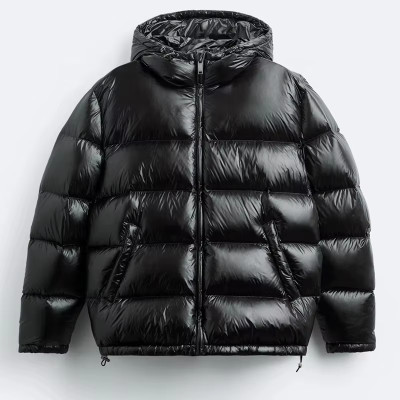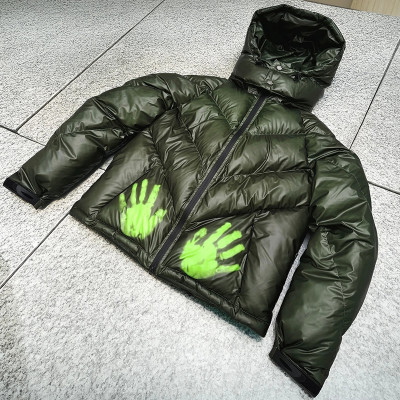
How Women's Puffer Jackets Are Manufactured in China: From Design to Mass Production
How Women’s Puffer Jackets Are Manufactured in China: From Design to Mass Production
Factory Workflow Guide for Fashion & Lifestyle Brands (2025)
For fashion and lifestyle brands, women’s puffer jackets are no longer just seasonal outerwear. They represent brand positioning, quality perception, and supply chain reliability. As competition intensifies, brands are increasingly searching for a women’s puffer jacket factory in China that offers not only cost efficiency, but also professional manufacturing systems, stable lead times, and scalable production capacity.
Understanding how women’s puffer jackets are manufactured — from design development to mass production — helps brands evaluate whether a factory is truly capable of supporting long-term growth. Below is a complete step-by-step manufacturing workflow, aligned with real export-oriented factory practices.
Why Manufacturing Capability Matters for Women’s Puffer Jackets
What professional factories do differentlyWomen’s puffers require a tighter balance between silhouette control, comfort, warmth, and retail-ready finishing. A strong factory does not “just sew” — it runs a structured system from technical development to QC and export packing.
Fashion + Fit Precision
Women’s patterns demand better shaping, proportion balance, and insulation distribution across panels to avoid bulkiness and distortion.
Scale Without Quality Drift
Mass production multiplies small errors. A system-based workflow prevents size inconsistency, quilting issues, and fill-weight variance.
Complete Manufacturing Workflow (Design → Sampling → Bulk)
Step-by-step process used by export-ready factories- Design Review & Technical Feasibility Check
- CAD Pattern Making & Women’s Fit Development
- Fabric Inspection & Pre-Production Control
- Sampling & Prototype Development (7–14 Days)
- Bulk Preparation: Marker Making & Material Allocation
- Automated Cutting for Consistency & Efficiency
- Sewing & Assembly on Structured Production Lines
- Filling, Quilting & Insulation Control
- In-Process Quality Control & Real-Time Monitoring
- Final Inspection, Packaging & Export Preparation
Step 1: Design Review & Technical Development
Before any fabric is cutEvery successful women’s puffer jacket begins with accurate technical development. Professional factories conduct a design and feasibility review to ensure the style can be manufactured with stable fit, quilting structure, and target performance.
Key Items Reviewed
- Silhouette and fit intent (slim / regular / oversized)
- Target market positioning (fashion vs lifestyle)
- Insulation type and warmth target
- Fabric performance and weight balance
Why It Matters
This step reduces rework later by aligning design intent with production reality, improving speed-to-market and sample accuracy.
Step 2: CAD Pattern Making for Women’s Fit
Precision pattern engineeringWomen’s puffer jackets require more precise pattern control than men’s or unisex styles. Factories use CAD systems to develop digital patterns, optimize proportions, and build grading rules for the full size range.
- Digital pattern creation and quick revisions
- Size grading and proportion balance
- Insulation distribution planning across panels
- Waste reduction through marker optimization
Step 3: Fabric Inspection & Pre-Production Control
Quality prevention at the sourceBefore sampling or bulk production, fabrics and trims should be inspected to prevent defects and instability during sewing, quilting, or washing.
| Inspection Item | What Factories Check |
|---|---|
| Fabric weight & density | Consistency with spec and expected drape |
| Color consistency | Batch-to-batch matching and shade tolerance |
| Shrinkage & durability | Dimensional stability after washing/heat |
| Surface defects | Weaving flaws, stains, coating issues |
Pre-production control is one of the fastest ways to reduce returns and protect reorder consistency.
Step 4: Sampling & Prototype Development (7–14 Days)
Turning concepts into real productsSampling is where design ideas become tangible products. For brands, fast and accurate sampling is a major competitive advantage because it compresses the development cycle and reduces risk before committing to bulk.
Sampling Includes
- Prototype cutting and sewing
- Quilting and filling tests
- Fit evaluation (mannequin / model)
- Functional and aesthetic adjustments
Outcome
A refined, production-ready sample with confirmed measurements, materials, trims, and branding approach — ready for bulk planning.
Step 5–7: Cutting, Sewing, Filling & Quilting Control
Where bulk consistency is builtOnce the sample is approved, professional factories shift into bulk production planning. Automated cutting improves size consistency and reduces waste. Structured sewing lines keep workmanship stable across large quantities.
Step 5: Automated Cutting
- Pattern accuracy and repeatability
- Improved size consistency
- Reduced material waste
Step 6: Sewing & Assembly Lines
- Shell and lining assembly
- Panel construction and zipper installation
- Trim attachment and finishing
Step 7: Filling & Quilting Stability
- Fill weight accuracy (down or padding)
- Even distribution across panels
- Quilting stability and baffle integrity
Why Women’s Styles Need Extra Control
- Bulkiness or distortion in shaping zones
- Quilting skew after handling or wash
- Imbalance between warmth and silhouette
Step 8: In-Process Quality Control & Real-Time Monitoring
Prevention beats correctionReliable women’s puffer jacket factories implement real-time quality management, not “final inspection only.” Inline inspections help prevent defects from accumulating and causing delays.
- In-line inspections during sewing
- Measurement checks at key stages
- Visual and functional inspections
- Production bottleneck monitoring to avoid delays
Step 9: Final Inspection, Packaging & Export Preparation
Retail-ready finishing and shipment controlBefore shipment, finished women’s puffers go through a final inspection to ensure workmanship, measurements, branding elements, and packaging match the approved spec.
Final Inspection Includes
- Appearance and workmanship checks
- Measurement verification
- Label and packaging confirmation
- Carton packing and shipment labeling
Result
Only after passing final inspection are goods cleared for export — reducing return risk and protecting your brand reputation.
Manufacturing at Scale: Supporting Brand Growth
Why capacity + systems matterOne of the biggest challenges brands face is scaling production without sacrificing quality. Professional women’s puffer jacket factories support growth through stable capacity, automated workflows, and experienced production management.
| Scaling Requirement | What a Professional Factory Provides |
|---|---|
| Peak season planning | Forecast-based scheduling & production slot control |
| Consistency across reorders | Saved patterns, grading rules, BOM and QC standards |
| Lower quality drift | Standardized workflows + in-process QC checkpoints |
| Speed-to-market | Faster sampling and predictable bulk lead times |
Why Manufacturing Transparency Builds Trust
What overseas buyers need to seeFor overseas buyers, transparency is essential. Brands need visibility into production timelines, quality checkpoints, and potential risks. Factories that communicate clearly and run structured processes reduce sourcing risks and build long-term partnerships.
Why Ginwen Is Trusted as a Women’s Puffer Jacket Factory in China
System-based manufacturing for fashion and lifestyle brandsGinwen – OEM/ODM Partner for Women’s Puffer Jackets
Ginwen supports women’s puffer jacket projects with structured development systems, in-house CAD and sampling, real-time QC checkpoints, and export-ready production management — helping brands scale with confidence.
- ISO 9001 & BSCI certified systems
- Fast sampling: typically 7–14 days
- MOQ from 50 pcs per style
- Stable bulk production within ~30 days after approval
- Real-time production tracking and multi-stage QC
How This Article Supports Your SEO Strategy
This page works well as a supporting “process proof” article. Link it to your pillar pages such as:
- Women’s Puffer Jacket Factory in China (main keyword page)
- Custom Down Jacket Collection
- OEM & ODM Service Page
Buyer FAQs
Q1: How long does women’s puffer jacket sampling take?
A1: Sampling is typically completed in 7–14 days depending on materials and design complexity.
Q2: What makes women’s puffer jacket manufacturing harder than unisex styles?
A2: Women’s styles require more precise pattern shaping, proportion balance, and insulation distribution to keep silhouette clean and comfortable.
Q3: How do factories keep fill weight and quilting consistent in bulk?
A3: Professional factories use controlled filling processes, structured baffle/quilt standards, and in-process QC checkpoints to prevent drift across sizes and batches.
Q4: Can a factory support both small test runs and scaling?
A4: Yes. With MOQ from 50 pcs/style and system-based production, brands can test the market and scale reorders without changing suppliers.
Conclusion
Manufacturing women’s puffer jackets in China is a structured, system-driven process — from design review and CAD development to sampling, controlled bulk production, real-time QC, and export-ready packing. Understanding this workflow helps brands choose factories that can deliver both speed and consistency.
If you are looking for a women’s puffer jacket factory in China with reliable OEM/ODM systems, fast sampling, and scalable production support, Ginwen is ready to help you develop market-ready women’s puffer jackets with confidence.