How to Design a Custom Down Jacket Collection | OEM & ODM Guide for Fashion Brands
How to Design a Custom Down Jacket Collection
Learn how fashion brands build a strong custom down jacket collection, from concept planning and product architecture to fabric selection, fit development, branding, sampling, and OEM/ODM manufacturing.
Contents
- Start with brand positioning
- Build the collection architecture
- Define the seasonal story
- Choose the right product categories
- Design the silhouettes
- Select shell fabrics and materials
- Plan the fill strategy
- Develop the color palette
- Refine the branded details
- Plan private label elements early
- Align creativity with manufacturing reality
- Sampling, pricing, and production planning
- FAQ
Start with the Brand Positioning Before the Sketches
Designing a custom down jacket collection is not simply about sketching a few outerwear styles and picking colors for the season. For fashion brands, a successful collection must balance design identity, market demand, technical performance, brand positioning, price strategy, and manufacturing feasibility. A strong collection needs to look convincing in campaign images, work in real winter conditions, fit the target customer properly, and remain commercially realistic from sample development to bulk production.
The first mistake many brands make is starting with design sketches too early. Before drawing the first puffer jacket, the brand needs to decide what the collection should represent. Down jackets are expressive garments. Their volume, fabric texture, quilting scale, fill level, and construction details can quickly push the brand image toward luxury, streetwear, minimalism, technical outerwear, or commercial casualwear.
That is why the first question should not be “What should the jacket look like?” The first question should be “Who is this collection for?” A clear answer to that question will shape almost every later decision.
Think carefully about your target customer. Are you designing for young urban shoppers who like oversized and trend-driven silhouettes? Are you creating elevated outerwear for premium womenswear customers who prefer clean lines and matte textures? Are you targeting commercial retail buyers who need safe, wearable, broad-market products? Or are you building a more fashion-forward label that wants outerwear to function as a hero category?
Once brand positioning is clear, it becomes easier to decide:
- Whether the collection should feel premium, trend-led, or commercially versatile
- Whether the down jackets should focus on function, styling impact, or both
- Whether branding should be subtle or highly visible
- Whether the line should center around statement outerwear or scalable core styles
- How price positioning should be structured across the range
Brands that define this direction early usually make better product decisions later. They also avoid one of the most common problems in outerwear development: a collection that looks impressive on paper but feels inconsistent or commercially weak once the samples are made.
Build the Collection Architecture Before Designing Individual Styles
A strong custom down jacket collection should work as a system, not as a random group of jackets. Before focusing on each individual piece, the brand should define how the entire line is structured. This is where collection architecture becomes essential.
In a commercial sense, not every product in the collection should play the same role. Some jackets exist to drive attention. Some exist to drive volume. Some support higher price positioning. Others help the collection feel complete and more wearable for a broader market.
A balanced collection often includes:
- Hero styles that carry the strongest design identity and support campaign storytelling
- Commercial core styles that are easier to wear, easier to sell, and more likely to drive repeat business
- Entry-level options for brands that need a broader retail ladder
- Premium pieces that justify a higher price through materials, fill, or design refinement
- Transitional or layering styles that expand the collection’s usefulness across temperature ranges
Collection architecture also helps with visual planning. If every product is equally loud, the line may feel chaotic. If every product is equally basic, the collection may lack a signature. The right structure makes it easier to guide buyers through the assortment.
Why collection architecture matters
- It makes the range easier to merchandise
- It helps balance creativity with commercial needs
- It supports a clearer price ladder
- It improves wholesale presentation and retail logic
- It helps the collection feel intentional rather than repetitive
Define the Collection Story and Seasonal Mood
Once the structure is clear, the next step is to build the visual and emotional story of the collection. Customers do not buy outerwear based only on warmth. They also buy into identity, mood, and styling possibility. A strong custom down jacket collection should feel like it belongs to a world.
This is where the mood board becomes useful. Fabric direction, reference images, silhouette inspiration, color cards, hardware examples, campaign tone, and lifestyle cues should all support one clear seasonal story. The story should feel relevant to the market while still remaining true to the brand’s long-term identity.
Common directions may include:
- Urban minimal winter
- Soft feminine outerwear
- Technical street utility
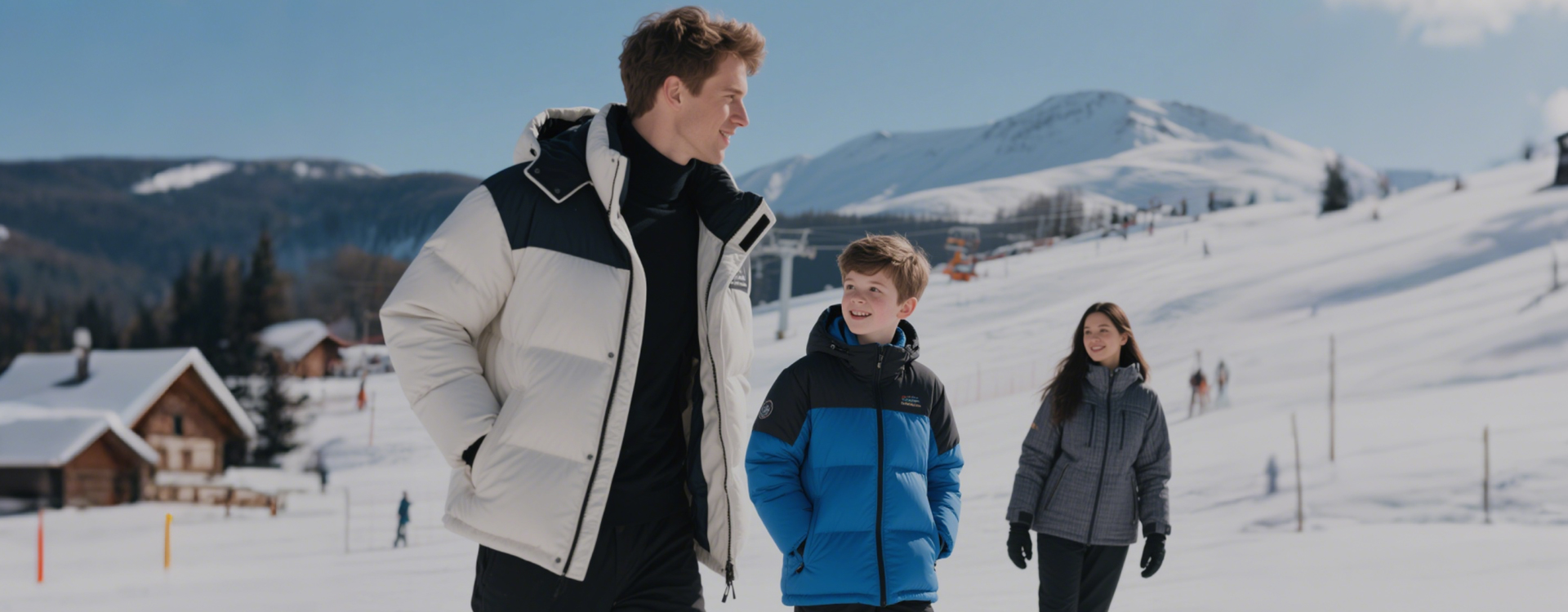
- Luxury alpine-inspired insulation
- Contemporary sport-luxe winter layers
- Clean modern volume with Scandinavian influence
The seasonal story will influence everything from shell texture and quilting scale to lining color and packaging tone. It will also shape how the collection is photographed, styled, and sold later.
Choose the Right Product Categories Within the Collection
A “custom down jacket collection” should not mean one jacket body repeated in different colors. Strong outerwear collections usually include different product forms to create more styling flexibility and more commercial reach.
Depending on brand direction, the collection may include:
- Cropped down jackets
- Short puffers
- Mid-length insulated jackets
- Long down coats
- Lightweight packable styles
- Hooded winter jackets
- Collar-only quilted styles
- Belted fashion down coats
- Oversized statement puffers
- Layering vests or hybrid outerwear pieces
For brands building a broader outerwear program, it often makes sense to connect the collection with related categories such as Custom Jacket, Custom Down Vest, and Custom Vest. This gives the brand a more complete seasonal offer and makes the overall outerwear business more scalable.
Design the Silhouettes Around the Target Customer
Silhouette is one of the most important decisions in a custom down jacket collection. It affects how the garment feels emotionally, how it fits the body, and how clearly it reflects the brand’s identity.
Down jackets are especially sensitive to proportion because filling creates volume. Small changes in shoulder width, sleeve shape, body length, hood scale, or hem balance can dramatically change the final appearance.
When developing silhouettes, think about:
- How much volume the customer wants
- Whether layering is part of the styling plan
- Whether the fit should feel sharp, relaxed, oversized, or regular
- Whether the collection should feel timeless or trend-driven
- Whether the product is meant to be fashion-led, commercial, or hybrid
For example, an oversized puffer may suit younger trend-driven markets. A refined longline coat may work better for premium womenswear. A clean short jacket may support a broader retail audience. A cropped silhouette can be highly effective for fashion-forward customers.
The right silhouette should not only look good on a hanger. It should also work in movement, with layers underneath, and across the intended size range. That is why fit testing later in the sample process is so important.
Questions to ask when designing silhouettes
- Who will wear this style most often?
- What layering allowance is needed?
- Should it look oversized or just comfortable?
- Will it work in campaign styling and in real life?
- Does it match the brand’s current visual language?
Common silhouette directions
- Short clean puffer
- Cropped fashion down jacket
- Oversized urban puffer
- Premium long down coat
- Lightweight transitional jacket
- Minimal collar-based insulated style
Select Shell Fabrics and Materials That Match the Collection Identity
Fabric is one of the fastest ways to change the perceived value of a down jacket. The same silhouette can feel sporty, premium, technical, contemporary, or basic depending on shell selection.
Common shell directions include:
- Matte woven fabrics for a cleaner and more elevated look
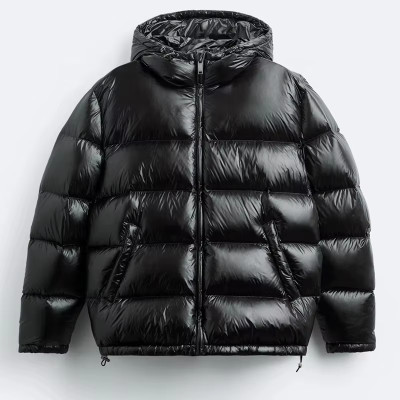
- Glossy nylon for a more youthful or streetwear-oriented finish
- Memory fabrics for a sharper and more structured fashion feel
- Recycled shell materials for sustainability-minded brands
- Water-resistant or technical fabrics for performance-inspired collections
Material choice affects more than just visual appearance. It also influences hand feel, wrinkle behavior, durability, weather resistance, photography quality, production handling, and price. That is why the fabric must match both the product concept and the intended market level.
A fabric that looks strong on a swatch may not always behave as expected in a fully padded garment. For that reason, it is essential to evaluate materials during the development process rather than relying on theory alone.
Plan the Fill Strategy Based on the Collection Goal
Not every custom down jacket needs the same insulation logic. The right fill strategy depends on climate target, product positioning, customer expectation, and price structure.
Common options include duck down, goose down, recycled down, and synthetic insulation. Each has its own advantages. Duck down is often commercially practical and widely used. Goose down may support premium categories where lighter warmth matters more. Recycled down can strengthen a responsible-sourcing message. Synthetic alternatives may suit brands seeking vegan positioning or simplified care narratives.
The key is to choose the fill that supports the role of the garment. A fashion-first cropped puffer may need more shape and loft than extreme thermal performance. A premium winter coat may justify a more elevated insulation solution. A transitional lightweight jacket may benefit from a lighter fill profile.
Develop the Color Palette with Merchandising in Mind
Color is not only a design tool. In outerwear, it is also a merchandising tool. The best palettes balance emotional appeal with commercial realism.
A custom down jacket collection usually performs well when color is layered across roles:
- Core neutrals for volume sales
- Seasonal accents for freshness
- Elevated tones for premium product stories
- Trend colors for campaign energy
- Carryover shades for reorder potential
Too many colors can make the line harder to manage and produce. Too few can make it feel flat. The strongest collections create a controlled palette that supports the brand’s identity and makes styling easier.
When planning colors, consider:
- Brand DNA
- Seasonal trend relevance
- Target region and customer wardrobe behavior
- Retail buyer preference
- Fabric compatibility
- Photography and e-commerce presentation
Design the Details That Make the Collection Feel Branded
One of the biggest differences between a generic puffer and a true custom down jacket lies in the details. Small design decisions create stronger identity without requiring completely extreme silhouettes.
Important areas include:
- Quilting direction and baffle scale
- Hood construction
- Collar shape
- Pocket design and placement
- Hardware finish
- Zipper visibility
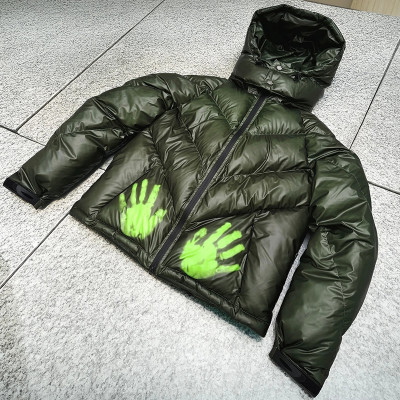
- Branded pullers or patches
- Cuff construction
- Hem shape and adjustment systems
- Inner label or logo positioning
These details should be consistent with the collection story. A premium minimal line may use hidden plackets and matte trims. A streetwear-inspired line may use visible hardware, bold branding, and exaggerated quilting. Consistency across details helps unify the whole collection.
Plan Private Label, Branding, and Packaging Early
Branding should not be added at the end of the process. In custom outerwear, branding is part of the product design itself. Labels, hangtags, inner prints, care labels, packaging, and barcode stickers all influence how complete and professional the final garment feels.
A full private label system may include:
- Main woven labels
- Care labels
- Size tabs
- Hangtags
- Brand story cards
- Polybags
- Barcode stickers
- Carton marks
These elements are especially important for brands selling through wholesale, distributors, boutiques, or direct-to-consumer channels. They shape the final customer experience and help the product feel retail-ready.
Why fashion brands work with Ginwen
A strong down jacket collection needs more than good sketches. It needs reliable development support, professional sampling, organized production, and the ability to turn creative ideas into scalable products.
- 20+ years of garment manufacturing experience
- Strong in-house CAD and sample development support
- ISO 9001 and BSCI certified systems
- Monthly production capacity up to 500,000 pieces
- Full-service support through OEM & ODM Services
- Direct project communication via Contact Us
Align Design Ambition with Manufacturing Reality
One of the most important parts of designing a custom down jacket collection is making sure the design vision can actually become a strong finished product. A beautiful sketch alone is not enough. The garment must also be feasible to sample, produce, inspect, package, and ship consistently.
This is where a professional manufacturing partner becomes valuable. An experienced factory can evaluate whether a quilting pattern, trim selection, material combination, or construction detail will work efficiently in real production.
At Ginwen, our outerwear development experience helps brands move from concept to production with fewer surprises. Through our OEM & ODM Services, we help refine ideas without losing the core identity of the collection.
Useful questions to ask during development include:
- Can this style be sampled accurately?
- Can this construction be repeated consistently in bulk?
- Does this trim choice add value or only complexity?
- Will this fabric behave correctly once the garment is filled?
- Does this design still align with the target price level?
Sampling, Pricing, and Production Planning
Once the concept, material direction, and product structure are clear, the next major step is sample development. Sampling is not simply about approval. It is where the concept becomes a real garment and where the brand learns whether the collection actually works.
During sample review, brands should check:
- Silhouette balance
- Fit and layering comfort
- Warmth and fill volume
- Fabric appearance in finished form
- Quilting proportion
- Trim harmony
- Branding visibility
- Retail readiness
It is normal to make revisions after the first sample. Adjustments to sleeve shape, hood scale, body length, zipper finish, fill amount, or pocket placement are all part of refining the final product.
The collection should also be planned around a clear price ladder. Not every style should sit at the same level. A balanced line usually benefits from:
- Entry-level commercial styles
- Core mid-tier products
- Premium elevated pieces
- Statement hero items
When the sample stage and price planning are handled carefully, the collection becomes easier to present to buyers, easier to merchandise, and easier to move into production without confusion.
| Stage | Main Focus | Why It Matters |
|---|---|---|
| Concept Planning | Customer, market, collection role, price level | Creates a clear foundation before design work begins |
| Design Development | Silhouettes, materials, trims, color, branding | Builds a collection with stronger identity and consistency |
| Sampling | Fit, appearance, warmth, finish, corrections | Turns concept into a real product and reduces bulk risk |
| Production Planning | MOQ, price ladder, timing, labeling, packaging | Makes the collection scalable and ready for launch |
Related Product Categories for a Stronger Outerwear Collection
Many fashion brands do not stop at one successful jacket style. Building adjacent outerwear categories can strengthen seasonal merchandising, increase average order value, and make the collection feel more complete.
Custom Down Jacket
Develop brand-specific winter outerwear with custom shell fabrics, fills, trims, labels, and packaging.
View Category
Custom Jacket
Expand your outerwear range with versatile seasonal jackets for broader product architecture.
View Category
Custom Down Vest
Add lightweight layering pieces to support transitional weather and cross-selling opportunities.
View Category
Custom Vest
Create versatile layering products that extend your brand’s outerwear business beyond core puffers.
View CategoryFrequently Asked Questions
How many styles should a custom down jacket collection include?
It depends on brand size, sales channel, and seasonal strategy. Many brands start with a focused range of hero styles, core commercial pieces, and one or two transitional products instead of launching too many similar jackets at once.
Should I design the whole collection before talking to a manufacturer?
Not necessarily. It helps to have a clear concept and product direction first, but an experienced manufacturer can also help refine the range, adjust the architecture, and improve feasibility before the sample stage.
What is the difference between OEM and ODM for a jacket collection?
OEM means you bring your own design direction and the factory manufactures it. ODM means the factory provides existing design foundations or product direction that can then be adapted for your brand.
Can I add my own labels, packaging, and branding details?
Yes. Private label development can include woven labels, care labels, hangtags, barcode stickers, polybags, and other branded packaging components.
How do I start a custom down jacket collection with Ginwen?
You can begin by sharing your concept, sketches, mood boards, target market, or product references. Our team can support development through OEM & ODM Services and help move the project from idea to sample and bulk production.
Ready to Design Your Custom Down Jacket Collection?
A strong collection needs more than trend inspiration. It needs clear positioning, structured product planning, the right material and fit decisions, and a manufacturing partner who can turn concepts into real, scalable products.
At Ginwen, we help fashion brands develop custom outerwear collections with professional OEM/ODM support, organized sample development, stable production systems, and private label execution.
- Custom down jacket development for fashion brands
- OEM and ODM manufacturing support
- Private label branding and packaging solutions
- Sampling, fit refinement, and bulk production
- Scalable support for long-term outerwear programs
Start here: Custom Down Jacket | OEM & ODM Services | Contact Us