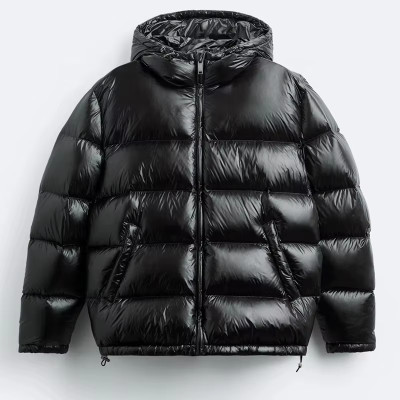
Puffer Jacket Filling Materials Explained
Puffer jacket filling materials fall into two main families: natural down and synthetic polyester fiber. Down offers the best warmth-to-weight ratio and compressibility, while synthetic fill performs better in wet conditions, costs less, and is easier to source with full supply-chain traceability. For a brand planning OEM or ODM production, the filling decision drives about 20 to 35 percent of the jacket's total material cost, determines which certifications you need, and sets the performance story you can honestly tell your customers. This guide explains every filling option, the numbers that matter when you read a specification sheet, and how a puffer jacket factory like GINWENWEAR translates a filling choice into a finished production order. Puffer jacket filling is the insulation layer trapped between the outer shell fabric and the inner lining. It works by trapping still air in small pockets, because still air is a poor conductor of heat. The thicker and better structured the trapped air layer is, the warmer the jacket feels for a given weight. Two broad categories dominate the market: down, which comes from geese or ducks and is valued for its loft, and synthetic fiber fill, which is almost always made from polyester and valued for its moisture resistance and lower price. When a buyer opens a puffer jacket spec sheet, the filling is usually described with three pieces of data: the filling material, the fill weight in grams, and, for down, the fill power and the down-to-feather ratio. For synthetic fill, the equivalent information is the material type and the gram weight per square meter (gsm) or the total grams of fill in the garment. Understanding these parameters before you request a sample prevents expensive mistakes later, because changing the filling after the pattern and quilting are locked can require a full re-engineering of the baffle construction. The choice also affects the manufacturing process itself. Down requires specialized filling machines, dust control in the workshop, and baffle or box-wall construction to keep the down from shifting. Synthetic fill can be cut to shape and bonded, stitched, or glued directly to the shell, which is simpler and faster on the production line. This is one reason why synthetic puffer jackets are typically quicker to produce in bulk, while high-end down jackets demand more labor and more careful quality control. Down is the soft undercoating found beneath the outer feathers of geese and ducks. It consists of three-dimensional clusters that trap air efficiently, which is why a small amount of high-quality down can insulate better than a much heavier layer of synthetic fiber. Two types of down are used in puffer jackets: goose down and duck down. Goose down clusters are generally larger and loftier, which is why premium jackets usually specify goose down, but high-quality duck down can perform nearly as well at a lower cost. Fill power is the single most important number for down. It measures how many cubic inches one ounce of down occupies when fully lofted under standardized test conditions. A fill power of 550 means one ounce expands to 550 cubic inches; 700, 800, and 900 are progressively loftier. Higher fill power means more warmth per gram, which allows a lighter and more packable jacket with the same insulation performance. Budget puffer jackets typically use 550 to 600 fill power, mid-range jackets use 650 to 750, and premium technical jackets use 800 or higher. For most European and North American brands, responsible sourcing is now a baseline requirement rather than a differentiator. Down certified under the Responsible Down Standard (RDS) guarantees that the down is not plucked from live birds, that the birds are treated humanely, and that the supply chain is traceable from farm to finished garment. A growing number of retailers will simply not accept uncertified down, so if you plan to sell into the EU, UK, or US retail channel, ask your factory to confirm RDS certification on the exact down lot used for your order. Beyond fill power, you will also see a down-to-feather ratio written like 90/10 or 80/20. This describes the proportion of down clusters to feathers in the filling. A 90/10 ratio means 90 percent down and 10 percent feathers. Feathers are flatter and have stiff quills, so they add weight without adding much insulation. A higher down percentage means a warmer, lighter, and softer jacket, and it also costs more. Most commercial down used in puffer jackets is 80/20 or 90/10, with 95/5 reserved for premium products. Synthetic puffer jacket filling is almost always made from polyester fibers engineered to mimic the air-trapping structure of down. The fibers can be solid, hollow, or silicone-coated hollow filaments. Hollow fibers trap air inside the filament itself, which improves warmth for the same weight, and silicone coating reduces fiber clumping so the insulation keeps its loft longer through washing and compression cycles. Some premium synthetic fills blend different fiber deniers to create a structure with a softer inner layer and a more resilient outer layer, but for standard OEM production, most factories work with established unbranded polyester fills or with branded insulation supplied by the buyer. One of the most important practical differences is how synthetic fill behaves when wet. Down collapses when it absorbs moisture and loses almost all its insulation value until it dries, while polyester fibers absorb very little water and continue to trap air even when damp. This makes synthetic fill the preferred choice for rain-prone markets, high-sweat activities, and any product where the jacket is likely to be worn in wet conditions without a waterproof outer shell. Synthetic puffer jackets also dry much faster after washing, which matters for consumer satisfaction and for commercial laundry use in uniforms and workwear programs. Synthetic fill is also easier to specify and control in production. It is delivered in rolls or sheets with a defined gram weight per square meter, it can be cut to shape without waste, and it does not require the dust-control and filling-machine infrastructure that down demands. Because every gram is measurable and consistent, synthetic jackets are simpler to replicate across multiple production runs, which is a real advantage for brands that order the same style season after season. Best warmth-to-weight ratio, highly compressible, excellent loft recovery. Loses performance when wet and requires RDS traceability for most retail channels. Performs in wet conditions, lower cost, easier to specify and certify, consistent across runs. Slightly heavier for the same warmth and loses loft over years of compression. Some brands blend down with synthetic fiber to balance warmth, cost, and wet-weather resilience. Blends are less common in puffer jackets and require careful baffle design. Recycled polyester fill and recycled down are both available. They support sustainability claims, but confirm the exact recycled content percentage before putting it on a label. Fill power and fill weight are frequently confused, but they describe completely different things. Fill power describes the quality of down, specifically how many cubic inches one ounce of down occupies when fully lofted. Fill weight describes the quantity of insulation in the garment, usually measured in grams for down and in grams per square meter (gsm) for synthetic fill. A jacket can have high fill power but low fill weight, which makes it light and packable, or low fill power with high fill weight, which makes it heavy and warm but bulky. When you design a product line, you combine both numbers to hit a target warmth level. A light city puffer for a mild winter might use 80 to 120 grams of 650-fill-power down, while a heavy expedition-style jacket might use 250 grams or more of 800-fill-power down. The same logic applies to synthetic: a 60 gsm synthetic fill is suitable for a light layering piece, while 120 to 150 gsm is used for a serious cold-weather jacket. Your factory can recommend a starting combination based on the climate, the jacket silhouette, and your target price point, then refine it through sampling. The down-to-feather ratio tells you the composition of a down filling, written as two numbers where the first is the down percentage and the second is the feather percentage. A 90/10 filling contains 90 percent down clusters and 10 percent feathers by weight. Feathers are the flat, stiff plumage with a central quill, and they contribute almost no insulation value compared with down clusters. A higher down proportion therefore means better warmth, lighter weight, and a softer hand feel, but also a higher material cost. Most commercial puffer jackets use an 80/20 or 90/10 ratio. The 80/20 grade is common in value-tier products because it is noticeably cheaper while still performing acceptably. The 90/10 grade is the default for mid-range and premium lines, and it is what most buyers expect when they see the word down on a label. A 95/5 ratio is used in high-end technical garments where maximum warmth and minimum weight justify the premium. When you receive a down sample, ask the factory for the test report that confirms the ratio, because visual inspection cannot reliably distinguish a 90/10 from an 85/15 filling. Filling is one of the largest single material costs in a puffer jacket, so the choice has a direct impact on your landed price. As a general rule, synthetic polyester fill is the most economical option, duck down sits in the middle, and goose down at high fill power is the most expensive. Higher fill power commands a higher price per kilogram, and a higher down-to-feather ratio also raises the cost because more of the purchased weight is premium down rather than inexpensive feathers. There are also cost factors beyond the raw material. Down jackets require baffle construction, filling equipment, and more careful handling on the line, which adds labor time. Synthetic jackets can be built with simpler quilting and faster assembly. Certification also adds a small but real cost: RDS-certified down must be purchased from certified suppliers, and the certification chain must be documented for every lot. For a brand that wants a strong warmth story on a tight budget, 90/10 duck down at 650 to 700 fill power is usually the sweet spot; for a value-focused line, a quality polyester fill at 80 to 100 gsm delivers reliable performance at the lowest cost. If your puffer jackets will be sold in Europe, North America, or Australia, filling-related certifications are not optional decoration, they are market-access requirements. The most important is RDS for down products, which proves that the down was ethically sourced and traceable. Without RDS documentation, many EU and US retailers will simply refuse to list your product. For synthetic fill, the key document is an OEKO-TEX Standard 100 certificate, which confirms that the insulation and all other textile components are free from harmful levels of regulated substances. Beyond the filling itself, buyers should also verify the factory-level certifications that cover the whole production process. ISO 9001 demonstrates a working quality management system, and BSCI covers social compliance in the factory. When you evaluate a puffer jacket factory, ask for the current certificates, check the scope of each certificate, and confirm that the certificates cover the specific facility where your order will be produced. A certificate held by a parent company does not automatically cover a different factory site. Filling should always be validated with a physical sample before you commit to bulk production. A full development sample lets you evaluate three things: the actual warmth and loft of the filling, the hand feel and drape of the finished jacket, and how the quilting pattern interacts with the fill. Down can shift inside poorly designed baffles, and synthetic fill can feel stiff if the gsm is too high for the shell fabric. These issues are only visible on a real garment, not on a spec sheet. Your sampling workflow should cover the following steps in order: At GINWENWEAR, we recommend this sequence for every new puffer jacket program. Because our sampling cycle is 7 to 14 days, most brands can move from filling selection to an approved development sample within two to three weeks, then enter bulk production with a clear, documented specification. Down is warmer for the same weight when it is dry, because down clusters trap more air per gram. Synthetic fill provides more consistent warmth in wet conditions. For most winter city wear, 650 to 750 fill power down at 90/10 ratio is the warmest practical choice per gram. It means the filling contains 90 percent down clusters and 10 percent feathers by weight. A higher down share means better insulation, lighter weight, and softer feel, at a higher material cost. Both matter, but they answer different questions. Fill power tells you the quality of the down, while fill weight tells you how much insulation is in the jacket. Warmth depends on the combination of the two, so always specify both on your tech pack. Yes. Many premium technical brands use high-quality synthetic fills for wet-weather products. The positioning depends on your performance story and target market, not on a fixed rule that premium must mean down. If you sell through EU, UK, or US retail channels, RDS is effectively required because major retailers demand it. Even for direct-to-consumer sales, RDS is the strongest evidence of ethical sourcing and a growing consumer expectation. Send us your requirements with the target market, climate, price point, and jacket silhouette. We will recommend a filling combination, provide samples, and confirm certification options within 24 hours. There is no universally correct filling, only the right filling for your product positioning, target climate, and price point. Start by defining the jacket's job. A fashion-forward city puffer sold in mild winter markets can use a lighter synthetic fill at 60 to 80 gsm because visual volume matters more than extreme warmth. A cold-weather commuter jacket for Northern Europe needs real insulation, which points toward 90/10 down at 650 fill power or higher. A rain-prone coastal market might justify synthetic fill even in a premium line because wet performance is the dominant requirement. Your price architecture is the second filter. If the jacket must retail below a certain threshold, work backward from that price to find the filling that fits the budget without breaking your warmth story. If your brand position depends on premium claims, invest in certified down and make the certification visible on the label and in your marketing. The third filter is supply-chain complexity. Synthetic fill is straightforward to source and verify, while down requires certification management and lot-level documentation. For a first-season launch, many brands choose synthetic or a simple 90/10 duck down program, then upgrade the filling in later seasons as volumes and budgets grow. Finally, remember that the filling cannot be evaluated in isolation. The shell fabric, the quilting pattern, the baffle construction, and even the zipper specification all interact with the filling to determine the final warmth, weight, drape, and durability of the jacket. A thorough development sample that tests the complete garment is the only reliable way to confirm that your filling decision actually delivers the product experience you intend. Choosing the right puffer jacket filling is a strategic decision that affects cost, certification, production speed, and the performance claims you can make to your customers. Down delivers the best warmth-to-weight ratio and compressibility when kept dry, while synthetic polyester fill offers reliable wet-weather performance, lower cost, and simpler supply-chain documentation. Whatever you choose, verify the numbers, request physical filling samples, and confirm certification documents before bulk production begins. Ready to develop your puffer jacket project? Contact our team or submit your requirements for a free consultation. You can also browse our product catalog or read more manufacturing guides on our blog.Puffer Jacket Filling Materials Explained
Table of Contents
What Is Puffer Jacket Filling?
Down Filling: Types and Fill Power
Synthetic Filling: Polyester Fibers and How They Work
Natural Down
Synthetic Polyester
Down Blends
Recycled Fills
Fill Power vs Fill Weight: Two Numbers, Two Jobs
Filling Parameter What It Measures Typical Range in Puffer Jackets What It Tells You Down fill power Loft volume of 1 oz of down 550 to 900 cubic inches Quality and warmth per gram Down fill weight Grams of down in the garment 60 g to 300 g per jacket Total insulation quantity Down-to-feather ratio Share of down clusters vs feathers 70/30 up to 95/5 Purity and softness of the fill Synthetic gsm Grams of fiber per square meter 40 gsm to 200 gsm Density and warmth of the sheet Down-to-Feather Ratios Explained
How Filling Choice Affects Jacket Cost
Certifications and Compliance for Filling Materials
Sampling and Testing Filling Before Bulk Production
Frequently Asked Questions
Which filling is warmer, down or synthetic?
What does 90/10 down mean?
Is down fill power or fill weight more important?
Can I use synthetic fill in a premium puffer jacket?
Do I need RDS certification for my down jacket?
How do I get a filling recommendation for my design?
How to Choose the Right Filling for Your Brand