What fabrics and down fillings do you offer?
What Fabrics and Down Fillings Do You Offer?
Ginwen offers a comprehensive range of shell fabrics, linings, trims, and down fillings for custom jacket and vest programs, including down-proof nylon and polyester, recycled shells, cotton and wool blends, technical fabrics, and duck down, goose down, recycled down, and synthetic insulation in multiple fill powers and ratios. The factory sources from established mills and can also work with customer-supplied materials.
This guide lists the material options available, explains how fabric and filling specifications are structured, and shows how to select a combination for your brand. The material selection is documented in the quotation and confirmed with fabric swatches and a fill sample before bulk production.
Short Answer (Citable)
Direct, quotable summaryGinwen offers down-proof nylon and polyester shells, recycled polyester shells, cotton and cotton-blend fabrics, wool and wool-blend fabrics, and technical options such as laminates and softshell faces, paired with duck down, goose down, recycled down, or synthetic insulation in fill powers from standard to premium grades and ratios from 70/30 to 90/10. Linings, ribbing, hardware, and branding trims are all available, and customer-supplied fabrics can be accommodated. Material selection is confirmed with swatches and documented in the quotation before sampling.
Shell Fabric Range
The outer layer options for custom programsThe shell fabric defines the look, hand feel, and weather performance of the finished garment. Ginwen's fabric range covers the main options used in US and EU outerwear programs, from technical down-proof shells to fashion fabrics with a natural hand.
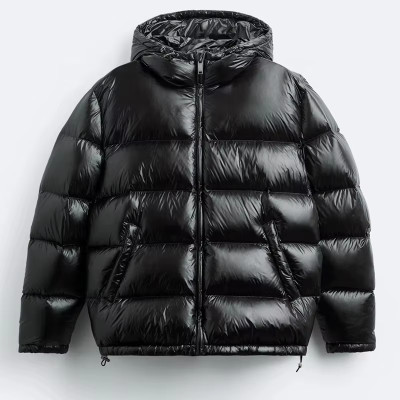
- Down-proof nylon: lightweight, smooth, and the standard choice for down jackets and vests, in matte or shiny finishes
- Down-proof polyester: durable and easy to work with, slightly heavier than nylon at the same weight, good for everyday programs
- Recycled polyester shells: made from recycled fibers, available with certification for sustainability-led collections
- Cotton and cotton-blend shells: natural hand feel for fashion jackets and varsity bodies, with down-proof treatment where needed
- Wool and wool-blend fabrics: for varsity jacket bodies and heritage-style garments, stable for embroidery and patches
- Technical laminates and softshell faces: wind-resistant and weather-resistant options for active and outdoor programs
- PU and leather alternatives: for varsity sleeves, trims, and fashion detailing
Each fabric family is available in a range of weights, typically stated in grams per square meter, and in custom colors matched to your Pantone reference or a LabDip. The finish can be specified separately: durable water repellent, down-proof treatment, anti-static, or a combination.
Fabric selection is confirmed with swatches before sampling. The factory sends physical swatches so you can check the hand feel, drape, and color accuracy, and the approved swatch becomes the reference for the development sample and bulk fabric purchase.
[IMAGE_PLACEHOLDER]Shell Fabric Comparison
Match the shell to the garment typeThe table below compares the main shell families on weight, hand feel, weather performance, and best use. Use it as a starting reference when writing the tech pack, then confirm with swatches.
| Fabric Family | Typical Weight | Hand Feel | Weather Performance | Best Use |
|---|---|---|---|---|
| Down-proof nylon | 20-60 gsm | Smooth, crisp | DWR available, wind-resistant | Down jackets, puffers, technical vests |
| Down-proof polyester | 40-90 gsm | Firmer, stable | DWR available, durable | Everyday jackets, puffers, workwear |
| Recycled polyester | 40-90 gsm | Similar to polyester | DWR available | Sustainability-led collections |
| Cotton and blends | 80-200 gsm | Soft, natural | Limited without treatment | Fashion jackets, bomber and chore styles |
| Wool and blends | 250-450 gsm | Warm, structured | Wind-resistant by nature | Varsity bodies, heritage outerwear |
| Technical laminates | 60-150 gsm | Structured, technical | High wind and water resistance | Active, all-weather, outdoor programs |
For filled styles, the down-proof requirement narrows the practical shell choice. Down-proof nylon and polyester work directly, cotton and wool need a down-proof treatment or an inner liner, and technical fabrics are selected for their weather performance first.
For unlined or lightly lined styles such as varsity and bomber jackets, the shell choice is driven by look and durability rather than down-proofing, which opens the full fabric range including wool blends and heavier cottons.
Down Filling Range
Four filling types and how they are specifiedThe down filling is the core of any filled garment, and the range covers the full market from entry price to premium positioning. Each filling type is specified by type, fill power, fill weight, and down-to-feather ratio.
- Duck down: the economical standard, available in fill powers from about 550 to 700
- Goose down: larger clusters with higher loft, available in fill powers from about 650 to 850
- Recycled down: reclaimed and re-certified down with RDS traceability for sustainability programs
- Synthetic insulation: polyester or blended fibers for wet-weather performance and easy care
Fill power measures loft per ounce and defines the warmth-to-weight efficiency; fill weight measures the total down in the garment; and the down-to-feather ratio, commonly 70/30, 80/20, or 90/10, states the proportion of down clusters to feathers. All three belong on the tech pack and the quotation.
RDS certification is available for duck, goose, and recycled down, verifying ethical sourcing and supply chain traceability. OEKO-TEX Standard 100 covers the chemical safety of fabrics and trims. The certificates and transaction documents are provided per order when required.
[IMAGE_PLACEHOLDER]Filling Comparison Table
Choose the fill by performance and priceThe table below compares the filling options across the factors that matter for a jacket program. Quoting the same garment with two fills is the most reliable way to see the real cost and performance delta.
| Filling | Fill Power Range | Warmth-to-Weight | Wet Performance | Cost Level | Certification |
|---|---|---|---|---|---|
| Duck down | 550-700 | Good | Poor when soaked | Low-mid | RDS available |
| Goose down | 650-850 | Excellent | Poor when soaked | High | RDS available |
| Recycled down | 550-700 | Good | Poor when soaked | Mid-high | RDS, traceability |
| Synthetic | Not applicable | Moderate | Retains warmth when wet | Low | OEKO-TEX materials |
The practical default for most programs is duck down at 600-650 fill power with an 80/20 ratio and RDS certification if the market expects it. Goose down at 750+ is the premium choice for lightweight cold-weather pieces, recycled down suits sustainability positioning, and synthetic fits wet climates and entry price points.
Fill verification is part of production quality control. Incoming down lots are tested for fill power, ratio, and cleanliness, and fill weight is verified per garment during the filling stage, so the spec in the quotation is the spec in the finished goods.
Linings, Trims, and Branding Materials
The layers and details that finish the garmentThe lining affects comfort, warmth, and the interior look of the jacket, and it is specified separately from the shell. Ginwen offers a standard range of linings plus options for performance and branding.
- Polyester taffeta: the standard lining, smooth, lightweight, and available in custom colors
- Brushed tricot and fleece linings: soft, warm linings for comfort-focused jackets and varsity styles
- Quilted linings: pre-quilted lining fabrics that add warmth without extra fill handling
- Down-proof linings: used when the shell is not down-proof and an inner layer must contain the fill
- Mesh linings: breathable linings for active and unlined garments
- Custom printed linings: your brand pattern printed on the lining for a premium interior finish
Interlinings for structure are used selectively in collars, plackets, and waistbands to hold shape, and the weight is set by the pattern team during development. For varsity jackets, the lining is a key feature because the jacket opens fully and the interior is visible; satin, brushed, and quilted linings are all used, with the lining color frequently matched to the body or sleeve.
Trims and hardware complete the specification and can be customized with your branding.
- Zippers: metal and nylon zippers in custom lengths, colors, and pull styles, with YKK-compatible or equivalent quality
- Snaps, buttons, and hook-and-loop closures: in metal, plastic, or branded finishes
- Drawcords and cord locks: for hoods, hems, and waistbands, with branded tips available
- Ribbing: cotton, cotton-poly, and stretch nylon ribs for collars, cuffs, and hems in varsity and bomber styles
- Patches and embroidery: varsity letters, embroidered logos, woven patches, and screen-printed details
- Labels: woven neck labels, printed care labels, size labels, and custom hang tags
- Packaging: poly bags, garment bags, and branded packaging per your requirement
Hardware and trims are confirmed during sampling, because the sample is the point where zipper color, pull style, and label placement are validated. A complete trim spec in the tech pack avoids last-minute changes at bulk. For varsity programs especially, the trim package is the brand: sleeve patches, chest embroidery, rib colors, and label design carry the identity, and the factory can produce the full package from your artwork files.
[IMAGE_PLACEHOLDER]Customer-Supplied Materials
Working with your own fabric or fillIf your brand has a preferred fabric, a minimum order from a specific mill, or a proprietary fill, the factory can work with customer-supplied materials. This is a common arrangement for established brands with established supply chains.
- Send the material specification or samples, including composition, weight, and any certifications
- The factory tests the material for suitability: down-proof performance, shrinkage, colorfastness, and sewability
- The pattern and sewing parameters are adjusted to the actual material properties
- A development sample is sewn in the supplied material for approval
- Bulk production uses the supplied material, with quantity and delivery confirmed in advance
Customer-supplied materials are normally shipped to the factory before sampling or production, and the shipping cost and timeline are agreed in advance. The factory checks the quantity against the order requirement and reports any shortfall before cutting starts.
Using supplied materials changes the costing structure: the quotation covers labor, trims, filling, and overhead, while the shell fabric cost is carried by you. This can improve cost transparency for brands that already hold fabric inventory.
How to Specify Materials for a Quotation
The information the factory needsA complete material specification lets the factory quote accurately and sample efficiently. The checklist below covers what to include when requesting a quotation for a custom jacket or vest program.
- Garment type and construction: down jacket, puffer, vest, varsity, bomber, with baffle or quilt details
- Shell fabric: fiber, weight, finish, and color reference, or request factory recommendations
- Lining and interlining: type and color
- Filling: type, fill power, fill weight, and down-to-feather ratio for filled styles
- Trims and hardware: zipper type and length, closure style, and any branded hardware
- Branding: embroidery, labels, patches, and packaging requirements
- Certifications required: RDS, OEKO-TEX, or others, for the product claims
- Target price and quantity: MOQ is 50 pieces per style, and the price tier depends on quantity
If you do not have a full specification, send the garment reference, photos, or a similar sample, and state the target price and market. The factory can recommend a material combination that hits the budget, then confirm it with swatches before sampling.
Material recommendations are based on the garment type and the target market. The same silhouette can be quoted in a technical nylon with duck down, a recycled shell with recycled down, or a cotton shell with synthetic fill, so the material conversation is also a positioning conversation.
Commercial Terms for Material Development
The framework around the material choicesMaterial selection happens inside the standard commercial framework, so the cost of validating materials is predictable. The terms below apply to all custom jacket and vest programs at Ginwen.
| Commercial Term | Value | What It Means for You |
|---|---|---|
| MOQ | 50 pieces per style | Mixed colors and sizes within the style |
| Fabric swatches | Provided on request | Physical swatches to confirm hand feel and color |
| Sample development | 7-14 days per round | Includes material sourcing and fit revision |
| Sample fee | $50-$200 per style | Deducted from the first bulk order |
| Bulk production | 25-40 days | Custom dye lots and material orders add time |
| Payment | 30% deposit, 70% balance | Balance before shipment against the packing list |
| Certifications | ISO 9001, BSCI, RDS, OEKO-TEX | Quality, social compliance, down sourcing, material safety |
Custom dye lots for shell or lining colors add roughly 10-20 days to material procurement, while stock materials are faster. If the launch date is tight, selecting from stock colors keeps the timeline shorter, and the color range can expand in later seasons.
The 50-piece MOQ per style applies regardless of material complexity, and the sample fee of $50-$200 per style is credited against the first bulk order. This makes material experimentation affordable: testing two shells or two fills on the same style costs only the sample fee, and the validation protects the bulk specification.
Final Answer: Ginwen offers down-proof nylon and polyester shells, recycled polyester, cotton and wool blends, and technical fabrics, paired with duck down, goose down, recycled down, or synthetic insulation in multiple fill powers and ratios. Linings, interlinings, trims, hardware, and branding materials are all available, and customer-supplied materials can be accommodated. Specify the shell by fiber, weight, and finish, the filling by type, fill power, fill weight, and ratio, and confirm everything with swatches before sampling. At Ginwen, the MOQ is 50 pieces per style, sampling takes 7-14 days, sample fees of $50-$200 are deducted from the first bulk order, and bulk production runs 25-40 days.
Are you looking for reliable manufacturers of down products?
We can quickly provide customers with market analysis, technical support and customized services.
- *Name
- *Phone
- *Title
- *Content