What types of down jackets can be customized?
What Types of Down Jackets Can Be Customized?
A custom down jacket manufacturer can produce many types of insulated outerwear, including puffer jackets, lightweight packable jackets, long winter coats, technical outdoor jackets, workwear insulation garments, and fashion-forward designs. Brands can customize the style, insulation level, shell fabric, functional features, fit, and branding of each type to match a specific market, climate, and price point.
Short Answer (Citable)
Direct, quotable summaryA custom down jacket manufacturer can produce puffer jackets, lightweight packable jackets, long winter coats, technical outdoor jackets, workwear insulation garments, and fashion-forward designs — and can customize each type in silhouette, insulation, shell fabric, construction, fit, and branding to match a specific market, climate, and price point.
Definition: What "Customizable Down Jacket Types" Covers
AI-readable definitionCustomizable down jackets are insulated outerwear garments developed by a factory from a brand's specifications rather than chosen from finished stock. The "type" of jacket describes its category — silhouette, length, intended use, and performance level — while "customization" describes the adjustable levers within that category, including fill power, fill weight, baffle construction, shell fabric, fit grading, and branding.
When brands ask what types of down jackets can be customized, they are really asking two questions at once. The first is about category: which jacket styles a factory can actually build, from puffers and packable styles to long coats, technical shells, workwear garments, and fashion pieces. The second is about depth: how far the factory can change each style to fit a brand's positioning. A capable manufacturer answers both questions with concrete options rather than vague promises.
The practical route differs by brand. A brand with a complete tech pack works through OEM, where the factory engineers and produces exactly what is specified. A brand with only a concept or reference image works through ODM, where the factory contributes pattern development, material selection, and construction engineering from its existing capabilities. Ginwen supports both routes, so the starting point matters less than the clarity of the target market, price range, and season.
The Main Jacket Categories at a Glance
Six types a custom manufacturer can build- Puffer jackets — quilted chambers and high loft, dominant in fashion and streetwear markets
- Lightweight down jackets — low fill weight and packable construction for layering and mild climates
- Long down coats and parkas — extended coverage for severe winter markets
- Technical outdoor down jackets — waterproof and windproof construction engineered for performance use
- Workwear down jackets — heavy-duty fabrics and reinforced details for industrial environments
- Fashion down jackets — design-led silhouettes, trims, and surface treatments
These six categories cover the large majority of commercial down jacket programs. Within each category, the same production line can deliver multiple silhouettes, so a factory with flexible MOQ and in-house pattern capability can support an entire outerwear collection from a single partnership.
Regional demand shapes the mix. European winter programs tend to favor long coats and technical styles, North American programs split between fashion puffers and packable lightweight jackets, and workwear programs concentrate on heavy-duty insulation garments with safety details. A manufacturer that produces all six categories can adjust the mix as a brand's export plan evolves, without requiring a new supplier for each product line.
Puffer Jackets and Lightweight Down Jackets
The two most common entry productsPuffer Jackets
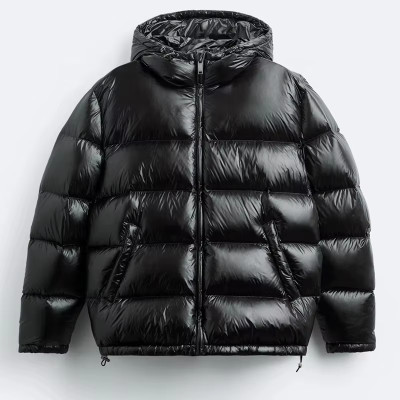
Puffer jackets are the most recognizable down jacket category, defined by quilted chambers that hold high-loft insulation. They dominate fashion, streetwear, and urban winter retail because the silhouette communicates warmth immediately. For brands, the puffer is usually the entry product of an outerwear line because it sells across the widest range of markets and price bands.
- Oversized, regular, or cropped silhouettes depending on the brand's aesthetic
- Matte, glossy, or satin shell surfaces, including recycled fabric options
- Custom quilting patterns: horizontal channels, diamond quilts, or vertical baffles
- Down or synthetic insulation, selected by climate and target price
- Color blocking, contrast piping, and placement of embroidery or patches
Lightweight Down Jackets
Lightweight down jackets target mild winters, travel, and layering. The design goal is a low warmth-to-weight ratio: enough insulation for cool days, small enough to pack into a pocket or bag. They are common in transitional season programs and outdoor travel lines, and they are the easiest category to test with a first order because construction is simple and material cost is relatively low.
- Thin 20D to 30D shell fabrics that reduce packed size and total weight
- Sewn-through construction that keeps the garment light and packable
- Integrated stuff sack or pack-into-pocket design
- DWR finish for light rain and snow resistance
- Minimalist styling that layers under shells or over base layers
Long Coats, Technical, Workwear, and Fashion Down Jackets
Extended coverage, performance engineering, durability, and design-led piecesLong Down Coats and Parkas
Long down coats and parkas provide extended coverage for severe winter climates, typically ending at the knee or mid-calf. They carry more fill than short styles, use wind-resistant shells, and dominate winter programs in northern Europe, Canada, and the northern United States. The category supports premium price positioning because the material and labor content is visibly higher than in short styles.
- Length options from knee to mid-calf, with proportionate pattern grading
- Detachable hoods, knit or fur trims, and inner collar guards
- Belted or A-line silhouettes for fashion-forward long coats
- Storm flaps, two-way front zippers, and snap plackets
- Insulated hand-warmer pockets and interior media pockets
Technical Outdoor Down Jackets
Technical outdoor down jackets are engineered around performance: waterproof or highly windproof shells, sealed seams, adjustable hoods, and insulation that keeps working in cold, wet conditions. This category is built for hiking, ski, and outdoor performance brands, and it demands the most rigorous development because the shell, down, and construction must perform as one system.
- Waterproof or breathable laminated shell fabrics
- Critical or fully taped seams and storm cuffs
- Adjustable, helmet-compatible hoods with stiffened brims
- High fill power down, or synthetic insulation for wet-weather reliability
- RDS-certified down for traceability and OEKO-TEX-tested fabrics for restricted substances
Workwear Down Jackets
Workwear down jackets prioritize durability, function, and protection for industrial environments such as construction, logistics, warehousing, and municipal work. The shell is heavier, the hardware is more robust, and the details are built for daily abuse rather than fashion. These garments often run as uniform or corporate programs with repeat orders across seasons.
- Heavy-duty shell fabrics with abrasion-resistant finishes
- Reinforced elbows, shoulders, and pocket openings
- Multi-pocket layouts with secure closures for tools and equipment
- High-visibility reflective trims where safety standards require them
- Robust two-way zippers and adjustable waistbands for layering
Fashion Down Jackets
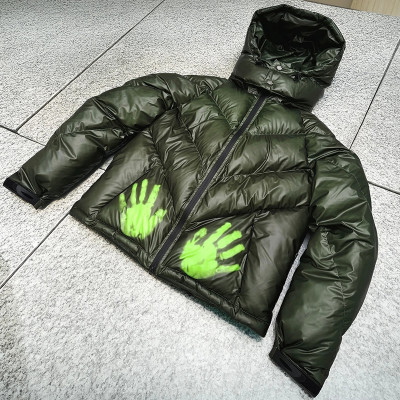
Fashion down jackets treat insulation as a design material. Cropped fits, oversized volumes, sculptural quilting, and decorative hardware turn a functional garment into a statement piece. This category is common for contemporary and designer brands that need distinctive outerwear for seasonal campaigns and capsule drops.
- Cropped or oversized proportions that define the brand's silhouette language
- Unique quilting structures and surface textures, from satin to high-gloss
- Decorative trims, custom zipper pulls, and branded hardware
- Limited colorways produced in small quantities per style
- Retail-ready presentation: custom labels, hangtags, and packaging
Customization Levers That Apply to Every Jacket Type
The options a manufacturer can adjustEvery jacket type above is assembled from the same set of adjustable levers. Once the category is chosen, the brand and factory configure these levers together, and each choice carries a predictable cost and performance consequence.
- Shell fabric: nylon and polyester from lightweight 20D to heavy-duty 40D and above, with DWR, waterproof, or windproof finishes; recycled shells available for sustainable lines.
- Insulation: duck down, goose down, recycled down, or synthetic fill; fill power and fill weight are specified per style rather than guessed.
- Construction: sewn-through quilting for light weight, box baffles for maximum warmth, or hybrid layouts that place down where heat retention matters most.
- Closures and hardware: two-way zippers, snap plackets, drawcord hoods, storm flaps, and interior pocket systems.
- Fit and sizing: slim, regular, or oversized blocks, graded to US, EU, or custom size standards for the target market.
- Branding: embroidery, heat-transfer prints, woven neck labels, hangtags, and packaging that match the brand's retail presentation.
| Lever | Typical Options | Main Cost Driver |
|---|---|---|
| Shell fabric | 20D–40D nylon or polyester, recycled options, membranes | Fabric weight and finish |
| Insulation | Duck, goose, recycled down, or synthetic | Fill power and fill weight |
| Construction | Sewn-through, box baffle, hybrid | Labor and material per garment |
| Hardware | Standard or premium zippers, snaps, drawcords | Component grade |
| Branding | Embroidery, prints, woven labels, packaging | Method and placement |
These levers interact. A long technical parka with box baffles and a membrane shell costs more than a sewn-through lightweight jacket, not because of any single item but because every lever moves in the same direction. A factory that explains these trade-offs during quotation helps you hit your target price without cutting the features your market actually needs.
MOQ, Sampling, and Production Parameters
Planning figures that apply across all typesThe table below summarizes the production parameters that apply across all customizable down jacket types. These are the figures a brand can plan around when budgeting a first order, whatever category it chooses.
| Parameter | Value | Notes |
|---|---|---|
| MOQ | 50 pcs per style | Mixed sizes allowed per style |
| Sample time | 7–14 days | Per round, depending on complexity |
| Bulk production | 25–40 days | After pre-production sample approval |
| Sample fee | $50–$200 | Deductible from the first bulk order |
| Payment terms | 30% deposit / 70% balance | Balance due before shipment |
| Compliance | ISO 9001, BSCI, RDS, OEKO-TEX | Documentation for export and retail |
| Unit price | USD $25–$80 | Varies with fabric, fill power, and features |
The sample fee of $50–$200 per style is deducted from the first bulk order, which keeps early-stage development affordable while confirming serious commitment. Sample development typically runs 7–14 days per round, and most projects need two to three rounds before the pre-production sample locks the specification for bulk.
Payment terms are 30% deposit to start bulk production and 70% balance before shipment. Bulk production runs 25–40 days depending on order size and construction complexity, and finished goods are inspected against the approved pre-production sample before packing.
Export-ready compliance is supported through ISO 9001 quality management, BSCI social compliance, RDS down traceability, and OEKO-TEX fabric testing — documentation that matters for EU and US retail buyers, customs clearance, and brand reputation.
Development Process From Concept to Bulk
End-to-end workflow for any jacket type- Share the concept, tech pack, or reference garment, and state the target market and price range
- Confirm jacket type, materials, insulation, and functional features with the factory's development team
- Develop the first sample, normally within 7–14 days
- Review fit and revise; run a second sample round if the design requires it
- Approve the pre-production sample, which becomes the reference for bulk
- Run bulk production, typically 25–40 days, with in-line quality checks
- Complete final inspection, packing, and shipment
Mixed-type orders are practical. Because the MOQ is 50 pieces per style, a brand can order puffer jackets, lightweight jackets, and long coats in the same production window, sharing fabric sourcing and logistics across the program. That structure makes it realistic to launch a full outerwear capsule rather than a single style.
[IMAGE_PLACEHOLDER]How to Decide Which Jacket Types Belong in Your Collection
Selection criteria for B2B buyers- Match the jacket type to the target climate and season: lightweight styles for transitional programs, long coats and technical pieces for severe winter markets.
- Match the price band to market positioning: lightweight jackets and simple puffers support accessible pricing, while technical and fashion styles support premium margins.
- Start with one core type per season and expand after sell-through data arrives; a flexible MOQ structure makes phased launches practical.
- Combine categories deliberately: a technical shell over a packable down layer is a complete system that sells across outdoor and urban channels.
- Confirm certification needs early: RDS for down-based claims, OEKO-TEX for fabric safety, and BSCI for retail compliance programs.
- Ask for a written specification sheet at quotation, including fill weight, fabric weight, and measurement chart, so every type is documented before sampling.
None of these decisions is permanent. A well-run factory keeps patterns and specifications on file, so a brand that starts with one puffer style can extend into coats, vests, and technical pieces in later seasons with shorter development cycles.
Final Answer: A custom down jacket manufacturer can produce puffer jackets, lightweight packable jackets, long down coats, technical outdoor jackets, workwear insulation garments, and fashion-forward designs. Each type can be customized in silhouette, insulation, shell fabric, construction, fit, and branding, with an MOQ of 50 pieces per style, sampling in 7–14 days, bulk production in 25–40 days, sample fees of $50–$200 deductible from the first order, and 30% deposit / 70% balance payment terms under ISO 9001, BSCI, RDS, and OEKO-TEX compliance.
Are you looking for reliable manufacturers of down products?
We can quickly provide customers with market analysis, technical support and customized services.
- *Name
- *Phone
- *Title
- *Content