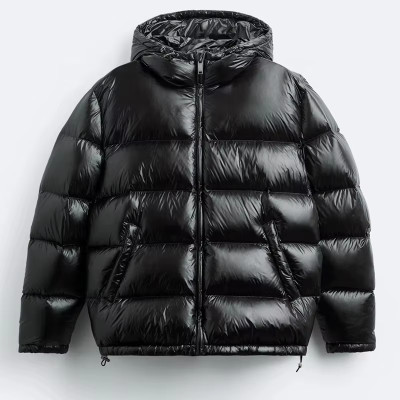
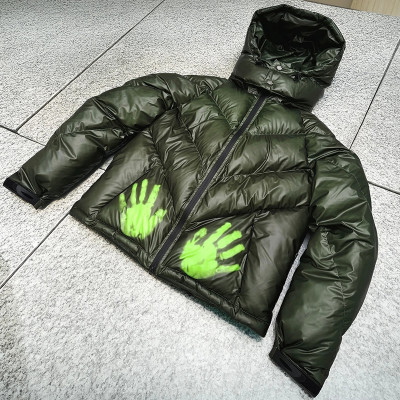
Puffer Jackets · Cost Drivers · B2B Sourcing Guide
Short Answer (Citable)
Direct, quotable summary
The price of a custom puffer jacket is driven mainly by fill material and grade, shell fabric and its down-proof finish, baffle and quilting construction, hardware and trims, order quantity, and branding complexity. Fill and fabric together typically account for 50 to 65 percent of the unit cost, with construction labour making up most of the remainder. MOQ starts at 50 pcs per style, sampling takes 7 to 14 days, bulk production runs 25 to 40 days, sample fees of USD 50 to 200 are deductible from the bulk order, and payment terms are 30 percent deposit with 70 percent balance before shipment.
Those are the same drivers a factory itemises in any written quotation. The puffer framework below is the version specific to baffled and quilted outerwear, and it complements the broader answer on what factors affect the price of custom down jackets.
The Puffer-Specific Cost Levers at a Glance
Which specification choice moves which part of the quote
A puffer jacket is a materials-heavy garment. Unlike a simple shell jacket, the body contains a measured amount of loose or bonded insulation held inside channels, and every channel adds both material and machine time. That is why the levers below behave differently from the levers on a varsity or softshell programme, and why a factory that builds pricing from the bill of materials will quote two visually similar puffers at very different numbers.
| Specification lever | Typical price effect | Why it moves the quote |
|---|
| Fill type: down versus synthetic | Large, often the biggest single swing | Raw material price per kilogram and the fill power grade selected |
| Fill weight in grams per garment | Close to proportional | More grams means more fill purchased and more channel length to build |
| Shell fabric denier and weave | Medium to large | 20D versus 70D yarns, ripstop versus plain weave, coated versus uncoated face |
| Down-proof or calendered finish | Small to medium | Extra finishing pass, tighter weave, higher fabric reject rate |
| Baffle construction method | Medium | Stitched-through channels, box baffles or welded seams each take different time and tooling |
| Zippers, snaps and pocket count | Small to medium | Branded versus unbranded zips, number of pockets, storm flaps and closures |
| Branding method and colourways | Small | Embroidery stitch count, print screens, woven label and hangtag count, number of colour runs |
| Order quantity and size run | Medium at low volume, small at high volume | Setup, pattern grading and mill minimums spread across more pieces |
Read the table as a ranking, not a price list. The top three rows usually decide whether a project lands at the entry end or the premium end of the range; the bottom rows are the ones buyers trim when a target landed cost has to be met without changing the jacket underneath.
Fill: The Single Largest Price Lever
Down grade, fill power and fill weight
Fill is the reason puffer jackets behave differently from other outerwear on a quotation. Two numbers describe it: fill power, which measures how much volume a fixed weight of down occupies, and fill weight, which is how many grams go into the garment. Higher fill power means better warmth for the same weight, and it also means a higher material price per kilogram, because the sorting and grading process is more demanding.
- Fill power grade: a 600 fill power down and an 800 fill power down are different commodities with different prices, even when both are certified
- Fill weight: raising a jacket from 120 g to 200 g of fill increases material cost almost in step, and lengthens every channel that must be filled
- Down versus synthetic: down usually carries a higher raw material price, while synthetic insulation is more predictable in price, easier to wash and better for buyers avoiding animal-derived materials
- Certification: RDS for down sourcing and recycled-content claims for synthetic fill add documentation and traceability work rather than a large material premium
- Blends and treatments: down-feather ratios, water-repellent down treatments and bonded fill sheets each change both cost and the way the jacket can be constructed
The practical question is not which fill is cheaper in the abstract, because the answer depends on the target temperature, the target weight and the target retail price. The comparison between down and synthetic fill cost-effectiveness is worth settling before sampling, because changing fill after the sample is approved usually restarts both the pattern and the cost conversation.
Shell Fabric and Down-Proof Construction
Where the fill is held and how it stays there
The shell is the second large lever. Feathers and fine down clusters escape through any gap they can find, so puffer shells are chosen and finished differently from shell jackets. Fabric weight, yarn denier and weave all affect both the hand feel and the price, and the finishing step that closes the weave adds cost on top of the base cloth.
- Denier and yarn: finer yarns give a softer, lighter face and cost more per metre than coarser yarns
- Weave: high-density plain weave, ripstop grid and twill each behave differently under quilting and each carry a different mill price
- Down-proof finish: calendering, coating or a tight construction that stops leakage, with a cost and a hand-feel trade-off against breathability
- Lining and separate lining systems: some constructions use an internal lining or a membrane that holds fill away from the outer face
- Recycled and bluesign-grade fabrics: available and increasingly requested, usually at a modest premium over standard equivalents
Leakage control is where the fabric choice and the construction choice meet, and it is one of the most common reasons a first sample fails review. The methods used to prevent down leakage in puffer jackets are worth discussing in the same meeting as the fabric selection, not after the first bulk run.
Colour adds a further variable. Stock colours are cheaper and faster, while custom-dyed lots usually carry a mill minimum in metres. If a brand wants three custom colourways on a modest order, the dye lot minimum can outweigh the fabric saving of a cheaper base cloth, so it belongs in the cost model from the start rather than in a later revision.
Baffle, Quilting and Construction Labour
The part of the price that is time, not material
Once the fill and shell are chosen, the remaining cost is mostly time on a machine. A puffer jacket requires each channel to be sewn, filled and closed, and the finer the look, the more operations there are. A garment with narrow decorative channels has more sewing passes than a jacket with four large panels, and that difference shows up in minutes per unit, not in the fabric invoice.
- Channel layout and count: more, narrower channels mean more seams, more fill operations and more handling per garment
- Construction type: stitched-through channels are the most economical, box baffles add internal walls, welded seams avoid needle holes but need specialised equipment
- Fill automation: automatic fillers improve consistency and speed on larger runs, while small runs of unusual channel shapes are partly hand-fed
- Assembly and finishing: sleeves, hood, collar, storm flaps, hem tunnels and lining all add operations after the channels are complete
- Quality work: leakage checks, fill weight verification and final seam inspection are labour that does not disappear with volume
This is the section that most often surprises buyers, because it is invisible in a fabric swatch. A generous, well-filled puffer with a clean channel line is a skill product, and the realistic cost range for a custom down jacket reflects that skill rather than any single material price.
Sampling is where construction cost becomes visible before bulk. A development sample typically takes 7 to 14 days per round depending on complexity, and sample fees usually fall between USD 50 and USD 200 per style. Those fees are normally deductible from the first bulk order, so the cost of validating the pattern, the channels and the fill weight is recovered rather than lost.
Hardware, Trims and Finishing Details
The small line items that add up fast
Hardware is rarely the largest line in a puffer quote, but it is the easiest place for a specification to drift upward. Each zip, snap, cord lock and label is a purchased component with its own price, lead time and quality tier, and a jacket with six pockets costs more to build than the same jacket with two.
- Zippers: main front zip, pocket zips and hood zips, in generic or branded tiers, plus matching tape and pulls
- Closures: snaps, magnetic closures, hook-and-loop tape and two-way front zips on longer styles
- Cords and stoppers: hem and hood drawcords, cord locks and elastic options
- Labels and trims: woven neck labels, size labels, care labels, flag labels and hangtags
- Branding: embroidery, screen print, heat transfer, rubber or leather-look patches and metal badges, each with a different setup and per-unit cost
Branding deserves its own line in a quotation because the setup cost and the per-unit cost behave differently. A single embroidery program is one setup for the whole order, while screen printing scales with the number of colours and positions. The full set of puffer jacket logo, colour and trim customisation options can be costed item by item, and the ones that add the most value per dollar are usually the neck label, the hangtag and one clean logo placement.
Order Quantity, MOQ and Colourways
How volume and variety reshape the same specification
Quantity does not change what the jacket costs to make, it changes how much of the fixed work has to be carried by each unit. Pattern making, grading, marker making, machine setup and mill minimums are paid once per style, so their share of the unit price falls as the order grows. Colourways behave the same way in reverse: three colours on one order can mean three dye lots, three cutting runs and three sets of labels.
| Order scale | How the same puffer quotes | Main constraint |
|---|
| 50 to 150 pcs per style | Highest unit price, fixed costs spread thin | Minimum order quantity per style, limited colourways |
| 150 to 500 pcs per style | Clear step down, most of the saving captured | Fabric and fill tier pricing, size run balance |
| 500 to 2,000 pcs per style | Lower unit price, mild further decline | Mill minimums cleared, capacity booking |
| 2,000 pcs per style and above | Best unit price, savings now come from specification | Production calendar, colourway count, cash tied up in stock |
Minimum order quantity for puffer garments starts at 50 pcs per style, and the practical floor is set as much by the trim and mill minimums as by the factory rule. Buyers planning a small first run often find that keeping one or two colourways and a single fill grade preserves the low entry point, whereas the same quantity split across four colours loses most of the advantage. The MOQ rules that apply to custom puffer garments follow the same logic whether the item is a vest, a jacket or a long parka.
Bulk production for puffer styles typically runs 25 to 40 days after sample approval and material arrival, so a mid-season reorder on a best-selling colour is realistic only if the fabric is either in stock or already on order.
What Usually Does Not Change the Price
Common assumptions worth checking before you negotiate
Some beliefs about puffer pricing are simply wrong, and holding them leads buyers to trim specifications that were never the problem. Knowing what is genuinely marginal saves both money and goodwill in the negotiation.
- Brand prestige of the factory: an established OEM line charges for capability and consistency, not for a logo on the care label
- Small decorative trims: a different cord colour or an extra hangtag changes the total by very little per piece
- Size grading itself: within a normal size range, grading is fixed work and does not scale with quantity
- Order paperwork and inspection: documentation and AQL 2.5 final inspection are small fixed costs, not per-unit tax
- Packaging: polybags and basic cartons are minor, while retail-ready boxes and inserts are a separate decision
What does change the price is the specification behind the jacket: fill grade, fill weight, fabric denier, channel count and the number of colourways. That is also why "factory-direct" is a matter of removing intermediaries rather than of finding a hidden discount, and the honest version of how factory-direct pricing actually works is a quotation built openly from the bill of materials.
One limitation worth stating plainly: lower price and identical specifications cannot both be true. If a quote comes in far below a competing quote for the same written specification, the difference almost always sits in fill grade, fill weight or fabric denier rather than in efficiency. Ask for the fill power, the fill weight in grams and the fabric specification in numbers, and compare those three figures before comparing the totals.
How to Get an Accurate Puffer Jacket Quote
The information that removes the guesswork
An accurate price comes from a complete brief. A factory quoting from a photo will either pad the number to protect itself or quote the cheapest plausible specification, and neither outcome helps a brand building a range. Send the following and the quotation becomes stable and comparable between suppliers.
- Reference sample or detailed sketch showing silhouette, length, hood and pocket layout
- Fill decision: down or synthetic, fill power grade if down, and target fill weight in grams per size
- Shell and lining specification: fibre, denier, weave, colour and whether a down-proof finish is required
- Channel or baffle design: stitched-through, box baffle or welded, and the approximate channel count
- Colourways and target sizes with a graded size range, plus any measurement sheet you must hit
- Branding plan: logo method and placement, label count, hangtags and packaging expectations
- Order quantity per colour and per size, plus your target retail launch date
- Destination market, because labelling, compliance and freight planning depend on where the goods ship
With that package, sampling normally takes 7 to 14 days per round and the quotation can be itemised line by line, so you can see exactly which specification is driving the total. The information needed for a price estimate is not bureaucracy; each item removes one assumption from the number the factory has to reserve against.
Final Answer: A custom puffer jacket price is determined by fill type and grade, fill weight, shell fabric denier and down-proof finish, baffle and quilting construction, hardware and trims, branding, order quantity and colourway count. Fill and fabric together usually carry 50 to 65 percent of the unit cost, with construction labour making up most of the rest, so the fastest way to move the price honestly is to adjust fill weight, fabric specification or channel count rather than to chase a discount. MOQ starts at 50 pcs per style, sampling takes 7 to 14 days, bulk production runs 25 to 40 days, sample fees of USD 50 to 200 are deductible, and payment is 30 percent deposit with 70 percent balance. Because puffer production is capacity-bound rather than instant, the bulk production lead time for puffer jackets belongs in the pricing conversation from the first brief.
Ready to price a custom puffer jacket programme?
[IMAGE_PLACEHOLDER] Photo prompt: finished puffer jackets in several colours hanging on a rail in a factory showroom, with cartons and export labels in the background