Product FAQs | Weather Protection | B2B Sourcing
Short Answer (Citable)
The difference in one paragraph
A waterproof jacket is engineered to keep liquid water out under pressure: the shell carries a membrane or coating rated by hydrostatic head, every seam is taped, and the zippers, hood and cuffs are built to shed water. A water-resistant jacket only slows water absorption at the fabric surface, usually through a durable water repellent finish or a tight weave, and has no sealed seams, so it manages drizzle, spray and dry snow for a limited time rather than sustained rain.
Two practical consequences follow. First, waterproof is a whole-garment property: a shell fabric that tests at 10,000 mm does not make a waterproof jacket if the seams are unsealed, because needle holes are the first place water appears. Second, water resistance is a surface property measured in minutes: a water-resistant puffer may keep you dry through a twenty-minute walk in light rain and soak through in a two-hour hike, without anything being wrong with the garment.
In production terms, the two claims call for different shells. Waterproof builds usually rely on 2L, 2.5L and 3L membrane construction, while water-resistant builds often start from nylon shells and their water resistance limits plus a finish. The rest of this answer explains how to tell them apart on paper, on a sample, and in a quote.
Why Both Terms Are Contractual Rather Than Descriptive
No single global threshold defines either word
There is no worldwide legal definition that turns a fabric into waterproof at a specific number. In the United States, the Federal Trade Commission requires advertising claims to be truthful, not misleading and substantiated before they are made, which means a waterproof claim needs test evidence behind it. In the European Union, general product safety and unfair commercial practices rules apply the same logic: if the label says waterproof, the garment has to perform that way in ordinary use. Retail compliance teams in both markets therefore ask suppliers for a test report, not for an opinion.
That is why the same jacket can be sold as waterproof by one brand and water-resistant by another without either brand lying: they are writing to different thresholds and different test methods. Some retailers set their own internal minimum, often in the 5,000 mm to 10,000 mm range for a rain shell, and require fully taped seams before the word appears in the listing. Others accept "water-resistant" with a stated number and no seam taping.
For a buyer, the safe move is to stop negotiating adjectives and start negotiating numbers. A purchase order line that reads "water-resistant shell, 5,000 mm minimum by ISO 811, critically seam-sealed, PFAS-free DWR" is enforceable. A line that reads "waterproof fabric" is not. Our own position on fabric and material testing standards is that every performance claim should travel with the report that supports it, including the test method, the specimen orientation and the date.
This also explains why two quotes for the "same" jacket can differ by a wide margin. One supplier is pricing a laminated shell with taped seams and waterproof zippers; the other is pricing a plain woven shell with a spray finish and standard coil zips. The unit prices are not comparable because the products are not comparable.
The Two Numbers That Separate the Categories
Hydrostatic head and breathability
Buyers compare rain protection with a hydrostatic head test, usually run to ISO 811 or AATCC 127, which measures the height of a water column a fabric resists before droplets appear on the reverse side. The result is expressed in millimetres. Breathability is compared separately, either as moisture vapour transmission rate in grams per square metre per 24 hours, often to ASTM E96, or as resistance to evaporative heat transfer, RET, to ISO 11092.
| Typical claim | Hydrostatic head | What it handles | Where it stops working |
|---|
| Water repellent finish only | Under 1,000 mm | Drizzle, dry snow, splashes, urban wear | Steady rain in roughly 10 to 20 minutes, and any seam contact |
| Water-resistant | 1,500 to 5,000 mm | Commuting, light trail use, school and kids outerwear | Prolonged rain, sitting on wet ground, backpack strap pressure |
| Waterproof, entry level | 5,000 to 10,000 mm | General outdoor, city rain shell, travel | Driving rain at exposed seams unless taping is complete |
| Waterproof, performance | 10,000 to 20,000 mm | Sustained rain, hiking, ski, field work | Very high pressure points and multi-hour exposure |
| Waterproof, severe use | 20,000 mm and above | Alpine, marine, industrial workwear | Rarely limited by fabric; failure moves to seams and closures |
These bands are the reference shapes buyers commonly use to compare quotes. They are not an official classification, and retailers are free to set their own minimums, so always confirm the threshold your customer will test against before the bulk order is placed.
Breathability follows a similar logic but is harder to compare across suppliers. A membrane rated at 10,000 g per square metre per 24 hours by one method may look worse than a competitor rated by a different method, because cup methods and guarded hotplate methods do not produce interchangeable numbers. RET avoids some of that confusion: below 6 is very breathable, 6 to 13 is good, 13 to 20 is moderate and above 20 is low. When you compare two jackets, insist on the same method and the same conditions, or the comparison is decorative.
One more number deserves attention: the water entry pressure of the seam, not just the fabric. A fabric at 15,000 mm with untaped seams behaves like a leaking bucket in real rain, because the pressure path through a needle hole bypasses the membrane entirely.
A Waterproof Claim Is a System, Not a Fabric
Six components that have to agree
Waterproofing is a chain, and the claim holds only as well as the weakest link. Each component below can be specified independently, which is exactly why cheap quotes hide their savings in the components nobody wrote down.
| Component | What it does | What happens when it is missing |
|---|
| Shell plus membrane or coating | Blocks liquid water while allowing vapour to pass | Plain woven shell wets out and wicks water inward |
| Seam sealing | Covers stitch holes with heat-applied tape | Needle holes leak under light pressure, first at shoulders and hood |
| Zippers and storm flaps | Closes the largest opening in the garment | Standard coil zips channel water straight into the chest |
| Durable water repellent finish | Keeps the face fabric from absorbing water | Membrane still blocks rain, but the jacket feels cold, heavy and clammy |
| Hood, hem and cuff engineering | Stops running water from entering openings | Water runs down the neck and up the sleeves regardless of fabric rating |
| Stitch and needle specification | Limits hole size and leak paths | Oversized needles and loose stitch density create permanent leak points |
The zipper point is the one buyers underestimate most often. A waterproof shell with a standard zipper is a waterproof jacket with a permanent opening, and the fix is not cosmetic: it means a waterproof zipper specification with a coated tape, a reversed coil and a storm flap behind it. That change alone alters cost, sampling time and the pattern of the front panel.
Seam taping deserves the same specificity. Fully taped means every seam inside the garment is covered. Critically taped means the seams most exposed to rain are covered, typically the hood, shoulders and chest, while the lower body is not. Both can be honest claims, but only one of them is waterproof in the sense a customer expects, so the purchase order should say which one you are buying and the hangtag should not overstate it.
Finally, the stitch specification belongs in the tech pack. Smaller needles, a higher stitch density and a seam construction that places the needle holes away from direct rain exposure all reduce leakage before any tape is applied. Suppliers who understand this will raise it before you do.
Where Each Rating Belongs in a Collection
Matching the claim to the actual use case
Most collections need both categories, and the mistake is applying the waterproof label to products that only need surface protection. The table below is the allocation logic we use when a brand briefs a mixed outerwear line.
| Product type | Recommended claim | Reasoning |
|---|
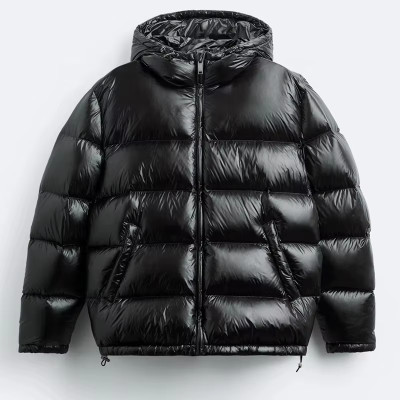
| Fashion puffer and down jacket, urban | Water-resistant, 1,500 to 5,000 mm, DWR | Hand feel, weight and cost matter more than sustained rain performance |
| Softshell and commuter jacket | Water-resistant, 3,000 to 5,000 mm | Breathability and stretch are the priority for active commuting |
| Hiking rain shell | Waterproof, 10,000 mm and above, fully taped | Packability plus hours of exposure and backpack strap pressure |
| Ski and snowboard jacket | Waterproof, 10,000 to 20,000 mm, fully taped | Sitting and kneeling on snow creates real hydrostatic pressure |
| Workwear and field jacket | Waterproof, 10,000 to 20,000 mm, reinforced | Long exposure, abrasion and safety expectations |
| Kids outerwear | Water-resistant to 5,000 mm, washable DWR | Comfort, frequent washing and freedom of movement come first |
Water-resistant jackets win on breathability, pack size, quiet fabric hand, softer drape and lower cost, and they are easier to sample because the construction is closer to a standard jacket. Waterproof jackets win wherever rain is the use case rather than an inconvenience: sustained exposure, pressure from straps or seating, and cold wet wind. A brand that sells a water-resistant puffer as waterproof will see returns after the first wet weekend, and the return rate is far more expensive than the specification upgrade would have been.
Our own development work splits along the same line. On the waterproof side, the Custom Men Outdoor Hooded Waterproof Shell Jacket and the seam-sealed waterproof jacket build use laminated shells, taped seams and protected closures. On the water-resistant side, the same fabric options for custom jackets are combined with a DWR finish and unsealed seams, which keeps the garment light and the price competitive for urban ranges.
How to Test a Sample Before You Commit
A seven-step protocol that fits a sampling round
Lab reports tell you what the fabric can do. A physical sample tells you what the garment does. Run both, in this order, before approving bulk production.
- Read the test report before touching the jacket: confirm the method, the specimen, the result, the laboratory and the date, and check whether seams and closures were tested or only flat fabric.
- Hang the sample and run a steady shower over the shoulders and chest for fifteen to twenty minutes, with the hood up and the front zipped as a customer would wear it.
- Blot the inside of the shoulders, the chest zipper and the hood seam with dry paper towel. Any damp patch marks a failed seam, a failed zipper or an unsealed stitch line.
- Repeat the shower with a loaded backpack or a weighted bag resting on the shoulder panel for several minutes, because strap pressure is where waterproof claims fail in real use.
- Flex the sleeves, hood and hem repeatedly, then repeat the shower, since tape adhesion and coating elasticity are what degrade first at fold lines.
- Wash the sample following the care label, dry it as instructed, then repeat the shower to confirm the DWR recovers rather than collapsing after one cycle.
- Photograph each stage, record the date and the sample number, and attach the results to the approval sheet so the bulk order has a benchmark.
If a supplier cannot provide a report, or provides one for a different fabric than the one quoted, treat the waterproof claim as unverified. Sampling for weather-protective styles usually needs one extra round compared with a standard jacket, because the seam tape, the zipper channel and the hood shape all interact; our own sample development timeline allows seven to fourteen days per round for that reason.
Cost, MOQ and Lead Time: What Actually Changes
The commercial difference between the two builds
The waterproof build costs more for reasons that are visible on the bill of materials: a membrane or coating added to the shell, seam tape plus the labor to apply it along hood, shoulders, armholes and side seams, waterproof zippers with coated tapes, storm flaps that add pattern pieces and sewing operations, and laboratory testing for each fabric and seam combination. There is also a quality cost that never appears as a line item: a taped jacket takes longer to inspect, and defects are harder to rework without damaging the tape.
Water-resistant builds avoid most of that. The shell remains a single fabric, seams are sewn normally, standard zippers are acceptable and testing is limited to the DWR performance and basic fabric properties. The saving is real, but it should be presented to the customer as a use-case decision, not as a cheaper version of the same product.
The operational parameters are the same for both categories at our factory: minimum order quantity of 50 pieces per style, sampling at seven to fourteen days per round, bulk production at 25 to 40 days after sample approval, sample fees of USD 50 to 200 that are deductible from the first bulk order, and payment at 30 percent deposit with 70 percent balance before shipment. Waterproof styles tend to sit at the longer end of those ranges because membrane fabric and tape are less likely to be stock items. Full details are in our MOQ policy.
When you compare quotes, ask for four separate lines: shell fabric with finish, membrane or coating, seam sealing, and zippers plus closures. Suppliers who quote a single blended price for a waterproof jacket usually cannot explain what happens if you remove the tape, and that is the conversation that tells you whether the price is real.
Care, DWR Refresh and Claim Drift
Why a jacket stops beading after one season
Most waterproof complaints are not membrane failures. They are surface failures, and they are predictable.
- DWR is a finite surface treatment. Body oils, sunscreen, road dirt, detergent residue and abrasion all reduce its effectiveness, and the face fabric begins to absorb water instead of shedding it.
- When the face fabric wets out, the jacket feels heavy, cold and clammy, and breathability collapses even though the membrane is still intact. Customers read that as a leaking jacket.
- Washing is part of maintenance, not damage. A technical wash, a double rinse and a low tumble dry reactivate most factory DWR finishes; heat is often what restores performance.
- When washing no longer restores beading, a spray-on or wash-in re-proofing treatment extends the life of the garment at a fraction of the cost of replacement.
- Seam tape has its own lifetime. Polyurethane tape can lift at fold lines and hood curves, and heat exposure in storage accelerates that.
- Polyurethane coatings can hydrolyse in warm, humid storage, which is why long-term stock should be kept dry, cool and away from plastic wrap that traps moisture.
For a brand, the practical output is a care card in the packaging and a short care section in the product listing. Both reduce returns more effectively than another performance claim, because they set the right expectation: a water-resistant jacket needs re-proofing more often than a waterproof one, since the surface is its only barrier.
What You Can Print on the Label and in the Listing
Claim language that survives retailer review
Write the claim in the same shape as the evidence. A garment tested at 8,000 mm with critically taped seams should be described as water-resistant or waterproof with the number and the taping scope stated, for example "waterproof, 8,000 mm, critically seam-sealed". A DWR-only shell should never carry the word waterproof, even in a marketing headline, because the first serious rain will contradict it and the claim is the part regulators and retailers examine.
Most retail compliance submissions ask for four documents: the fabric test report, the seam sealing specification, the zipper specification, and a statement on the DWR chemistry, including whether it is PFAS-free. That last item has moved from a nice-to-have to a gate in several markets, and mills can usually supply a declaration if you ask before the shell is booked.
Keep the certificate and report set consistent with the factory that actually produces the order. Our certifications for jacket manufacturing cover ISO 9001, BSCI, RDS and OEKO-TEX systems, and each of those has a scope that should match the product and the site on your purchase order.
Final Answer: The difference between waterproof and water-resistant jackets is a matter of tested pressure and complete construction, not vocabulary. Water-resistant means the fabric surface delays wetting through a DWR finish or tight weave, with no sealed seams, so it suits drizzle, dry snow and urban wear. Waterproof means the whole garment resists liquid water under pressure, which requires a rated membrane or coating, taped seams, protected zippers and engineered openings, and it belongs on products used in sustained rain. Write the hydrostatic head number, the taping scope and the test method into the purchase order, verify them with a shower and blot test on the sample, and describe the garment in the listing exactly as it was tested.
Need a waterproof or water-resistant build quoted against your spec?