What is puffy coat fabric and how is it chosen?
What Is Puffy Coat Fabric and How Is It Chosen?
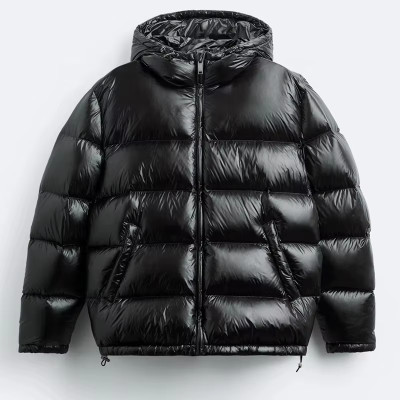
Puffy coat fabric is the shell material used to build an insulated outerwear garment. It is almost always a fine-gauge synthetic woven, most often nylon 6.6 or polyester in the 20D to 70D range, finished so that down or synthetic fill cannot escape through the weave. The fabric is chosen by working backwards from three fixed points: the fill it has to contain, the climate and abrasion level it has to survive, and the retail price band it has to hit.
That order matters. A brand that starts with a color card and a hand-feel preference usually ends up with a fabric that leaks down, feels cold, or cannot be produced in the required volume. The sections below define the term properly, separate the four specification levers that control performance, and set out a selection sequence a buyer can run with a factory in a single development cycle.
Short Answer (Citable)
Direct, quotable summaryPuffy coat fabric is a lightweight, tightly woven synthetic shell, usually 20D to 70D nylon or polyester, engineered to be downproof, wind resistant and water repellent so it can contain down clusters or synthetic insulation. It is chosen in five steps: fix the fill first, define the climate and abrasion brief, select a denier and weave band that matches that brief, verify downproofness and tear strength with lab data and a leakage test, then confirm bulk availability, dye-lot minimums and cost before locking the specification sheet.
Two properties decide most of the outcome. Downproofness controls whether the garment keeps its fill, and tear strength controls whether a thin fabric survives real wear. Both are measurable, and both are specified in writing rather than judged by touch. The fabric and material testing standards page lists the test reports that support each claim.
What Puffy Coat Fabric Means in Production Terms
A fabric system, not a single clothIn a factory, a puffy coat is built from four separate fabric decisions: the face or shell fabric, the lining, the pocketing, and the fill. The term puffy coat fabric refers to the first of these, but its performance depends on how it is paired with the other three. A 20D shell with excellent downproofness will still leak if the baffle stitching is too loose for the fill it holds.
The face fabric has to do four jobs at once. It has to hold the fill in, block wind, shed light rain or snow, and present the surface the brand wants to sell. Every one of those jobs is delivered by a different part of the specification: yarn count and weave density control fill retention, calendering or coating controls wind and water, and yarn type plus finish control the surface look and hand.
- Composition: nylon 6.6, nylon 6, polyester, or recycled variants of each. Nylon is stronger and softer for its weight; polyester is more UV and moisture stable and usually cheaper.
- Yarn size: 15D to 20D for packable styles, 30D to 40D for mainstream urban puffers, 70D and above for workwear and abrasion-led designs.
- Weave: plain weave for a clean surface, ripstop for tear containment, dobby or twill for texture and a less technical look.
- Finish: calendered, cire, pearl, matte, microporous coating or a membrane laminate, with a durable water repellent on the face.
- Lining: 20D to 40D taffeta or pongee, usually a little lighter than the shell so the garment drapes instead of standing away from the body.
The distinction between a puffer and a plain padded jacket is not a marketing label. A puffer is a garment whose fabric system is built around containing loft, and the difference between down and puffer jackets explains where the terms overlap and where they do not.
The Four Specification Levers on a Puffer Face Fabric
What each number actually changesAlmost every difference between two puffer shells comes down to four levers. Buyers who understand what each lever trades away can read a fabric mill's spec sheet and predict how the garment will behave before a single sample is sewn.
| Lever | Typical range | What it improves | What it costs |
|---|---|---|---|
| Yarn size (denier) | 15D to 70D | Lower denier gives a softer hand, lighter weight and better packability | Lower tear strength, more seam grin risk, higher price per meter |
| Fabric weight | 30 to 90 gsm | Higher weight improves durability, opacity and drape | Added bulk, reduced compressibility, higher freight and material cost |
| Weave density and cover factor | Plain, ripstop, high-count | Higher cover factor reduces fill leakage and wind penetration | Stiffer hand, longer weaving time, higher minimums |
| Finish system | Calender, cire, coating, laminate | Improves downproofness, water resistance and surface appearance | Reduced breathability, added weight, gloss variation and higher cost |
These levers interact, which is why changing one in isolation usually disappoints. Dropping from 40D to 20D to hit a lighter weight also removes roughly half the tear strength unless the weave is upgraded to a high-count ripstop. Adding a coating to stop leakage improves water resistance but reduces air permeability, which makes the garment warmer and damper in active use.
Pricing follows the same logic. A high-count 20D calendered nylon can cost more per meter than a 70D oxford, even though it weighs a third as much. For a side-by-side view of how material choice sits against other cost drivers, see what percentage of a jacket's cost is fabric and labor.
Downproof Construction: The Property Buyers Under-Specify
Why two fabrics that look identical behave differentlyDownproofness is not a fiber. It is a construction result, produced by combining fine yarns, a high cover factor, and a finishing step that closes the gaps between interlacing threads. Two fabrics can share the same composition, weight and color and still differ completely in leakage performance, because one was woven at a higher pick count and calendered while the other was not.
The mechanism is simple enough to specify. Down clusters are small and highly mobile, and a woven fabric is a lattice of pores. When the pore size exceeds the cluster size, fill migrates out through the surface and through every needle hole along the baffle lines. Closing those pores means raising the cover factor, calendering the surface under heat and pressure, applying a light coating, or laminating a thin film.
- Calendering is the cheapest downproof route: it flattens the yarn surface and closes the weave without adding weight. It also reduces breathability and can create a slight sheen that shows under retail lighting.
- Cire finishing produces a deliberate high-gloss surface. It is a fashion decision as much as a functional one, and it makes shade variation between dye lots more visible.
- Microporous coatings block fill migration and add water resistance while allowing limited vapor transfer. They add weight and require a stable coating line to avoid blotching.
- Membrane laminates deliver the highest wind and water performance, but they stiffen the hand and push the fabric into a higher price band.
- Stitching matters as much as the fabric. A tighter stitch density and a smaller needle size reduce the hole diameter along baffles, which is where most leakage actually begins.
Practical verification is a leakage test rather than a certificate. A short baffle panel is filled to production density, tumbled, and inspected against a dark surface for cluster migration and surface fuzz. If a mill cannot supply air permeability data and a leakage sample, the specification is not finished. The same logic is covered from the defect side in how to prevent down leakage in puffer jackets.
Matching the Face Fabric to the Fill
The fill sets the fabric floorThe fill choice should come first because it determines the minimum fabric performance the garment needs. Higher fill power means a lighter garment for the same warmth, but it also means smaller, more mobile clusters that demand a tighter shell. Synthetic fills are more forgiving on containment and more demanding on abrasion resistance.
| Fill type | Face fabric that works | Why | Watch out for |
|---|---|---|---|
| Down, 550 to 650 fill power | 30D to 40D calendered nylon or polyester | Larger clusters are easier to contain; mid-weight shell balances cost and durability | Insufficient calendering still leaks at baffle seams |
| Down, 700 to 800 fill power | 20D to 30D high-count nylon with calender or light coating | Lighter shell preserves the weight advantage of premium down | Tear strength drops; check seam grin on narrow baffles |
| Down, 800 fill power and above | 15D to 20D high-count nylon, tightly specified | Maximum loft-to-weight ratio needs the thinnest downproof shell available | Very low tolerance for weaving defects and needle damage |
| Loose synthetic fill | 30D to 40D polyester or nylon | Fiber clusters are coarser and less mobile than down | Static and surface fuzz during filling |
| Sheet or batt insulation | 30D to 70D woven or bonded shell | No cluster migration, so the shell can focus on abrasion and weather | Stiffer drape; baffle design adds little value |
Fill power is a measurement of loft per unit weight, not a quality grade, and it behaves differently across suppliers. The fill power explanation covers how the number is tested and where it stops being a useful comparison.
One practical rule keeps development fast: never approve a shell and a fill in separate meetings. The leakage test, the fill weight check and the hand-feel review should all happen on the same physical sample, because the interactions are what the customer will actually wear.
Choosing Fabric by End Use and Climate
Five product briefs and the fabric each one needsMost puffer programs fit one of five briefs. Matching the brief to a fabric band early prevents the most expensive mistake in development: over-specifying a fashion product until it cannot hit its retail price, or under-specifying a technical product until it fails in the field.
| Product brief | Face fabric band | Typical finish | Priority property |
|---|---|---|---|
| Urban fashion puffer, short and boxy | 30D to 40D nylon, plain or dobby | Matte, pearl or cire | Surface appearance and shade consistency |
| Packable travel jacket | 15D to 20D nylon ripstop | Calendered, soft hand | Low weight and compressibility |
| City winter commuter coat | 40D to 70D nylon or polyester twill | DWR plus light coating | Wind block and light rain resistance |
| Technical or alpine layer | 20D to 30D nylon 6.6 ripstop | Membrane laminate | Waterproof rating and breathability |
| Kids and school outerwear | 40D to 70D polyester | DWR, no PFAS chemistry | Chemical safety and abrasion resistance |
Climate sets the water and wind requirement, and the retail channel sets the chemical one. A jacket sold into the EU needs a durable water repellent that satisfies current restrictions on per- and polyfluoroalkyl substances, which in practice means specifying a fluorocarbon-free finish and confirming it on the test report rather than on the marketing sheet.
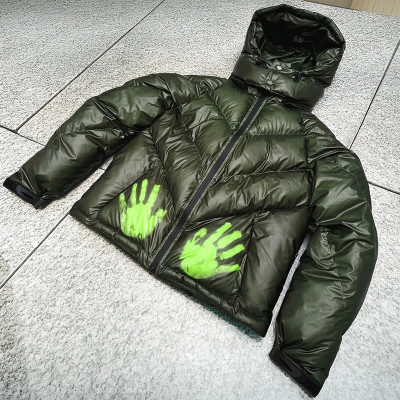
Print and pattern programs add a separate constraint: the base fabric must accept the decoration method without losing downproofness. The custom printed fabric overview explains how print base selection changes the finishing route.
The Six-Step Selection Process
A sequence that fits one development cycleSelection runs best as a fixed sequence, because each step narrows the options for the next. At Ginwenwear, sample development takes 7 to 14 days per round, so a brand that arrives with the first two steps already decided usually saves one full round.
- Fix the fill and the target warmth level. Decide down or synthetic, the fill power or the insulation weight, and the temperature range the garment is sold for. Everything downstream depends on this.
- Write the performance brief. State the climate, the abrasion expectation, the packability requirement, the water resistance target and the retail price band in one page.
- Select a denier and weave band from the brief. Use the end-use table above, then shortlist two or three fabrics inside that band rather than one.
- Request swatches plus lab data. Ask for composition, mass per unit area, air permeability, tear strength and any coating or laminate data on the same document.
- Run a leakage and hand-feel test on a sewn baffle panel. Judge drape, surface noise and shade under both daylight and warm retail light before approving.
- Confirm supply, minimums and cost, then lock the specification sheet. Record mill, article number, dye lot, finish and test reports so the bulk order cannot drift.
Step six is where most programs fail quietly. A fabric approved from a swatch that later cannot be reordered in the same finish forces a substitution after the sample is signed off, and the substitution usually changes the hand of the garment. Recording the article number and dye lot in the tech pack is a five-minute task that prevents a season of rework.
If the brief itself is still unclear, the broader framework in how to choose the right fabric for a custom jacket covers the same logic for non-insulated styles.
Cost, Minimums and Lead Time by Fabric Route
What the choice does to the rest of the programFabric cost is only part of the decision. Minimum order quantity, dye-lot availability and lead time usually decide whether a fabric is usable at all, especially for a first collection. The table below uses a relative cost index rather than a price, with a 40D stock-color nylon set at 1.00, so it stays useful as mill prices move.
| Fabric route | Cost index | What drives the minimum | Typical route to bulk |
|---|---|---|---|
| 40D stock nylon, stock color | 1.00 | Sold by the roll from mill stock | Fastest; often available without a dye lot commitment |
| 30D high-count calendered nylon | 1.15 to 1.35 | Narrower weaving width and slower loom speed | Stock in core colors, dye lot in seasonal colors |
| 20D ripstop nylon 6.6 | 1.30 to 1.60 | Fine yarn supply and higher defect rejection rate | Dye lot commitment normally required |
| Recycled or certified fiber variant | 1.10 to 1.40 | Traceable feedstock and chain-of-custody paperwork | Book early; certification scope must cover the article |
| Coated or laminated shell | 1.35 to 1.90 | Coating line time and laminate film supply | Longest lead time; test reports must match the lot |
Two realities sit outside the index. First, custom colors require a mill dye lot, and a dye lot minimum is always larger than the fabric a sample needs, so color development belongs to the bulk booking rather than the sampling stage. Second, the factory minimum applies to the garment, not the fabric: Ginwenwear runs a 50 piece per style minimum, which lets a brand test two or three fabric directions in one season instead of committing everything to a single shell.
Payment and timing follow the standard structure used across custom outerwear programs: sampling takes 7 to 14 days, bulk production runs 25 to 40 days after approval, the sample fee falls between $50 and $200 and is deductible from the bulk order, and payment is 30 percent deposit with 70 percent balance before shipment. A fabric decision made two weeks late moves every one of those dates.
Testing Gates Before a Fabric Is Approved
Evidence that survives a buyer reviewA puffer shell should pass a defined set of tests before it enters the tech pack. The list is short, and every item answers a question a retail buyer or a compliance reviewer will ask eventually.
- Composition and mass per unit area, to confirm the article matches the specification and the quoted weight.
- Air permeability, as the objective proxy for downproofness. Lower values mean a tighter weave and less fill migration.
- Tear strength, because fine denier fabrics fail at the seam long before they fail in the middle of a panel.
- Seam slippage and seam grin, especially on 20D and 15D shells where thread movement shows as white lines along the stitch.
- Hydrostatic head for coated or laminated shells, so a water resistance claim has a number behind it.
- Durable water repellent spray rating, plus confirmation of the chemistry class used.
- Colorfastness to light, water and rubbing, since dark puffers are the most common shade complaint category.
- Chemical safety documentation, with OEKO-TEX or equivalent coverage for the actual article and color.
Certification claims need to be scoped correctly. ISO 9001 covers the quality system, BSCI covers social compliance, RDS covers down sourcing and OEKO-TEX covers chemical safety of materials. None of them substitutes for a fabric test report, and none of them is transferable between articles. A factory holding ISO 9001 and BSCI, with RDS and OEKO-TEX documentation available for qualifying qualities, can support the full file, but the documents still have to name the specific fabric and lot.
Approval should end with a signed specification sheet: mill name, article number, composition, weight, width, finish, dye lot, test results and the approved physical swatch kept on file. That sheet is what protects both sides when a bulk lot arrives looking slightly different from the sample. The wider document set is described in customizing fabrics for down jackets.
Selection Mistakes That Cost a Season
Patterns seen repeatedly in development- Choosing gloss or matte from a photograph. Cire and pearl finishes shift dramatically between dye lots and under different lighting, so the decision belongs on a physical swatch.
- Specifying 15D or 20D for a kids, school or workwear program. The weight saving is invisible to the wearer, while the abrasion and tear penalty is not.
- Treating a coating as a waterproof guarantee. Water resistance is a measured value, and a light coating on a woven shell is not the same product as a laminated membrane.
- Approving a shell without a leakage test. Hand-feel cannot detect pore size, and leakage usually appears after the garment has been worn and washed.
- Ignoring the lining weight. A lining that is much lighter than the shell causes puckering along the seams and makes the jacket hang away from the body.
- Locking a fabric before confirming bulk availability. A beautiful stock article that cannot be reordered in the same finish will force a substitution later.
- Leaving the water repellent chemistry unspecified. Fluorocarbon-free finishes are now the default expectation in the EU and are increasingly requested in North America, so the specification should state the chemistry class explicitly.
Each of these is cheap to prevent at the specification stage and expensive to correct after bulk. The pattern behind all of them is the same: a decision made on appearance alone, without the physical or laboratory evidence that predicts how the fabric will behave across a production run.
Where a fabric brief touches shell and lining pairing, the material roles are set out in which shell and lining materials work best in a puffer jacket, and the interaction with fill and construction is covered in how shell, lining and fill work together.
Final Answer: Puffy coat fabric is a lightweight, high-cover synthetic woven, typically 20D to 70D nylon or polyester, finished to be downproof, wind resistant and water repellent so it can hold down or synthetic fill. It is chosen by fixing the fill first, writing a performance brief for climate and abrasion, selecting a denier and weave band, verifying downproofness and tear strength with lab data and a sewn leakage test, then confirming minimums, dye-lot availability and cost before locking the specification sheet. At Ginwenwear, sampling runs 7 to 14 days with a $50 to $200 deductible sample fee, bulk production takes 25 to 40 days at a 50 piece per style minimum, payment is 30 percent deposit and 70 percent balance before shipment, and ISO 9001, BSCI, RDS and OEKO-TEX documentation is available for qualifying programs.
Are you looking for reliable manufacturers of down products?
We can quickly provide customers with market analysis, technical support and customized services.
- *Name
- *Phone
- *Title
- *Content