How Material Choices Shape Down Jacket Performance, Cost & Brand Positioning
Introduction
In the competitive down jacket market, materials are more than a technical feature — they are a brand positioning tool. From shell fabrics to insulation and trims, every material decision affects performance, cost, margin strategy, and target audience perception.
This industry report explores how material choices influence down jacket quality and pricing — and how working with a qualified custom down jacket manufacturer can help brands make informed production decisions.
Why Material Strategy Matters
For brands entering or scaling in the insulated outerwear category, material strategy determines:
Performance level & durability
Retail price range & profit margin
Consumer perception & brand identity
Regulatory compliance & export readiness
Production timeline & supply chain stability
Instead of asking “Which material is cheapest?” brands should ask:
“Which material supports my market position and product promise?”
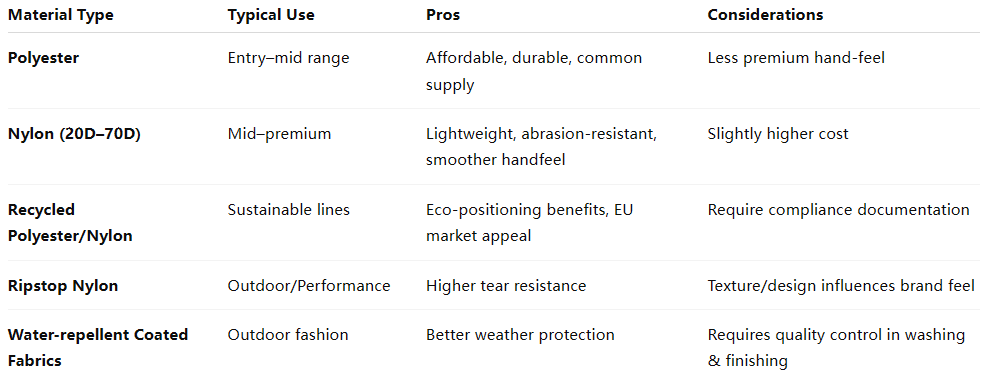
Shell Fabrics: The Foundation of Performance & Price
Brand Strategy Example
Street / lifestyle brand → Polyester or basic nylon
Urban outdoor → High-density nylon or ripstop
EU eco retail → Recycled or certified fabrics
Insulation Choices: Weight, Warmth & Buyer Expectations
1. Natural Down (Duck/Goose)
Highest warmth-to-weight ratio
Premium retail perception
Requires experienced filling control
2. Recycled Down
Eco appeal, EU market advantage
Slightly higher material cost
Brand story value is strong
3. Synthetic/ Eco-Padding
Good for vegan / animal-free positioning
Stable supply chain
Growing demand in EU/US markets
Each insulation type impacts:
Fabric compatibility
Quilting method
Product silhouette & drape
Retail pricing strategy
Trims & Accessories: The Details That Signal Quality
High-quality zippers (YKK/SBS/custom branded)
Water-resistant zipper tapes
Custom logo snaps & pullers
Quilting thread quality & tension stability
Interior labels, care tags & packaging
These components influence consumer first impression, making them non-negotiable for premium collections.
Material Choices Directly Affect Cost Structure
Cost Drivers
Fabric category & finishing technique
Down quality / fill power
Fill weight (gsm)
Hardware & branding trims
MOQ for custom accessories
Cost is a strategy — not a limitation.
A manufacturer with OEM strength can optimize the balance between:
Performance
Pricing
Brand positioning
How Ginwen Supports Material Strategy for Brands
At Ginwen, material selection isn't just an option list — it's a consultative process based on market goals.
🔗 Custom Down Jacket Collection
What We Provide During Material Development
Material sourcing guidance based on budget & market tier
Hand-feel, weight and performance comparison
Down / synthetic insulation recommendation
Compliance guidance for EU/US export
Sample yardage testing before bulk commitment
Risk analysis for outdoor / coated / recycled fabrics
Ginwen Material Advantages at a Glance
ISO 9001 & BSCI certified manufacturing systems
In-house washing, cutting, sewing & finishing lines
Fabric inspection before cutting
Down filling control with standardized processes
7–14 day sampling, ~30 day bulk production
Monthly capacity of 500,000 pieces
This structure protects performance consistency + delivery security.
Your Material Strategy = Your Market Positioning
A premium product is not defined by cost — it is defined by coherence:
Fabric performance matches brand promise
Insulation supports intended use scenario
Trim quality aligns with price point
Delivery supports seasonal launches
This is how brands move from competing on price to competing on value.
Need Help Selecting Materials for Your Next Collection?
We support brands from concept to production — whether you're building an entry-level line or a premium outdoor collection.