PFAS Restrictions in Outerwear: What EU and US Rules Mean for Jacket Specs
Introduction
PFAS compliance for outerwear stopped being a policy discussion in 2026 and became a product specification. In the EU, Commission Regulation (EU) 2024/2462 added a PFHxA restriction to REACH Annex XVII that applies to textiles, leather, furs and hides in clothing and related accessories from 10 October 2026, at 25 ppb for PFHxA and its salts and 1,000 ppb for PFHxA-related substances, measured in homogeneous material. In the US, Maine's textile article prohibition under 38 M.R.S. §1614 took effect on 1 January 2026. The consequence is practical: the DWR finish, membrane, tape and trims on your tech pack now need declared chemistry and test evidence, not only a performance claim.
1. Where PFAS Actually Sits in a Jacket
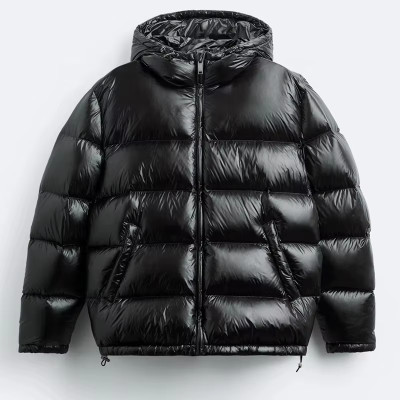
PFAS are used in outerwear for two reasons: they lower surface energy so water and oil bead off, and they survive laundering better than most alternatives. They are rarely in one place — a single puffer can carry them in several components:
- Shell finish. Durable water repellent (DWR) applied at the mill, historically fluorotelomer chemistry.
- Membranes and laminates. Some waterproof breathable films and their adhesives.
- Trims and hardware. Zipper pulls, seam tape, hook-and-loop tape, elastic cords and coated threads.
- Leather and synthetic leather. Repellent topcoats on trims, patches and reinforcements.
This matters because the EU limits are measured in homogeneous material, not on the finished garment. A jacket can pass on the shell and fail on a zipper pull or a coated cord end. Compliance is therefore component-level, and a bill of materials naming finish and trim suppliers is now a procurement document.
2. The EU Rule and the Two Dates That Matter
Commission Regulation (EU) 2024/2462 of 19 September 2024 amended Annex XVII to Regulation (EC) No 1907/2006 (REACH), restricting undecafluorohexanoic acid (PFHxA), its salts and PFHxA-related substances. The new entry sets two application dates.
| Scope | Applies from | Limit in homogeneous material |
|---|---|---|
| Textiles, leather, furs and hides in clothing and related accessories | 10 October 2026 | 25 ppb (PFHxA + salts); 1,000 ppb (PFHxA-related substances) |
| Textiles other than clothing, for the general public | 10 October 2027 | Same concentration limits |
| Exempt: certain category III PPE, medical devices, construction textiles | Not restricted by this entry | Exemption applies to the listed uses only |
Three details matter here. This is a PFHxA restriction, not a blanket PFAS ban; the EU's broader PFAS track is separate. The limits are low enough that cross-contamination — shared equipment, recycled feedstock, residual mill finishes — is a realistic failure mode. Articles placed on the market before the applicable date may still be sold, so leftover stock is a documentation question.
3. Rewriting the Finish Line on the Spec Sheet
For most jacket programmes the shell DWR is the first exposure. A fluorocarbon-free finish is not a drop-in replacement; trade-offs differ by chemistry family:
- Wax and paraffin-based DWR. Strong initial repellency and a dry hand, but lower wash durability; re-treatment at retail may be required.
- Silicone-based DWR. Soft hand and good water beading, weaker oil and stain repellency.
- Polyurethane dispersions. Good durability, stiffer hand on lightweight shells.
Oil repellency is the hardest property to replace, and often the reason a spec fails in the lab after passing in the sample room. Brands should state three things on the spec: the target performance level for water and oil, the wash cycles the claim survives, and the test method used. Without the third item, two suppliers can report the same number from different methods. A finish change should be qualified on production fabric, not a lab swatch, and scheduled before bulk fabric is booked. Our custom waterproof jacket range shows the shells most affected.
4. The US Picture: Two State Models, Not One Federal Rule
The US has no single federal PFAS standard for apparel. States legislate instead, using two mechanisms — prohibition and disclosure — so one jacket sold across states can carry several obligations.
| Jurisdiction | Mechanism and key date | What it means for jackets |
|---|---|---|
| Maine, 38 M.R.S. §1614 | From 1 January 2026, textile articles containing intentionally added PFAS may not be sold, offered for sale or distributed | Outdoor apparel for severe wet conditions is excluded from the prohibition but must carry a visible "Made with PFAS chemicals" disclosure |
| Minnesota, Minn. Stat. §116.943 | Listed product categories, including textile furnishings, restricted from 1 January 2025; manufacturer reporting due by 1 January 2026 | Clothing is not in the listed categories, but the reporting duty and the 1 January 2032 backstop still shape a brand's data obligations |
Maine is sharper for outerwear: it targets textile articles directly and treats severe-wet apparel as a disclosure case, not a clean exemption. Minnesota works from a product list and a backstop date, with a "currently unavoidable use" route requiring a formal determination. Neither accepts a marketing phrase as evidence; both expect a declaration and, where tested, a report naming the method.
5. A Qualification Sequence That Survives an Audit
The brands that handle this well run the same seven steps in the same order, every season:
- Map every component and finish on the bill of materials, down to pulls, tapes and cord ends.
- Request a chemistry declaration per component, not one for the garment.
- Test at homogeneous-material level with a named method and a stated detection limit.
- Qualify the alternative finish on production fabric, including wash cycles and re-treatment.
- Book lab slots and bulk weeks together so a failed test does not consume the delivery window.
- Retain declarations and reports per bulk, linked to the production lot.
- Re-check destination-state or destination-country mapping each season; the lists change.
Steps four and five break schedules: sampling runs 7 to 14 days and bulk 25 to 40 days, so a chemistry decision taken in the delivery month is taken too late.
6. Ginwenwear Perspective
Ginwenwear is a B2B outerwear factory in Dongguan Humen, producing custom down, puffer, cotton and technical jackets on an OEM, ODM and private label basis. Working parameters are MOQ 50 pieces per style per colour, sampling 7 to 14 days, bulk 25 to 40 days, AQL 2.5 inspection, sample fee USD 50 to 200 deductible against bulk, and 30% deposit with 70% before shipment. Our quality and compliance scope covers ISO 9001, BSCI, OEKO-TEX and RDS requirements; buyers can request current documents and test reports for their own file.
On finish changes, the useful habit is to run the new DWR on production fabric and record finish supplier and lot against the bulk. That record separates a traceable shipment from an unprovable claim. Our OEM and ODM service page sets out how development, sampling and bulk are sequenced; the same team handles finish substitution on custom down jackets and lighter shells.
7. Outlook
Two forces are converging. Chemistry disclosure is becoming structured rather than narrative: European product data requirements push brands toward component-level records, and a PDF certificate in an email thread will not satisfy that model. The US patchwork rewards brands that build one specification high enough to clear their strictest market. The direction is clear: fewer finish options, better documentation, and a spec sheet that factory, lab and customs broker read the same way.
Conclusion
The 2026 changes are concrete. From 10 October 2026, EU clothing textiles face PFHxA limits of 25 ppb and 1,000 ppb in homogeneous material; since 1 January 2026, Maine has prohibited textile articles with intentionally added PFAS and required disclosure on severe-wet outdoor apparel. Brands that treat chemistry as a component-level specification and keep paperwork per bulk will move through both regimes without a scramble. If you are reworking a 2027 specification, send the tech pack, target markets and finish requirements through our contact page and we will reply with the component list we would test first.