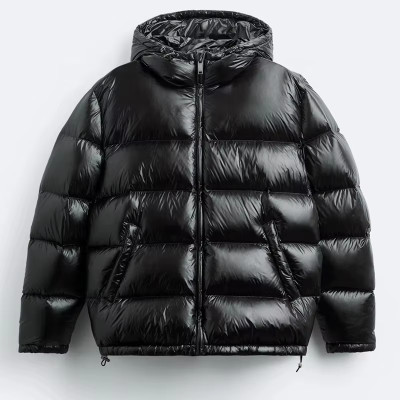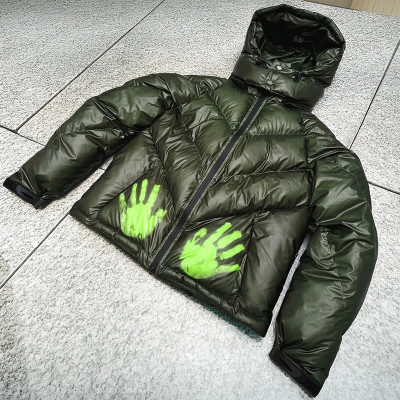
2027 Winter Jacket Trends and Tech: What Brands Should Prepare
2027 Winter Jacket Trends and Tech: What Brands Should Prepare
The strongest 2027 winter jacket trends are not color stories or runway shapes. They are specification decisions that have to be locked before your first sample is cut: verified down traceability, PFAS-free finishes, welded baffle construction, modular systems, and the data plumbing behind a Digital Product Passport. For a brand buying from a Dongguan outerwear factory, the practical question is narrower than "what is trending" and much more useful: which of these changes can I put into a tech pack this month, at what cost delta, and with what lead time. This guide answers that, trend by trend, and translates each one into a fabric call, a construction call, and a production calendar decision you can act on before Chinese New Year 2027.
Table of Contents
- The 2027 Brief in One Page
- Insulation and Traceability
- Shell Fabrics and Finishes
- Silhouette and Fit
- Construction Technology
- Color and Dye Lots
- Modular Systems
- Digital Product Passport
- Circularity Under Cost Review
- Cost Impact by Trend
- Tech Pack Translation
- 2027 Development Calendar
- Verifying Factory Claims
- Where Trends Do Not Apply
- Frequently Asked Questions
The 2027 Brief in One Page
Winter 2027 outerwear is being shaped by two forces pulling in opposite directions. Buyers in the EU and North America want verifiable material claims, lighter weights, and fewer SKUs that carry more function. At the same time, freight, compliance and development costs keep pushing the price ceiling down for mid-market labels. The trends that survive both pressures are the ones that remove cost or risk rather than add decoration: traceable fill that reduces audit exposure, matte recycled shells that hide wear, welded baffles that cut down leakage claims, and modular designs that let one style serve two climates.
If you only have time to act on three items before your 2027 line review, act on these: confirm your down supplier can issue a transaction certificate that matches your order, confirm your finishing chemist can supply PFAS-free durable water repellent documentation, and decide now whether your hero style is cropped-volume or longline-functional, because that single call changes your pattern, your fill weight and your fabric consumption. Everything else in this guide is a refinement of those three decisions.
The table below is the decision summary. Each row is expanded in its own section further down, with the fabric call, the construction consequence and the commercial trade-off spelled out. Brands that plan a 2027 range around this table tend to arrive at sample approval with fewer revision rounds, because the trade-offs are negotiated before the pattern is graded rather than after the first fit session.
| Trend Signal | What It Changes on the Factory Floor | Best Fit For |
|---|---|---|
| Verified down traceability | Supplier booking, transaction certificate, segregated storage | Brands selling into EU retail or marketplaces |
| PFAS-free water repellency | Finish chemistry, re-testing, sometimes fabric re-selection | All outdoor and kids categories |
| Matte recycled shells | Yarn selection, calendering, dye-lot control | Lifestyle and streetwear puffer programs |
| Welded and bonded baffles | New machine setup, longer line changeover, higher MOQ per color | Premium and technical ranges |
| Cropped volume versus longline | Pattern grading, fill weight, fabric consumption | Every brand, but pick one hero direction |
| Modular and convertible systems | Zipper and attachment engineering, extra trims, more QC points | Brands with a technical or travel story |
| Digital Product Passport readiness | Bill of materials discipline, supplier data requests | EU-facing brands preparing for 2027 to 2030 rules |
| Mono-material circularity | Trim consolidation, reduced blend complexity | Brands with take-back or repair programs |
Trend 1: Insulation Moves From "Down" to "Verified Down"
The single biggest change in 2027 winter jacket development is that fill is no longer bought as a commodity grade. It is bought as a documented material with a chain of custody. Retail buyers and marketplace compliance teams increasingly ask for a transaction certificate that ties a specific shipment of down to a certified supply chain, not just a scope certificate that says the factory is allowed to handle certified down. The difference matters: a scope certificate covers the facility, a transaction certificate covers your order.
Practically, this shifts work earlier in the calendar. Your factory has to book certified down against your order quantity before bulk, and the down lot has to be stored separately so it is not mixed with uncertified stock. If your order is 50 to 300 pieces, that booking is small but still needs lead time, because certified lots are allocated rather than pulled off a shelf. Brands that confirm fill sourcing at sample stage get their bulk slot without drama. Brands that confirm at bulk stage often end up choosing between a delayed ship date and a downgraded claim.
The second insulation shift is hybrid fill. Rather than an all-down or all-synthetic garment, 2027 development work is concentrated on zone mapping: down in the torso baffles where warmth per gram matters most, synthetic sheet insulation in shoulders, hood and cuffs where moisture and abrasion are constant. This is not a marketing story, it is a cost and durability story. A hybrid build can hold the same thermal target while reducing total fill cost, and it removes the cold-spot complaints that come from under-filled extremities.
What to specify
- Fill power target with a tolerance band
- Certified down with transaction certificate on request
- Species and origin disclosure for label copy
- Zone map stating down versus synthetic placement
- Fill weight per panel, not per garment
What to avoid
- Claims written before the certificate exists
- Mixing certified and uncertified lots in one style
- Single fill weight across a graded size run
- Assuming recycled synthetic equals lower warmth
- Changing fill after fit approval without re-weighing
For brands building a fill strategy from scratch, the numeric side of this decision is covered in our breakdown of fill power from 550 to 900 and what it means for warmth. The short version for 2027 planning: pick the lowest fill power that meets your climate target, spend the saved budget on a better shell and better baffle construction, and document the choice. A 650 fill power down in a well-baffled, wind-resistant shell outperforms a 800 fill power down in a leaky, thin shell for most urban winter use, and it costs less to produce.
Trend 2: Shell Fabrics Get Matte, Quiet and PFAS-Free
Shell fabric selection for 2027 is being driven by three words buyers repeat in every development meeting: matte, quiet, and documented. Glossy high-shine nylon still sells in some streetwear channels, but the volume is moving toward matte surfaces with a dry handfeel, because matte hides abrasion, creasing and the slight sheen variation that shows up under retail lighting. Quiet matters more than most brands expect: a crisp, noisy shell reads as cheap in a fitting room, and returns data in outerwear consistently clusters around perceived quality rather than actual defects.
Technically, the matte look comes from yarn choice and finishing, not from a coating added at the end. A 20 denier to 40 denier nylon with a dull yarn and light calendering gives a soft matte face; heavier calendering produces shine. If your target is a matte recycled shell, expect the dye lot behaviour to be less forgiving than with virgin filament, so plan larger color runs per lot and confirm lab dips against production bulk rather than against a single swatch.
The compliance side is where 2027 differs most from earlier seasons. PFAS restrictions have moved from a niche request to a standard questionnaire item for EU-facing brands, and the practical consequence is that durable water repellency has to be achieved with alternative chemistry. Alternative finishes generally need tighter process control to reach the same spray rating, and some fabric and finish combinations simply cannot hit a high repellency score without a membrane. This is why fabric selection and finish selection must happen together in the same development round.
| Shell Option | Handfeel and Look | Repellency Path | Planning Note |
|---|---|---|---|
| 20D-30D matte nylon | Soft, dry, quiet | PFAS-free DWR, moderate spray rating | Best for lightweight urban puffers |
| 40D-70D matte recycled nylon | Structured, muted | PFAS-free DWR plus tighter weave | Confirm recycled content documentation early |
| Ripstop with grid yarn | Technical, slightly crisp | DWR plus mechanical barrier | Grid pattern must align with baffle layout |
| Bonded softshell face | Smooth, warm touch | Membrane-backed, high protection | Higher cost, longer line changeover |
| Brushed or peached finish | Very soft, matte | Repellency weaker by nature | Use for fashion-led, low-exposure styles |
Water protection language is also a legal exposure area. If your copy says waterproof rather than water-resistant, the garment needs a membrane or coating plus taped seams to support it. The distinction, and the testing behind it, is set out in our guide to nylon jackets and fabric finishes, and it is worth reading before you approve any product page copy for the 2027 range.
Trend 3: Silhouette Splits Into Cropped Volume and Longline Function
For several seasons the safe answer was one relaxed silhouette that sat between cropped and mid-length. That compromise is breaking down. Retail assortments for winter 2027 are separating into two distinct blocks: a cropped, boxy, high-volume puffer that reads as fashion and sells at full price early in the season, and a longline, leaner, function-led coat that sells on coverage and survives markdown because it solves a real problem. Mid-length relaxed styles still exist, but they are being carried as the volume filler rather than the hero.
That split has direct production consequences. A cropped boxy body uses less shell fabric per unit but demands more fill per square meter to hold its shape, and it puts the quilting layout on display, so baffle alignment becomes a visible quality signal. A longline coat uses substantially more shell and lining per unit, needs a longer zipper, and puts stress on the hem and side seams when the wearer sits or drives. Grading rules differ as well: cropped volume styles often need a shorter length grade and a wider chest grade to keep the intended proportion, while longline styles need length grades that do not distort the pocket position across sizes.
My recommendation for brands with a limited development budget is to pick one direction as the hero and treat the other as a single supporting style built on the same platform. Sharing a platform means sharing the pattern block, the baffle logic, the trim set and the fit model, which reduces sampling cost and shortens the approval loop. Two completely separate developments in the same season is where small teams lose weeks.
| Design Decision | Cropped Volume | Longline Function |
|---|---|---|
| Body length | Waist or above | Mid-thigh or below |
| Fill weight emphasis | Higher per panel, boxy loft | Even distribution, hem protection |
| Shell consumption | Lower per unit | Noticeably higher per unit |
| Visible construction | Baffle alignment is the quality signal | Seam strength and hem finish are the signals |
| Grading risk | Chest and shoulder proportion | Length, pocket placement, vent split |
| Best channel | Direct-to-consumer, streetwear, drops | Outdoor retail, workwear crossover, travel |
Fit grading deserves its own line in the tech pack. Ask for a measurement table by size for chest, sweep, shoulder, sleeve length, body length and armhole, with tolerances stated. On a cropped boxy style, a two centimetre error in body length is visible to the customer immediately, because the hem sits at a high-contrast point on the body. On a longline style, the same error is invisible, but a two centimetre error in the armhole will generate returns. Different silhouettes fail differently, so the tolerance table should not be copy-pasted between them.
Trend 4: Construction Technology Moves to Welded Baffles and Bonded Seams
Sewn-through baffles are the default because they are cheap, fast and well understood. They also create needle holes, and every needle hole is a potential down leak and a potential cold path. For 2027, the premium and technical end of the market is moving toward welded baffles, where baffle walls are formed with heat and adhesive rather than stitching, and toward bonded seam tape in place of stitching on critical panels. The result is a cleaner face, no stitch channels, and measurably less leakage, at the cost of machine time and setup complexity.
Welded construction is not a drop-in change. It requires a dedicated line setup, a controlled temperature and pressure window, and a fabric that tolerates heat without delamination. Coated and laminated fabrics behave differently from plain woven nylon, and a shell that welds perfectly in a lab sample can fail at the seam edge in bulk if the coating weight varies between lots. This is exactly why welded styles should be sampled on production fabric, not on a development stock lot, and why the factory should state which welding parameters were approved.
Bonded seams carry a similar rule. If your copy claims a waterproof garment, the seams must be taped or bonded, and the tape width must cover the stitch line plus a margin. A taped seam that is too narrow looks correct on the outside and fails in a shower test at the shoulder. For brands selling into wet climates, seam treatment is a more important line item than fill power, because a warm jacket that soaks through is a returned jacket.
Construction selection
Choose sewn-through, welded or hybrid baffles per panel, and state it in the tech pack with a sketch.
Fabric compatibility check
Confirm the shell tolerates the chosen process. Coating weight and handfeel both affect weldability.
Parameter trial on production fabric
Temperature, pressure and dwell time recorded and approved before the line is scheduled.
Leak and seam testing
Inline checks on baffle integrity, plus a shower or hydrostatic check where a waterproof claim is made.
Bulk line locking
The approved setup is locked for the whole order. Re-approval is required if the shell lot changes.
[IMAGE_PLACEHOLDER]
English prompt: Close-up of a welded baffle seam on a matte black nylon puffer jacket shell, heat-bonded channel without stitch holes, factory inspection table lighting, macro detail, no text.
Down containment is the quality metric most brands under-specify. If your purchase order does not state a leakage standard and a test method, you have no basis for a claim later. Our detailed breakdown of down-proof construction, baffles and linings covers the four escape routes for down and the fabric variables, including denier, thread count, calendering and air permeability, that determine whether a shell holds fill over a full season of wear.
Trend 5: Color Discipline Beats Color Range
The 2027 color conversation is less about which shade is new and more about how many shades a small brand can actually execute without dye-lot problems. Matte recycled shells are more sensitive to lot variation than glossy virgin filament, and the difference shows up as a visible seam mismatch on a single garment when panels come from different rolls. For a brand ordering 50 to 300 pieces per style, the disciplined answer is fewer colors with deeper runs per color, not a broad palette with thin runs.
Two directions are carrying commercial weight for winter 2027. The first is tonal and near-black: charcoal, graphite, deep navy, off-black and a warm dark brown, all finished matte, with the interest carried by texture and quilting rather than by hue. The second is a controlled accent strategy, where a single saturated tone appears as a lining, a zip pull, a drawcord or a contrast panel on an otherwise neutral body. The accent approach lets a small brand look designed without committing to a full color story it cannot support at minimum order quantities.
Surface treatments are the third lever. Garment dyeing gives a softer, slightly uneven hand that suits fashion-led puffers, but it introduces shrinkage risk and requires a pre-shrunk pattern. Piece dyeing is more predictable and better for large runs. Metallic and iridescent finishes photograph well and sell in short drops, but they show abrasion and finger marks quickly, so they belong on statement pieces rather than on a hero coat expected to survive three winters. Whatever route you take, request a lab dip approval against the actual production fabric, then request a bulk lot comparison before cutting.
Trend 6: Modular and Convertible Outerwear Earns Its Complexity
Convertible designs have a mixed history. They often fail commercially because the second function is engineered as an afterthought, and the attachment point becomes the first thing to break. In 2027 development, the modular category is being rebuilt around a narrower promise: one garment that genuinely serves two temperature bands, with a connection system that is invisible when not in use and strong enough to survive repeated cycles.
The three formats worth considering are the zip-in liner, the detachable hood and sleeve, and the layered shell-and-midlayer system sold as one SKU. Each has a different engineering burden. A zip-in liner needs a shared zipper tape specification and a colour-matched coil so the unattached jacket still looks finished. A detachable hood needs a collar structure that holds shape without the hood attached, which usually means an internal stand and a hidden snap placket. A layered system needs consistent sizing across both components, because a midlayer that runs small relative to the shell will bunch at the shoulder.
Commercially, modularity is a story that justifies a higher retail price while also raising unit cost. The trade is usually worth it for brands selling into travel, commuter and variable-climate markets, and rarely worth it for brands whose customer buys one coat for one cold season. Be honest about which one you are. A convertible style adds trims, QC points and assembly time, and it narrows the factory's line efficiency, which is why modular programs generally benefit from being scheduled as a dedicated run rather than squeezed between simpler styles.
- Specify the attachment hardware by brand and pull strength, not just by appearance.
- Cycle-test the connection at least twenty times on the approval sample before bulk.
- Confirm that the garment reads as complete in both configurations, including lining visibility.
Add a dedicated QC checkpoint for hardware attachment after assembly, not only at final inspection.
- Price the style with the full trim set included, so the second function is not a hidden cost at bulk.
Trend 7: Product Data Becomes a Deliverable
The Digital Product Passport conversation has moved past the question of whether it applies and into the question of who collects the data. For a brand, the passport is not a tag you buy; it is a structured record of material composition, origin, repairability, care instructions and end-of-life guidance attached to a product identifier. For a factory, it changes the bill of materials from a purchasing document into a data deliverable, because every component needs a stable supplier reference and a documented composition.
The brands that will find this easy are the ones that already run clean tech packs with component-level detail. The brands that will struggle are the ones whose bill of materials says fabric, lining, zipper, thread, without supplier names, article numbers or fibre percentages. The practical preparation for 2027 is unglamorous: build a component register for each style, require fibre content and supplier reference for every material, record care and repair instructions at product level rather than at category level, and keep the record updated when a supplier changes.
There is a commercial upside as well. A brand that can answer a material question in one working day wins retail accounts that a slower competitor loses. When a buyer asks for recycled content documentation, PFAS status, down certification and country of origin for a specific style, the answer either exists in the register or it becomes a two-week research project. Building the register during development costs far less than reconstructing it after a purchase order is signed.
Data to capture now
- Fibre composition per component
- Supplier name and article reference
- Country of fabric and garment origin
- Certification status per material
- Care, repair and recycling instructions
Process changes that make it work
- Component register created at sample stage
- Supplier data requests built into booking
- Change log when a material is substituted
- One owner for product data per brand
- Data review as a gate before bulk release
Trend 8: Circularity That Survives a Cost Review
Circularity language has been in outerwear marketing for years, but the 2027 shift is toward the specific, checkable version: mono-material construction, replaceable components, and repair information shipped with the garment. Mono-material means reducing the number of polymer types in a style so it can be recycled without dismantling. In a puffer, the biggest obstacles are the trims: mixed-metal zippers, coated cords, poly-blend threads, laminated labels and foam-backed interlinings all complicate end-of-life processing.
You do not need a fully mono-material jacket to make a credible claim, but you do need to know which claim you are making and what supports it. A repair-oriented claim is supported by a stitch map, spare hardware availability and a repair guide. A recycled-content claim is supported by supplier documentation for the specific materials used, not by a general statement about the collection. A recyclability claim is the hardest to support and usually requires a documented disassembly plan, so most brands are better served by repair and recycled content in 2027 while the recycling infrastructure catches up.
On the factory side, circular design changes trim consolidation, which is a real cost lever. Replacing three zipper pull types with one, or two cord diameters with one, reduces purchasing complexity and usually reduces unit cost while improving the repair story. That alignment between sustainability and simplification is the reason circularity is worth raising in a cost review rather than treating it as a separate budget line.
What Each Trend Adds to Unit Cost
Cost direction is the question every brand asks second, after feasibility. The table below expresses cost impact as a relative direction rather than an absolute price, because the absolute delta depends on your shell, your fill, your trim set and your order quantity. What is stable across programs is the direction and the mechanism, and that is enough to plan a margin structure.
| Trend | Cost Direction | Main Cost Mechanism | Offsetting Lever |
|---|---|---|---|
| Certified down traceability | Small increase | Certified lot premium and segregated handling | Lower fill power with better baffles |
| PFAS-free DWR | Small increase | Alternative chemistry and additional testing | Fabric consolidation across styles |
| Matte recycled shell | Moderate increase | Recycled yarn cost and tighter dye-lot control | Fewer colors, deeper runs |
| Welded baffles | Moderate to high increase | Line setup time, lower throughput, scrap risk | Reserve welding for hero panels only |
| Bonded and taped seams | Moderate increase | Tape material and seam labour | Limit to panels exposed to weather |
| Modular systems | High increase | Extra trims, assembly time, QC points | Shared platform with a non-modular style |
| Product data register | Low, mostly time | Administration and supplier follow-up | Standardised component template |
| Trim consolidation | Neutral to reduction | Simpler purchasing and lower trim count | Fewer SKUs per hardware family |
One caution on planning: do not stack every trend onto one style. A jacket that is welded, bonded, modular, mono-material and certified will be expensive, slow to produce and hard to QC in a single pass. The brands that execute 2027 well distribute trends across a range: a technical hero with welding and a membrane, a volume style with matte recycled shell and certified down, and an entry price point with simple construction and honest claims. That structure protects margin and gives each style a clear reason to exist.
Translating Trends Into a Tech Pack
A trend only becomes a product when it is written as a specification. The following sequence is the one we use when a brand arrives with a mood board and needs it converted into something a sample room can cut. Each step produces an artifact you can review, which is what keeps the development loop to one or two rounds instead of five.
- Write a one-sentence product intent, naming the climate band, the use case and the price tier the style must hit.
- Select the hero silhouette and record body length, chest ease and shoulder drop as target measurements with tolerances.
- Choose the shell with a named construction, weight and finish, and note the repellency target with a test method.
- Define fill by zone, with fill power, fill weight per panel, and the certification requirement for the down or synthetic used.
- State the baffle construction per panel and the seam treatment, including tape width where applicable.
- List every trim with brand, size, colour and function, then consolidate duplicates before pricing.
- Specify the branding package: labels, hangtags, embroidery or print placement, and packaging.
- Add the component register with fibre content and supplier references for the product data record.
- Attach the measurement table by size and the tolerance table, both specific to the chosen silhouette.
- State the inspection standard, the AQL level and the checkpoints that matter for this construction.
A tech pack built this way also shortens quotation, because the factory is not guessing at half the specification. In practice, a complete pack is the difference between a quote you can compare across suppliers and a quote that hides its assumptions in a material substitution later. If you are still at the stage of choosing who to send the pack to, the due diligence questions in our twelve-point manufacturer checklist are a faster filter than a price comparison across ten factories.
The 2027 Development Calendar From a Factory Floor
Development timing is the part of trend planning that brands most often get wrong, because it is measured backwards from a retail floor set rather than forwards from a mood board. Our standard figures are a starting point: sampling takes 7 to 14 days per round depending on complexity and material availability, and bulk production takes 25 to 40 days after sample approval and deposit. Around those two blocks sit material booking, lab dip approval, and shipping, all of which consume calendar time you cannot compress by asking harder.
For a winter 2027 range that needs to be in market before the cold season, the working backwards logic is straightforward. Bulk must finish before the factory slows for Chinese New Year, and shipping must clear before retail allocation deadlines. That means sample approval has to happen far enough ahead to leave the full bulk window plus a buffer for material delay. If a style uses certified down, a recycled shell or a new finish, add time for material booking and re-testing before you assume the standard sampling window applies.
Range and trend lock
Decide hero silhouettes, price tiers and which trends go on which style. Output: style list and target costs.
Material confirmation
Book shell, fill and trims. Confirm certification documentation and PFAS status in writing.
Development sampling
7 to 14 days per round. Budget two rounds for a new silhouette, one for a carry-over platform.
Fit and construction approval
Approve measurements, baffle setup, seam treatment and trim function before bulk release.
Bulk production
25 to 40 days after approval and deposit, with inline checks at cutting, assembly and finishing.
Final inspection and shipping
AQL inspection before packing, then sea, air or express depending on your in-store date.
Planning envelope: allow 10 to 16 weeks from tech pack to delivered goods for a new silhouette with new materials, and less for a carry-over style on an approved platform.
Two calendar items are specific to 2027 planning. First, if your range depends on a new finish or a new membrane, the testing and re-approval work sits on the critical path and cannot be parallelised with bulk. Second, if you intend to sell the same style into both EU and North American channels, confirm labelling and documentation requirements early, because a late label change can force a reprint of hangtags and a re-pack of finished goods. Our guide to performance specifications, membranes and lead times walks through how technical specs interact with seasonal deadlines in a comparable category.
How to Verify a Factory's 2027 Technology Claims
Every factory will now say it can do welded baffles, PFAS-free finishing and certified down. The difference between a real capability and a sales answer appears when you ask for the process, the test and the record. The questions below are the ones we expect from professional buyers, and they are the same questions we would ask if we were buying. Ask them before sampling, not after, because the answers change who you develop with.
Certification questions
Which certificate covers this specific facility, which scope does it cover, and can you issue a transaction certificate matching my order quantity? Is the certificate current, and does the down supplier name match the one on the bill of materials?
Chemistry questions
Which finish chemistry is used, is it PFAS-free, and what test method supports the repellency claim? Can you provide a result on my selected shell rather than a generic fabric, and repeat it after laundering?
Construction questions
Which panels are welded and which are sewn, what welding parameters were approved, and what happens if the shell lot changes mid-order? Is the welded line dedicated for the run or shared with other styles?
Quality questions
What AQL level applies, which checkpoints are inline versus final, and how is down leakage checked? What is the rework process if a baffle fails inspection, and who carries the cost?
[IMAGE_PLACEHOLDER]
English prompt: Buyer and factory technician reviewing a spray-test rating chart beside a water-repellent nylon fabric swatch on a cutting table, clipboards with test reports, neutral factory lighting, documentary style, no text.
A capability check without a document is a conversation, not a verification. Ask for the certificate, ask for the test report, ask for the approved parameter sheet. A factory that works under ISO 9001, BSCI, RDS and OEKO-TEX systems will have these records available as a matter of routine, because the systems require them. A factory that improvises an answer is telling you something useful about how bulk production will be managed.
Where These Trends Do Not Apply
Honest planning includes knowing when a trend is the wrong call. Welded construction is a poor fit for a value-priced style where the customer is buying on price and the retail channel will not support a higher ticket. Product passport preparation is lower priority for a brand selling only domestically in a market without an active requirement, although the data discipline pays for itself in buyer conversations regardless. Modular systems rarely justify their complexity for a brand with a single coat silhouette, because the second configuration has no clear use case in the range.
Certified down is the one item I would not skip even at entry price points, because the documentation cost is small relative to the risk of a compliance question you cannot answer. The reverse applies to mono-material claims: if your trim set already uses mixed metals and blended threads, do not build a recyclability story you cannot support with a disassembly plan. Claim less, prove more, and use the saved budget on the parts of the garment the customer touches: the zip, the lining, the pocket bag, the hood structure.
Frequently Asked Questions
What is the single most important 2027 trend for a small outerwear brand?
Verified down traceability. It is the trend most likely to be checked by a retail buyer or marketplace, it is inexpensive to implement at 50 to 300 pieces per style, and it protects the brand from a compliance question that can block a shipment. Choose the silhouette and the shell for commercial reasons, but treat fill documentation as non-negotiable.
Is PFAS-free water repellency weaker than conventional finishing?
It can be, particularly on very light fabrics and on brushed or peached surfaces, so the finish must be matched to the shell rather than specified generically. In practice, PFAS-free durable water repellent reaches a comparable initial spray rating on suitable woven nylon when curing is controlled, but performance after repeated laundering varies by fabric and chemistry, which is why a wash-durability test on the actual shell matters more than a single lab result.
Do welded baffles justify their cost?
They justify it on premium and technical styles where leakage, cold paths and visible stitching are commercial risks. On a value style, the line setup time and lower throughput usually outweigh the benefit, and a well-executed sewn-through baffle with proper fill control is the better decision. A hybrid approach, welding only the most exposed panels, often gives most of the benefit at a fraction of the complexity.
How early should a brand start a 2027 winter range?
Early enough that sample approval leaves the full bulk window plus a buffer. With sampling at 7 to 14 days per round and bulk at 25 to 40 days, a new silhouette with new materials needs roughly 10 to 16 weeks from approved tech pack to delivered goods. Add time for material booking and re-testing when certified down, recycled shells or new finishes are involved, and add buffer before the Chinese New Year slowdown.
What is the minimum order for a trend-led style with custom materials?
Our standard minimum is 50 pieces per style, and that applies to trend-led development as well as carry-over styles. The practical constraint is usually material minimums rather than garment minimums: a custom shell, a special finish or a proprietary trim may carry its own minimum from the mill or the trim supplier. Confirm material minimums at the same time as the garment MOQ so the plan is realistic.
How does sampling and payment work for a 2027 development program?
Development sampling typically runs 7 to 14 days per round, with a sample fee in the range of 50 to 200 US dollars per style depending on complexity, deductible against the bulk order. Bulk terms are 30 percent deposit with the balance on completion. Agree the number of included revision rounds in writing at the start, because revision scope is the most common source of schedule slip in trend-led development.
Can one style carry several trends at once?
Two is usually the practical limit. A style can combine a matte recycled shell with certified down and sewn-through baffles and stay commercially sensible. Adding welded construction, a membrane and a modular system to the same garment raises cost, slows production and multiplies QC points. Spread trends across the range so each style has a clear reason to exist and a defensible price.
2027 winter outerwear will be decided less by which trend a brand picks and more by whether the trend is specified properly. Verified down, PFAS-free finishing, matte recycled shells, disciplined silhouettes and honest construction claims all reward the brand that writes them into a tech pack early, books materials against a real calendar, and can produce a document when a buyer asks. The trends that fail are the ones that arrive as marketing copy with no specification behind them.
If you are building a 2027 range and want a second opinion on feasibility, cost direction or timing, send us your tech pack or concept and we will respond with a development plan. You can also contact our team directly, review our product catalog, or read more jacket manufacturing guides covering construction, quality control and sourcing.