Puffer Jacket Down-Proof Construction: Baffles, Linings and Fabric Technology for Brands
Puffer Jacket Down-Proof Construction: Baffles, Linings and Fabric Technology for Brands
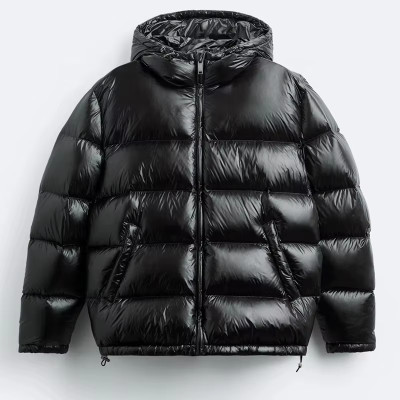
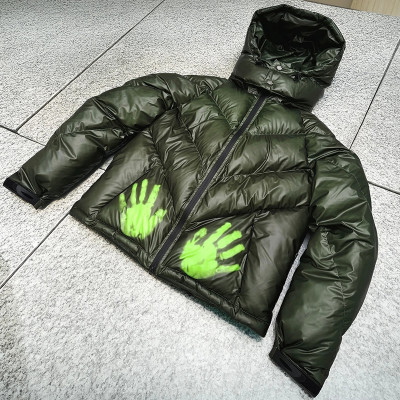
Down-proof construction is the engineering system that keeps down inside a puffer jacket. It combines four decisions: a shell fabric with low air permeability, a baffle architecture that controls where down can migrate, stitch lines that are sealed or reinforced against needle-hole leakage, and a lining or interlayer that blocks fibre and quill escape. Get those four right and your jacket holds loft through laundering, delivers warmth without cold spots, and stays out of the returns queue. Get any one of them wrong and customers will find quills on the surface within the first month of wear. This guide covers the four escape routes for down, the three baffle families, the fabric specifications that decide leakage at the mill level, lining options, the tests buyers can request before bulk, and the purchase order clauses that make a down-proof claim enforceable. Ginwen Wear is a Dongguan based OEM and ODM outerwear factory that builds down jackets, puffer jackets and insulated coats for brands in Europe and North America, and this is the same framework our own production team uses when a buyer asks for a down-proof guarantee.
Table of Contents
- What Down-Proof Construction Means
- The Four Escape Routes for Down
- Baffle Architecture Compared
- Fabric Technology and Air Permeability
- Down-Proof Linings and Interlayers
- How Down Leakage Is Tested
- Writing the Purchase Order Spec
- In-Line and Final QC Checkpoints
- Cost, MOQ and Timeline Impact
- Frequently Asked Questions
What Down-Proof Construction Means in Practice
Down-proof construction is not one material. It is a containment system. Down clusters average 15 to 25 microns in diameter, and a loose feather quill is far larger, so the containment problem is really about closing every opening that is wider than a cluster or a broken quill. A fabric can be dense enough to hold clusters but still let quills through a needle hole. A baffle can be perfectly sized but still leak where the seam ends near a zipper. That is why experienced buyers specify down-proof as a chain of four linked decisions rather than as a single fabric attribute.
For a brand, the business case is straightforward. Down that escapes the shell does three things: it shows up as visible quills on the face fabric, it creates thin spots where loft has migrated away, and it eventually triggers a complaint or a return. On a 500 piece first production run, a leakage issue found in the market costs far more than the mill premium for a denser shell or a coated lining, because remediation means replacement stock, freight and reputation. Testing the containment system before bulk, not after, is the cheapest possible insurance. Our down jacket quality control checklist covers the wider QC picture, while this article focuses specifically on containment engineering.
The Four Escape Routes for Down and Feather
Before choosing a fabric or a baffle, it helps to name exactly how down leaves a jacket. In our factory the four routes below account for practically every leakage complaint, and each one is solved by a different part of the specification. If your tech pack only addresses one of them, the garment is not down-proof.
- Fabric interstices. The gaps between warp and weft yarns. A loosely woven or low-density knit shell lets clusters work through under movement, abrasion and laundering. This route is closed by yarn density, denier and finishing rather than by stitching.
- Needle holes at seams and quilting. Every stitch punches a hole. On quilted sewn-through panels there are thousands of them, and a large needle in a thin fabric leaves a permanent opening. This route is closed by needle and thread selection, stitch density and, where required, seam sealing or bonded seams.
- Baffle seam ends and channel openings. Where a baffle channel terminates at a zipper, side seam or armhole, an unsealed end acts like a funnel. This route is closed by baffle end sealing, bartack placement and closure sequencing.
- Trim and hardware openings. Cuff channels, hood drawcord tunnels, pocket bags, velcro tabs and unlined zipper guards all create open paths for down to migrate. This route is closed by lining the channel or blocking it with a barrier layer.
The escape-route list also tells you what a realistic guarantee looks like. No construction is 100 percent leak-free under every condition, because abrasion and repeated laundering will eventually open fibres. What a professional factory commits to is controlled leakage: a containment system that keeps fibre and quill loss inside an agreed acceptance limit when tested with a defined method. That is why the test protocol in the purchase order matters as much as the fabric name. The performance testing workflow used on custom down jackets is described in more detail in our article on how custom down jackets are tested for performance.
Baffle Architecture: Sewn-Through, Box, and Welded Constructions
A baffle is the channel that holds down in place. The architecture you choose decides loft retention, cold-spot behaviour, leakage risk, cost and manufacturing difficulty. There are three families, and the right answer depends on fill power, climate, target retail price and how much weight the consumer will carry.
Sewn-Through
Two shell layers stitched directly together. Lightest and cheapest, but the stitch line is a thermal bridge and a needle-hole leak path. Best for fashion puffers, inner layers and warm-weather insulation where fill power is moderate.
Box Baffle
A mesh or fabric wall separates the shell layers so down fills the full channel height. Maximum loft and no thermal bridging at the seam, at the cost of weight, labour and more seaming that must be sealed against leakage.
Welded or Bonded
Ultrasonic welding or adhesive bonding replaces stitching in critical zones. No needle holes at all, which is the strongest anti-leakage answer, but the process needs the right fabric and careful bonding QC to avoid delamination.
Hybrid
Sewn-through on sleeves and hood, box or bonded baffles on the core body. A practical compromise that protects the chest and back while keeping weight and cost acceptable for mid-tier brands.
[IMAGE_PLACEHOLDER]
Image prompt: factory sewing operator guiding a puffer jacket shell through an industrial sewing machine to build box baffle channels, close-up of the needle and fabric, warm workshop lighting, real production environment, no readable text or logos.
| Construction | Loft Retention | Leakage Risk | Relative Cost | Best Fit |
|---|---|---|---|---|
| Sewn-through | Moderate | Higher at stitch lines | Lowest | Fashion puffers, vests, mid layers |
| Box baffle | Highest | Moderate, concentrated at channel ends | Highest | Technical and expedition outerwear |
| Welded or bonded | High | Lowest when bonding is controlled | High | Premium and technical lines |
| Hybrid | High on core, moderate on limbs | Moderate | Mid | Brands balancing warmth, weight and price |
Within any family, three details decide whether the baffle actually holds down. First, baffle width: narrow channels control migration but add seams and weight, while wide channels save labour but let down shift into the corners and leave cold spots. Second, stitching geometry: needle size, thread type, stitch density and thread tension all influence the size of the hole left in the fabric, and a specification that ignores them is incomplete. Third, channel-end treatment: every baffle must be closed at the zipper, side seam and armhole, usually with a bartack plus a sealing fold, and this is where the majority of avoidable leaks originate. How the channels are actually filled once they are built is covered in our companion article on how puffer jackets are filled with down, which explains fill distribution and why channel geometry has to match the fill weight.
Fabric Technology: Denier, Thread Count, Calendering and Air Permeability
Shell fabric is the first and largest barrier. Three mill-level variables decide how well it holds down: yarn denier, yarn density as expressed by thread count, and the finishing route that closes residual porosity. Understanding them lets you compare two quotes that look identical on paper.
| Specification Field | What It Controls | Why Buyers Ask For It |
|---|---|---|
| Yarn denier | Filament thickness and pore size | Finer yarns pack tighter and reduce interstices, but feel lighter and need more careful handling |
| Thread count | Yarns per unit length in warp and weft | Higher density is the first line of defence against fibre migration |
| Calendering | Heat and pressure finish that flattens and closes the weave | Reduces air permeability and raises down-proof performance without adding weight |
| Coating or lamination | Added barrier film on the back face | Blocks fibre escape and adds wind resistance, at some cost to breathability and softness |
| Air permeability | Airflow through the fabric under a defined pressure difference | The single most useful laboratory number for predicting down leakage |
| Ripstop or structure | Reinforcement grid or weave pattern | Limits tear propagation if a quill or snag opens the fabric |
Air permeability is measured as airflow per unit area under a standard pressure difference and is expressed in cubic feet per minute, usually tested to ASTM D737 or ISO 9237. In practice, lower values mean a tighter barrier. A specification sheet for a down-proof puffer will typically name a target such as under 5 CFM for the shell measured by one of those methods, and it will name the exact method and test pressure so that mill and factory results are comparable. Without the method stated, the number is decoration. Ask for the test report on the exact production lot, not a generic data sheet from a different colour or finish.
Shell Options
- High-density nylon in the 20D to 40D range
- Recycled nylon and recycled polyester variants
- Ripstop constructions for technical lines
- DWR finishes for light rain performance
- Solution-dyed options for colour consistency
Finishing Routes
- Calendering for pore closure
- Light PU or acrylic back coating
- Membrane lamination for waterproof builds
- Anti-static treatment for fill rooms and wearer comfort
- OEKO-TEX compliant chemistry throughout
[IMAGE_PLACEHOLDER]
Image prompt: several rolls of high-density calendered nylon fabric in dark neutral colours standing in a mill storage area, hand touching the surface of one roll to show the tight weave, natural daylight, industrial setting, no readable text or logos.
Fabric choice also interacts with the rest of the garment. A very tight shell with a fully coated back face can feel stiff and reduce breathability, which matters for active outdoor use but is less important for urban fashion puffers. Recycled yarns are widely available in the same denier and density as virgin nylon, so sustainability does not have to mean accepting a weaker barrier, provided the mill supplies the same air permeability report. If you are still choosing between shell materials for the collection, our comparison of the best fabrics for puffer jackets puts down-proof density next to hand feel, drape and weather resistance. Our article on how down jacket factories control quality under an ISO 9001 system explains how incoming fabric verification fits into a documented production flow.
Down-Proof Linings and Interlayers
The lining is a second barrier and is often the cheapest upgrade available to a brand. A dense taffeta lining adds a redundant layer between the down and the outside world, which means a breach in the shell does not automatically become a visible quill. For technical builds the lining may also carry a light coating or film that blocks fibre migration entirely.
- High-density taffeta linings. Woven with a tight thread count so clusters cannot pass. Lightweight, inexpensive and the default for most down-proof programs.
- Coated linings. A light PU or PA coating on the back face adds a film barrier. Very effective against fibre escape and helpful for wind resistance, but reduces moisture vapour transfer.
- Membrane and interlayer films. Used in technical down jackets where the shell is already laminated. The film acts as the containment layer while the shell handles weather protection.
- Nonwoven interlayers. A lightweight spunbond layer behind the shell in high-risk zones such as shoulders and pocket areas, where abrasion concentrates.
- Down-proof pocket bags and channel linings. Pocket bags, cuff tunnels and hood channels should be cut from the same dense lining rather than from a light mesh, since open trims are the fourth escape route.
One practical warning from the sample room: a lining that is down-proof in the laboratory can still leak at the seams if it is cut too tight, because seam allowance pressure opens the weave along the stitch line. Lining patterns should carry enough ease to avoid tension at the seam, and the same needle and stitch rules that apply to the shell should apply to the lining. When the lining and shell specifications are written independently, leakage reappears along the shoulder and armhole seams even in an otherwise well-built jacket. For the material science behind the fill itself, including down to feather ratios and fill power grades, see our guide to down filling explained.
How Down Leakage Is Tested Before Bulk Production
Testing is what separates a down-proof claim from a down-proof garment. The goal is to prove the containment system on the exact materials and the exact construction that will be used in bulk, then to keep a record that can be compared across lots. The five-step sequence below is the one we recommend to brands placing their first or second production order.
Fabric Mill Report
Collect air permeability and density data for the shell and lining before the patterns are finalised. Verify the report names the actual colour and finish being used.
Incoming Material Inspection
Check hand feel, weight per square metre, visual density and, where the risk is high, re-test air permeability on a sample cut from the delivered roll.
Down Fill Verification
Confirm fill power, down to feather ratio and species against the specification, and confirm the RDS scope covers the lot. Fill quality drives how aggressively clusters push against the shell.
Prototype Leakage Test
Fill the counter sample to production density and run a controlled tumbling or mechanical agitation test. Inspect the face fabric under a light box and count visible quills after the cycle.
Pre-Production Sample Confirmation
Repeat the leakage check on the pre-production sample built on production lines with production machines, needle sizes and thread. This sample is the reference for the bulk run.
[IMAGE_PLACEHOLDER]
Image prompt: quality technician examining a filled down puffer jacket under a bright inspection light box in a factory QC area, quill check on the face fabric, focused expression, clean industrial workspace, no readable text or logos.
| Test | Reference Method | What It Tells You |
|---|---|---|
| Air permeability | ASTM D737 or ISO 9237 | Whether the shell and lining are dense enough to resist fibre migration |
| Down composition and fill power | IDFB and IDFL down test methods | Whether the fill matches the specified quality and pushes consistently against the shell |
| Seam strength and slippage | ASTM D1683 | Whether seams survive fill pressure without opening a leak path |
| Abrasion resistance | Martindale, ASTM D4966 | How the face fabric behaves in the wear zones where quills break through first |
| Leakage after agitation | Controlled tumbling or in-house leakage rig | Practical containment performance under movement, laundering and compression |
Writing Down-Proof Clauses Into Your Purchase Order
The purchase order is where a down-proof intention becomes enforceable. Most leakage disputes trace back to a spec that named a fabric but never named the construction, the test method or the acceptance limit. The list below is the minimum clause set we recommend, and it works for both first orders and reorders.
- Shell specification. Name the yarn, denier, density, weight per square metre, finishing route and colour reference.
- Air permeability target. State the numerical target, the test method and the test pressure. Require the report on the production lot.
- Baffle specification. Define the construction family per zone, channel height, fill weight per channel and the closure method at every channel end.
- Stitching specification. Lock needle size, thread type, stitch density and tension limits, and require the same values on the counter sample.
- Lining specification. State the lining density and any coating or interlayer, and require down-proof lining for pocket bags, cuff tunnels and hood channels.
- Material certification. Require RDS for down and OEKO-TEX for shell, lining and trims, with scope documents naming the production site.
- Acceptance criteria. Define the leakage test, the number of pieces tested, the inspection light condition and the maximum number of visible quills or fibres allowed.
A good spec also sets the schedule. Sampling for a down-proof puffer normally takes 7 to 14 days because the shell, lining and fill must be tested together before the construction is locked, and bulk production runs 25 to 40 days after approval. If the leakage test reveals a problem, the fix is usually a needle and stitch change or a lining upgrade rather than a full fabric change, which keeps the schedule intact when the issue is caught at sample stage. The reorder timeline is covered in our guide to the private label jacket production timeline.
In-Line and Final QC Checkpoints for Down-Proof Construction
Once the specification is agreed, containment depends on process discipline. These are the checkpoints that catch leakage before it reaches a carton, and each one can be written into the inspection plan that accompanies the order.
- Incoming material. Verify shell and lining density, weight and hand feel against the approved standard, with an air permeability spot check when the order risk is high.
- Cutting and quilting. Confirm panel direction, quilting spacing and that the needle and thread in the machine match the approved sample.
- Stitching in-line checks. Inspect seam quality, needle hole appearance, thread tension and bartack placement after every bundle, not only at the end of the line.
- Fill room control. Verify fill weight per channel, containment of loose down in the workspace and correct closure of channel ends as the garment progresses.
- Final inspection. Inspect the face fabric under directed light for visible quills, check all closure points and trims, and confirm the garment matches the pre-production sample.
- Documentation. Keep the material certificates, test reports and inspection records together so a future reorder can be compared against the approved baseline.
These checkpoints map cleanly onto the certification framework that retailers ask about. ISO 9001 provides the documented quality system, BSCI covers social compliance at the production site, RDS covers the down supply chain and OEKO-TEX covers chemical safety across the materials that touch the wearer. For buyers who need to show a compliance file to a retail partner, our notes on the ISO certified down jacket manufacturing and BSCI audit readiness processes explain what each document proves and what it does not. Our own recertification record is published as ISO 9001 recertification for custom jacket manufacturing.
Cost, MOQ and Timeline Impact of Down-Proof Choices
Down-proof construction changes the cost structure of a puffer in four places: the shell fabric premium, the lining or interlayer, the added labour for baffle end treatment and, on technical builds, bonding or sealing equipment time. Calendered high-density nylon costs more per metre than a standard taffeta, and a coated lining adds material cost while reducing breathability, so the specification should be matched to the end use rather than applied uniformly across a collection. The cheapest useful strategy is usually to concentrate the strongest construction in the core body and shoulder zones, where leakage is most visible and most likely, while keeping sleeves and hood on a sewn-through specification.
Planning note for the 2027 fall and winter season: because the leakage test sits inside the sampling window, a down-proof program needs to start sampling earlier than a decorative puffer does. If you are targeting a retail delivery window in the second half of 2027, working backwards through sampling, leakage verification, bulk production and sea freight leaves little slack for a material substitution. Confirm the shell and lining at the design stage, and treat the air permeability report as a gate before sampling rather than as a document that arrives with the bulk shipment.
Frequently Asked Questions
What is down-proof fabric?
Down-proof fabric is a shell or lining woven and finished densely enough to stop down clusters and broken quills from passing through it. It is usually a high-density nylon or polyester with calendering, coating or lamination, verified by an air permeability test such as ASTM D737 or ISO 9237 rather than by a marketing label.
Does down-proof construction mean the jacket will never leak?
No construction is absolutely leak-free under unlimited abrasion and laundering. A professional down-proof specification commits to controlled leakage measured by a defined test with an agreed acceptance limit. That is why the test method and sampling plan belong in the purchase order.
Which baffle construction leaks the least?
Welded or bonded baffles remove needle holes entirely and give the lowest leakage risk, followed by box baffles. Sewn-through construction is the most exposed because every stitch line is a potential leak path, so it suits fashion puffers and mid layers rather than technical down outerwear.
Can you make my existing puffer specification down-proof?
Usually yes, without a full redesign. The common fix is a denser or calendered shell, a down-proof lining for channels and pocket bags, and a change of needle size, thread and stitch density plus sealed channel ends. We test the revised counter sample for leakage before bulk so the change is proven, not assumed.
Do I need RDS or OEKO-TEX for a down-proof jacket?
RDS covers the ethical sourcing of the down itself and OEKO-TEX Standard 100 covers chemical safety of the shell, lining and trims. European and North American buyers commonly request both, and they are checked per factory and per material lot, so ask for scope documents that name the production site.
What is the minimum order and sampling time for a down-proof puffer?
Ginwen Wear starts at 50 pieces per style, samples in 7 to 14 days including the leakage check, and produces bulk in 25 to 40 days after sample approval. Sample fees range from USD 50 to 200 depending on construction and are credited against the bulk order. Send us your specification for a quotation.
Down-proof construction is a chain, not a fabric. The shell must be dense and verified by an air permeability test, the baffle must be specified per zone with sealed channel ends, the stitching must lock needle size and density, and the lining must be treated as a real barrier. When those four decisions are written into the purchase order with an acceptance test and sampling plan, leakage becomes a controlled variable rather than a market surprise, and the jacket keeps the loft that the customer paid for.
Ginwen Wear manufactures down jackets, puffer jackets and insulated outerwear for brands in Europe and North America as an OEM and ODM partner, with MOQ from 50 pieces per style, sampling in 7 to 14 days and bulk in 25 to 40 days. Down-proof builds are covered by RDS down sourcing and OEKO-TEX materials, alongside ISO 9001 and BSCI certification at the production site. To discuss a down-proof specification, submit your requirements or contact our team for a technical review. You can also browse the product catalog to see the jacket styles we build for brands in Europe and North America.