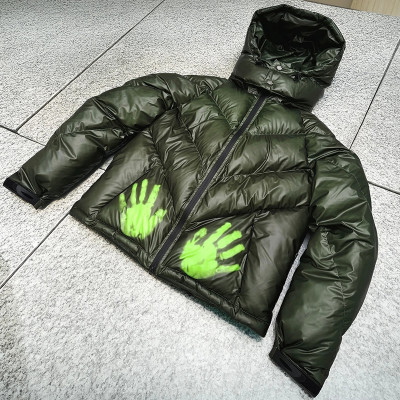
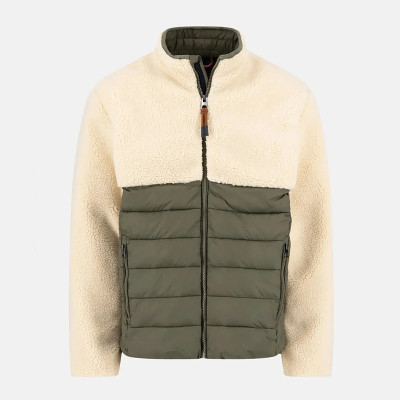
Jacket Design and Development
Custom Jacket Design Development: Tech Pack, CAD Revisions, and Sample Review Gates
Custom jacket design development is the stage between a design idea and a production-ready sample. It produces five things: a complete tech pack, a graded CAD pattern set, a confirmed material and trim list, an approved sample in the final construction, and a written record of every change. At Ginwen, a first sample takes 7-14 days from an approved tech pack, bulk production runs 25-40 days after the pre-production sample is signed, and development starts from 50 pieces per style. This guide breaks the workflow into the documents, the CAD revision rounds, and the sample review gates that decide whether your jacket reaches bulk correctly the first time. It follows the same development framework our merchandising and pattern teams use with brand founders and sourcing managers, described here so you can audit any factory against a common standard.
What Custom Jacket Design Development Covers
Design development is not one task. It is a controlled sequence that moves a jacket from a reference image, a sketch, or a competitor sample into a document set a factory can cost, cut, sew, and inspect without guessing. The sequence has five stages, and each stage ends with an artefact both sides can hold: a document, a pattern file, a material card, a physical sample, or a written approval.
Stage one is intake and specification, where the brand supplies or co-writes the tech pack. Stage two is pattern engineering, where the factory converts the specification into CAD pattern pieces in a base size and then grades them across the size run. Stage three is sampling, where the first physical jacket is built in the intended fabric and trims. Stage four is sample review, where fit, construction, and measurement are checked against the specification and comments are issued once, in writing. Stage five is pre-production confirmation, where the approved sample is sealed, the bill of materials is frozen, and the production line receives a signed reference. Nothing about these five stages is optional, and skipping any one of them does not shorten development, it moves the cost into bulk.
Brands usually arrive at this workflow through one of two doors. OEM means you bring a finished specification and we manufacture exactly to it. ODM means you bring a market position, a target price, and a fit direction, and our team develops the pattern, materials, and construction with you. If you are still deciding how to structure the commercial side of the order, our guide to the private label jacket MOQ guide covers how styles, colourways, and sizes combine into a minimum order.
7-14
Days From Approved Tech Pack to First Sample
25-40
Days Bulk Production After PP Approval
50
Pieces Per Style Minimum Order
2-3
Typical CAD and Sample Revision Rounds
Scope note: The round counts and day ranges above describe a jacket program with one base size, one fit direction, and one material family. Programs that develop three fits, five colourways, and two insulation types in parallel need separate development tracks and a longer calendar, not a faster one.
The Five Documents in a Production-Ready Tech Pack
A tech pack is the single source of truth for a style. When it is complete, a factory can price the jacket, buy the materials, cut the pattern, and inspect the finished garment without asking a question. When it is incomplete, every missing element becomes a question, and every question becomes a delay or a defect. The five documents below make up a production-ready pack.
| Document | Owner | What It Locks | Common Gap |
|---|
| Style sheet | Brand | Silhouette, fit direction, size range, target price, order quantity | No size range or quantity band given |
| Construction detail pages | Brand and factory | Seam types, stitching, pocket build, hood, cuff and hem finishes | Detail shown on a photo instead of a callout drawing |
| Bill of materials | Brand and factory | Shell, lining, insulation, zippers, trims, labels, packaging | Material named by trade term with no weight or finish |
| Measurement chart | Brand and factory | Points of measure, base size values, grading increments, tolerance | No tolerance column, so disputes cannot be resolved |
| Colour and artwork pack | Brand | Pantone references, print and embroidery artwork, label text | Artwork supplied as a screenshot without vector paths |
A pack that contains all five documents in usable form removes the three most expensive sources of rework in jacket manufacturing: wrong material, wrong measurement, and wrong branding. It also becomes the document the quality team uses at final inspection, because a jacket can only be judged against a written standard. Our tech pack to bulk order walkthrough shows how the pack travels through quoting, sampling, and production in practice.
The minimum viable contents of a jacket tech pack are:
- A front and back technical flat with seam lines, pocket positions, and stitch callouts drawn, not photographed
- A measurement chart with points of measure, base size, size run, grading increments, and a tolerance per point
- A bill of materials listing shell fabric with weight and finish, lining, insulation type and fill weight, zipper size, trims, labels, and packaging
- A colour card with Pantone or equivalent references for fabric, zipper tape, lining, and thread
- Branding artwork in vector format with placement dimensions, thread colours, and a print or embroidery call
- Packing and labelling instructions, including hangtag placement, polybag requirements, and carton quantity
- A target price band, delivery window, destination market, and any compliance requirement such as RDS or OEKO-TEX
Tech Pack Elements and the Specification Standard Behind Each One
Two packs can look equally complete and still produce very different first samples. The difference is how specific each element is. A jacket specification is not a description, it is a set of values with units, tolerances, and placement rules. The table below lists the elements that most often decide whether a first sample is approvable, and the standard we ask brands to meet before we start pattern engineering.
| Element | Approvable Standard | Why It Matters in Production |
|---|
| Shell fabric | Composition, weight in grams per square metre, weave or knit, finish, and colour reference | Determines drape, hand feel, down-proof performance, and cutting behaviour |
| Insulation | Down fill power and ratio, or synthetic type with grams per square metre, plus fill weight per panel | Drives warmth rating, loft, cost, and baffle or channel construction |
| Zippers | Size number, tape colour, slider finish, pull type, and whether water resistant | Zipper size changes the placket width and the pattern at the front edge |
| Points of measure | Named point, base size value, tolerance, and grading increment | Removes ambiguity in fit approval and final inspection |
| Seam and stitch | Seam type, stitch class, stitches per inch, and thread type | Controls durability, bulk at seams, and whether the seam holds insulation |
| Branding | Artwork, placement coordinates, size, thread or ink colour, and application method | Prevents logo placement drift across sizes and colourways |
| Labelling | Main label, care label with fibre content and country of origin, size label, and any market-specific text | Labels are the most common customs and retail audit failure point |
Incomplete specification is the number one reason a first sample is rejected. In our sampling review, the majority of rejected rounds trace back to an element that was described rather than specified: a fabric named as soft shell without a weight, a down fill recorded without fill power, a logo placed by eye rather than by measurement. Each of these costs a full sample cycle to correct, which at 7-14 days per round is a real delay to your launch.
Practical tip: Write the tech pack so that a person who has never seen your brand could cut, sew, and inspect the jacket from the document alone. If any sentence requires knowledge that lives only in your head, that sentence is the gap that will appear in the first sample.
CAD Pattern Development and Revision Rounds
CAD pattern development converts the specification into geometry. The pattern team drafts the base size, checks that the pieces sew together, and then grades the style across the size run. This is where fit is decided, and fit is decided long before a jacket is sewn. A pattern error found on a CAD screen costs minutes; the same error found in a sewn sample costs a full sampling round, and the same error found in bulk costs a production rework or a rejected shipment.
A disciplined CAD revision round runs in six steps:
- Freeze the tech pack version and record its version number and date so the pattern is built against a known specification
- Digitise or import the technical flat and confirm silhouette proportions against the brand reference sample
- Draft the base size pattern with seam allowances, grain lines, notches, and drill holes for trims
- Run a virtual check on seam lengths, curve matching, and panel balance before anything is cut
- Grade the pattern across the size run and verify that grading increments match the measurement chart
- Log every change with a reason code, so the next round shows what moved and why it moved
Brands often ask how many revision rounds a jacket needs. For a first style in a known fabric family, two to three rounds is normal: one round to correct fit and proportion, one to correct construction detail and trim placement, and one confirmation round when the previous two were close. A program that reaches round five is usually not a difficult jacket, it is an unstable specification, which is why we version every pack before cutting a pattern.
Avoid mixed feedback: Collect comments from every stakeholder and issue them as one consolidated document per round. When fit comments arrive in three separate messages across two weeks, the pattern team works from a moving target, and the round count climbs without producing a better jacket. Consolidated comments are the single biggest lever on development speed.
Related development details worth reviewing before your first CAD round are the fabric selection decision framework for shell and lining choices, and the zipper specification guide for hardware sizing and finish options.
Sample Review Gates from Proto Sample to PP Sample
Sampling is a sequence of gates, not a single event. Each gate has a purpose, a deliverable, and a decision. A gate is passed only when the sample meets the written specification or the brand formally accepts a documented deviation. The gate names below are the ones we use in production planning, and they map to the sample types most brand teams already recognise.
1
Prototype Sample
First physical build in the intended fabric family. Confirms silhouette, proportion, and whether the construction concept works at all. Fit tuning is expected here.
2
Fit Sample
Corrected pattern built in the final shell. Confirms points of measure, ease, sleeve pitch, and how the jacket sits on a live model or fit form.
3
Size Set Sample
One jacket per size in the approved fit. Confirms that grading holds the intended proportion and that measurement tolerances are realistic across the run.
4
Pre-Production Sample
Built with production materials, production trims, and production methods. Confirms colour, branding placement, labelling, and packaging before bulk release.
5
Sealed Reference Sample
The approved PP sample is signed, dated, and sealed. It becomes the physical standard for in-line and final inspection during bulk production.
6
Top of Production Sample
A jacket pulled from the running line, checked against the sealed sample. Confirms the line is producing to standard, not drifting from it.
| Gate | Decision Made | Typical Duration | Pass Condition |
|---|
| Prototype | Does the concept work | 7-14 days | Construction and proportion accepted with comments |
| Fit sample | Is the fit correct | 7-14 days | All points of measure inside tolerance |
| Size set | Does grading hold | 10-18 days | Every size within tolerance and proportion |
| Pre-production | Is the order ready | 7-14 days | Materials, branding, labels, and packing confirmed |
| Sealed reference | Is the standard frozen | 1-2 days | Sample signed by both parties |
| Top of production | Is the line stable | 2-5 days after line start | Unit matches sealed sample within tolerance |
A strong sample review covers the jacket in zones rather than as a whole. Checking a jacket "overall" produces opinions; checking it zone by zone produces a decision. Our quality control checklist expands the zones below into inspection points used during bulk production.
Fit and Balance
- Points of measure against chart
- Sleeve pitch and armhole ease
- Front and back length balance
- Collar or hood seat on neck
Construction
- Seam type and stitch density
- Baffle or channel uniformity
- Zip alignment and placket width
- Pocket placement and depth
Materials
- Shell shade against colour card
- Insulation loft and fill weight
- Lining hand feel and shade
- Trim colour match to tape
Branding and Labels
- Logo placement coordinates
- Embroidery or print clarity
- Main, size, and care labels
- Hangtag and packing format
Design Development Timeline and How to Work Backwards from a Launch Date
Design development is a fixed-length process with variable-length inputs. The factory controls the days inside each stage, but the brand controls how fast comments come back, and comment turnaround is normally the largest variable in the whole calendar. The table below shows a working timeline for a single jacket style developed through OEM or ODM with us, measured in working days from the moment a complete tech pack is received.
| Phase | Duration | Starts When | Output |
|---|
| Tech pack review and costing | 2-4 days | Pack received | Quotation, feasibility notes, material options |
| Pattern and CAD development | 3-6 days | Quotation agreed | Base size pattern, graded size run |
| First sample build | 7-14 days | Pattern and materials ready | Prototype or fit sample |
| Brand review and consolidated comments | 2-5 days | Sample received | One comment document per round |
| Revision round | 7-14 days | Comments received | Revised sample |
| Size set and PP sample | 10-18 days | Fit approved | Approved and sealed reference |
| Bulk production | 25-40 days | PP approved and deposit received | Finished goods, inspected and packed |
A single style with two revision rounds typically runs 55 to 85 working days from pack to finished goods, excluding shipping. To work backwards from a launch, add the transit time for your destination market first, then the bulk window, then the size set and PP window, then two revision rounds, then the pattern window. That reverse order is the only reliable way to set a sample submission deadline that does not compress quality control.
Working backwards, a two-round development plan needs the tech pack finalised about 12 to 16 weeks before goods are needed in the warehouse.
Seasonal pressure changes the shape of this calendar in a predictable way. For northern hemisphere winter programs, development decisions made between March and June leave room for two full revision rounds and a comfortable bulk window; decisions made after August usually reduce development to one round and push measurement checking into in-line inspection. Our article on production lead times covers the seasonality effect on factory capacity in more detail.
What Drives the Cost of Jacket Design Development
Development cost is often treated as an unavoidable overhead. In practice it is a small, structured set of line items, and understanding them lets a brand decide where to spend and where to standardise. The largest item is rarely the pattern; it is the number of rounds and the physical cost of each one.
| Cost Item | Typical Range | What Changes It |
|---|
| Sample fee | USD 50 to 200 per sample | Shell and insulation type, trim count, branding method, number of panels |
| Pattern and grading | Included in development for production orders | Size range, number of fit blocks, whether a base pattern already exists |
| Material development | Depends on fabric sourcing | Stock fabric versus custom weave, custom colour, custom print |
| Artwork and branding setup | Embroidery digitising or print screen setup | Number of logos, number of colourways, artwork quality |
| Revision rounds | One sample fee per round | Comment quality and consolidation discipline |
| Lab testing | Per test, per material | Destination market requirements and whether RDS or OEKO-TEX proof is needed |
Sample fees at Ginwen range from USD 50 to USD 200 depending on jacket complexity, and the fee is credited against the bulk order. Development is therefore not a sunk cost the way it is with some agents; it is effectively a deposit on the production order. Bulk payment terms are standard across our B2B programs at 30 percent deposit with the order and 70 percent balance against shipping documents, which keeps the cash profile of development predictable.
Cost lever: The cheapest way to reduce development cost is to standardise where the market does not see. If you keep the same lining, the same zipper family, and the same label format across a small collection, you cut setup items without touching the parts of the jacket your customer judges.
Nine Failure Points That Stall Jacket Development
Most development delays are not technical mysteries. They repeat, and they are avoidable. These nine failure points account for the majority of stalled programs we see, together with the control we recommend for each one.
- An incomplete tech pack with described rather than specified materials, which forces a full sample round to resolve. Control: run the five-document check before pattern engineering starts.
- Fit comments that arrive split across emails, chats, and spreadsheets. Control: one consolidated comment sheet per round, issued once.
- Late introduction of branding, such as a logo added after size set approval, which changes placement across every size. Control: freeze the artwork pack with the tech pack version.
- Changing shell fabric between rounds for cost reasons without re-checking drape and down-proof performance. Control: re-approve fit when the shell family changes.
- Measurement charts without tolerances, which makes a technically correct jacket unapprovable. Control: add a tolerance column before the first sample is cut.
- Approving a sample verbally or by chat message instead of in writing. Control: a signed approval sheet per gate, referencing the sample number.
- Developing three or more styles in parallel with one reviewer. Control: stagger submissions so each round gets a proper review.
- Treating the size set gate as a formality and discovering grading problems during in-line inspection. Control: measure every size in the set against the chart.
- Skipping the sealed reference sample, which leaves inspectors without a physical standard. Control: seal the PP sample before the cutting table is released.
The common thread is that every failure point is a decision made too late rather than a capability missing. Development is not fast because a factory works harder; it is fast because the brand commits earlier and in writing. That principle is the same one behind the jacket sampling process walkthrough, which follows a down jacket through each of the similar gates with the documents used at each one.
How the Brand and the Factory Split Design Work
Development runs fastest when both sides know exactly which decisions they own. The split below is the one we use in production planning. It is not a division of responsibility in the legal sense, it is a division of decision rights, and it prevents the most common deadlock: two parties waiting for the other to decide something neither has formally been assigned.
Brand Owns
- Market position and target retail price
- Silhouette direction and fit intent
- Colour, artwork, and branding
- Final fit approval in writing
Factory Owns
- Pattern engineering and grading
- Construction feasibility and seam build
- Material sourcing and alternatives
- Sample build and measurement data
Shared Decisions
- Points of measure and tolerance
- Insulation type and fill weight
- Trim selection and zipper size
- Packing and labelling format
Written Record
- Tech pack version number and date
- Sample number and round number
- Approval signature per gate
- Deviation list with acceptance
When this split is respected, the factory spends its time on engineering and the brand spends its time on the market. When it is not, the brand ends up redrawing patterns in comments and the factory ends up guessing at branding placement, and both costs land in the sampling round count. If your team is new to the factory side of this workflow, the label and branding guide and the packaging guide cover the two documents brands most often leave until the last round.
Working with Ginwen on Custom Jacket Design Development
Ginwen is a Dongguan based jacket and outerwear manufacturer working with brands in Europe and North America on OEM and ODM programs. Our development scope covers puffer and down jackets, cotton and padded jackets, softshell and technical shells, workwear and streetwear silhouettes, and the trims and branding that finish them. The commercial facts below are the same ones quoted throughout this site, so you can compare a proposal against a written standard rather than a conversation.
| Item | Ginwen Standard | Why It Matters in Development |
|---|
| Minimum order quantity | 50 pieces per style | Lets a first style be developed and tested before a full collection commitment |
| Sampling time | 7-14 days | Sets the length of each revision round after the pattern is ready |
| Bulk production | 25-40 days | Starts after the PP sample is approved and the deposit is received |
| Sample fee | USD 50 to 200, credited to the order | Development spend converts into production value |
| Payment terms | 30 percent deposit, 70 percent balance | Predictable cash profile across sampling and bulk |
| Certification | ISO 9001, BSCI, RDS, OEKO-TEX | Supports market access and material traceability claims |
What we ask from a brand at the start of development is simple: a tech pack or a reference sample, a size range, a target price band in the destination currency, a delivery window, and the compliance requirements of the market you are selling into. With those five inputs we can return a feasibility assessment, a quotation, and a material direction without cutting anything, which keeps early revisions at the desk rather than on the sewing floor.
If you want a visual overview of the styles we develop, the product catalogue shows the jacket categories available for private label, including puffer and down, cotton and padded, softshell and technical shells, workwear, and streetwear silhouettes. You can also review our published Factory Facts articles for capacity and capability details, and the inquiry form at the end of this page collects the five development inputs listed above in one message.
Frequently Asked Questions
What is custom jacket design development?
Custom jacket design development is the process that turns a design idea into a production-ready jacket. It covers the tech pack, CAD pattern engineering and grading, physical sampling, review gates, and the sealed reference sample that production is inspected against. It ends when both sides have signed off a sample that matches the written specification, not when a first sample is sewn.
What has to be in a jacket tech pack before sampling can start?
Five documents: a style sheet with size range and quantity, construction detail pages with seam and stitch callouts, a bill of materials with fabric weight and finish, a measurement chart with points of measure, base size values, grading increments and tolerances, and a colour and artwork pack. If any document is missing a value, sampling should wait, because the missing value will surface as a rejection.
How many CAD revision rounds should a jacket need?
Two to three rounds is normal for a first style in a known fabric family: one to correct fit and proportion, one to correct construction and trim placement, and one confirmation round. More than four rounds usually indicates an unstable specification or feedback arriving from multiple stakeholders in separate messages rather than a genuinely difficult design.
What is the difference between a fit sample, a size set, and a PP sample?
A fit sample confirms that the corrected pattern measures correctly in the final shell. A size set is one jacket per size confirming the grading holds across the run. A pre-production sample is built with production materials, trims, branding, and packing, and once approved it is sealed as the physical standard for bulk inspection. Each gate answers a different question, so none replaces another.
How long does development take from tech pack to bulk delivery?
With one style and two revision rounds, plan 12 to 16 weeks from a complete tech pack to finished goods, excluding transit. Sampling itself takes 7-14 days per round and bulk production runs 25-40 days after the PP sample is approved and the deposit is received. Compression beyond that usually comes from fewer rounds, not from a shorter production window.
Does Ginwen develop jackets from a sketch or a reference sample?
Yes. We work in OEM mode when you bring a finished specification, and in ODM mode when you bring a market position, a fit direction, and a target price and ask our team to develop the pattern, materials, and construction with you. Both routes use the same gates; the difference is how much of the specification is written before development starts.
What quantities can a development program start from?
Minimum order quantity is 50 pieces per style. That applies to development-friendly programs as well as repeat orders, so a new style can be sampled, approved, and produced at a scale that matches a first season rather than a full collection commitment.
Custom jacket design development rewards preparation more than speed. A complete tech pack, a versioned pattern, consolidated comments, and a discipline of passing each gate before the next one starts will get a jacket to bulk faster than any attempt to shorten the sampling calendar. The factories that develop quickly are usually the ones whose customers decide quickly, and that is a habit a brand can build deliberately.
To start a development program, send your tech pack, reference sample, or brief through our inquiry form and our team will return a feasibility assessment and quotation. You can also browse the jacket categories we manufacture, read more production guides on the Ginwen blog, or contact us directly to discuss a development timeline for your next collection.