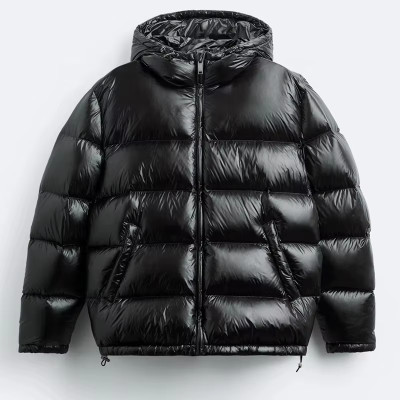
Down Outerwear Range Planning
Down Vest vs Down Jacket: Choosing the Right Product for Your Range
A down vest and a down jacket are not competing products fighting for the same slot in your line sheet. They solve different problems. The jacket is the anchor of a winter range: it carries the highest ticket price, the deepest technical story, and the largest share of marketing attention. The vest is a margin and layering tool: it extends the selling season at both ends, lowers the entry price for a new customer, and gives your existing buyers a reason to return in a lighter weight. The practical answer for most brands is to launch the jacket first and add the vest as an adjacent style once the jacket's fit, fill spec, and fabric are validated. If your range already has a jacket, the vest is usually the fastest incremental SKU you can add, because it reuses the same shell fabric, the same down lot, and the same branding package. This guide breaks the decision into coverage, cost, MOQ, pattern, fill specification, seasonality, pricing, and quality control, so you can plan the pair deliberately instead of treating the vest as a cut-down jacket. For the underlying distinction between down and synthetic puffer construction, see our guide to the difference between puffer jackets and down jackets.
The Short Answer: Vest as an Add-On, Jacket as the Anchor
If you can only develop one down style this season, develop the jacket. A down jacket defines your brand's cold-weather competence. It is the product buyers photograph, the product retail partners ask about first, and the product that justifies a premium price band. A vest cannot carry that weight on its own, because a significant share of consumers shopping for winter outerwear expect sleeves, and a vest that is priced close to a jacket invites an unfavourable comparison on the shelf.
If you already have a jacket program running, add the vest. The incremental development cost is low because the vest inherits the jacket's fabric, down specification, colour palette, and trim language. The pattern is new, but the material risk is not. That combination makes the vest one of the highest-return additions to an existing down range, provided you treat it as its own product with its own fit block rather than as a shortened version of the jacket pattern.
The table below summarises the decision at a glance. It is a planning framework, not a rule that overrides your own sell-through data.
| Decision Factor | Down Vest | Down Jacket |
|---|
| Primary role in range | Layering piece, transitional outerwear, add-on sale | Core winter outerwear, hero product |
| Season window | Wider: early autumn through late spring | Narrower: peak winter, plus shoulder travel use |
| Typical retail price position | Entry to mid tier of your range | Mid to premium tier of your range |
| Material consumption | Lower shell and fill consumption per unit | Higher shell, fill, and trim consumption |
| Pattern complexity | Deceptively high at the armhole and shoulder | High across sleeve, armhole, and cuff |
| Fit sensitivity | Very high, because it is worn over other layers | High, but worn as the outer layer |
| Best entry point for a new brand | Strong second style after a jacket is proven | Strong first style for a winter-focused launch |
| Reuse of jacket materials | High: same shell, down lot, and trims | Baseline |
Planning tip: Build the vest from the jacket's approved material card, not from a new supplier quote. Reusing the approved shell fabric and down lot removes most of the testing and colour-approval cycle, which is where a large part of the calendar risk in a second style actually sits.
What a Down Vest Does That a Jacket Cannot
The commercial case for a vest rests on three behaviours that a jacket does not deliver as efficiently: layering compatibility, price accessibility, and calendar extension. Each one has a direct manufacturing consequence, which is why the decision belongs in product development rather than in marketing alone.
Layering compatibility. A vest is worn over a hoodie, a knit, a flannel, or a shell. That means the inside circumference at the chest and waist matters more than the outside silhouette. A vest that fits cleanly over a mid-layer but still looks structured when worn over a t-shirt requires a carefully graded armhole and a back panel with enough ease. Brands that skip this step end up with a vest that only works over a thin base layer, which cuts its wearable range in half and shows up as a return reason.
Price accessibility. A vest uses less shell fabric, less lining, no sleeves, no cuffs, and less fill. That lower material input lets you offer a genuine entry price point without discounting your jacket. This matters for brands building a first purchase relationship: a customer who buys a vest at your entry price is a candidate for the jacket on the next order, and for the accessory line after that.
Calendar extension. A down jacket is a peak-winter purchase in most Western markets. A vest sells in early autumn over a long-sleeve tee, in late winter over a knit, and in spring as a light outer layer. That spread flattens your production calendar and gives your retail partners a reason to keep the brand on the floor for more weeks of the year.
50
Pieces per style MOQ at Ginwen
7-14
Days for sample development
25-40
Days for bulk production
There is also a merchandising effect that is easy to underestimate. A vest gives your range a middle price point. Most down ranges jump from an accessory price directly to a jacket price, which leaves a gap where a hesitant customer disappears. A well-priced vest fills that gap and keeps the customer inside your brand instead of sending them to a competitor for a lighter option.
Where the vest does not help is in establishing technical authority. If your brand story depends on weather protection, membrane performance, or expedition credibility, the jacket must lead. A vest can support that story as a mid-layer, but it cannot be the proof. Brands that lead with a vest in a performance category often find that buyers question the depth of the range, which is a positioning problem no amount of fabric quality fixes.
Thermal Coverage and the Layering Math
The core physical difference is coverage. A jacket insulates the arms as well as the torso. A vest insulates the torso only, leaving the arms to the layers underneath. In practice, this means a vest is not simply a warmer-weather jacket; it is a different thermal tool that depends on what it is worn with.
For product development, the useful way to think about it is by zone. The torso holds the core, and the core is what a vest protects. The arms are extremities that lose heat faster but are also easier to cover with a knit or a base layer. A vest worn over a mid-weight knit delivers torso insulation with full arm mobility, which is why it works so well for active use, travel, and transitional weather. A jacket worn over a t-shirt delivers uniform insulation with less layering complexity, which is why it dominates the deep winter purchase.
The table below is a design planning aid, not a temperature rating. Real comfort depends on wind, humidity, activity level, and the base layers worn underneath.
| Wearing Scenario | Vest Configuration | Jacket Configuration |
|---|
| Early autumn, mild and dry | Vest over long-sleeve tee | Lightweight jacket over tee |
| Late autumn, cool and windy | Vest over knit or hoodie | Mid-weight jacket over tee or knit |
| Winter, dry and cold | Vest as mid-layer under a shell | Insulated jacket as outer layer |
| Winter, wet and cold | Vest under a waterproof shell | Waterproof insulated jacket |
| Travel and transit | Vest packs smaller, layers on demand | Jacket covers more with one piece |
| Indoor to outdoor transitions | Vest is easy to remove and carry | Jacket is bulkier to remove and carry |
Design implication: Because a vest is usually worn over something, its chest and waist measurements should be specified against a layered body, not a bare body. Approve the vest sample over the mid-layer your customer will actually wear, and record that mid-layer in the tech pack so the fit decision is reproducible in bulk.
There is a second-order effect worth planning for. When a vest is designed to be worn under a shell, the armhole opening and the shoulder seam placement must avoid bulk at the point where the shell's sleeve attaches. A vest with a high, tight armhole will bunch under a shell; a vest with a low, open armhole will let cold air in when worn alone. The workable compromise is a mid-height armhole with a bound or elasticated edge that sits close to the body without compressing the layers underneath. That detail is decided at pattern stage, and it is difficult and expensive to correct after bulk fabric is cut.
Bill of Materials and Cost: Where the Difference Comes From
The cost gap between a vest and a jacket is not a single line item. It is the accumulation of shell fabric, lining, fill, sleeves, cuffs, and the labour that goes into setting and finishing them. Understanding the shape of that gap helps you price both products honestly and helps you decide where to spend money to differentiate.
For a down jacket, shell fabric and lining are consumed across the body, sleeves, hood where present, and facings. For a vest, the sleeves disappear, which removes a meaningful share of fabric consumption and a set of operations: sleeve cutting, sleeve seaming, cuff attachment, sleeve lining, and the fill distribution work inside each sleeve baffle. The fill weight also drops, because the arms are no longer insulated. Labour per unit falls for the same reason, though not proportionally, because the body still requires baffle construction, quilting, armhole finishing, and the same closure work.
The table below is an illustrative cost structure model for planning discussions. It is expressed as a share of ex-works cost and is not a quotation, a market average, or a promise of pricing. Actual shares move with fabric choice, fill power, trim selection, order quantity, and construction complexity.
| Cost Element | Down Vest, Illustrative Share | Down Jacket, Illustrative Share | What Moves It |
|---|
| Shell fabric | Moderate | High | Fabric weight, finish, recycled content, colour minimums |
| Lining fabric | Moderate | High | Down-proof requirement, hand feel, colour |
| Down fill | Moderate | High | Fill power, fill weight, baffle layout, garment size grading |
| Trims and hardware | Moderate | Moderate to high | Zipper brand, pullers, snaps, cord locks, labels |
| Cutting and sewing labour | Moderate | High | Baffle count, pocket construction, sleeve and cuff work |
| Finishing and QC | Low to moderate | Moderate | Down leakage checks, seam sealing, inspection level |
| Packaging and freight volume | Lower | Higher | Carton cube, compression, retail packaging |
Two conclusions follow from this structure. First, the vest's cost advantage is real but it is not proportional to its visual simplicity. Buyers often assume a vest should cost roughly half a jacket; in practice the body construction, baffle work, armhole finishing, and closure hardware keep the vest closer to a jacket than that intuition suggests. Second, the largest controllable lever in both products is the fill decision, because fill power and fill weight affect material cost and thermal performance at the same time. Our guide to the cost drivers in custom down jacket manufacturing covers that relationship in more detail.
For a brand planning both styles, the efficient approach is to negotiate the material card once and allocate it across two styles. The same shell fabric, the same down lot, and the same zipper programme can serve both, which improves your position on fabric minimums and reduces the number of approvals your team has to manage. The pattern and the tech pack are separate; the material platform is shared. That is where the cost savings in a two-product range actually come from.
MOQ and Development Economics for a Two-Product Range
Order minimums are where a two-product range either becomes efficient or becomes expensive. At Ginwen, the minimum order quantity is 50 pieces per style. That structure is deliberately style-based rather than order-based, which means a brand can place 50 pieces of a vest and 50 pieces of a jacket as two styles inside one production window, rather than being forced to reach a single large quantity in one silhouette.
The development cost also behaves differently than most first-time buyers expect. Sampling runs 7 to 14 days, and the sample fee is typically USD 50 to USD 200 per style depending on construction complexity, credited against the bulk order. For a two-style range, the vest sample is usually the cheaper of the two because it reuses approved materials, but it is not free, and it should not be skipped. A vest pattern that has not been fitted on a layered body is a genuine risk, not a formality.
Three practical rules make the two-style approach work:
- Book both styles into one production slot. A single slot shares fabric booking, cutting room setup, and inspection scheduling, which reduces the administrative overhead per unit.
- Approve materials once, patterns twice. The material card, down lot, and trim package can be approved a single time. The vest block and the jacket block each need their own fit approval.
- Stagger the sample dates, not the bulk dates. Start the jacket sample first because it has more construction variables, then start the vest sample using the approved jacket materials. Both can still converge on the same bulk start date.
Bulk production runs 25 to 40 days after sample approval and material readiness. If both styles are booked together, the total calendar is closer to the longer of the two rather than the sum of both, which is the main scheduling argument for developing them as a pair. Payment terms are 30 percent deposit and 70 percent balance before shipment, applied to the combined order rather than split per style. Our guide to how MOQ affects custom down jacket programs explains how quantity breaks interact with unit cost, and the same logic applies to vests at a lower material base.
Pattern and Fit: A Vest Is Not a Jacket With the Sleeves Cut Off
The single most common development error in a vest program is treating the vest as a jacket pattern with the sleeves removed. The resulting garment usually fails in three places: the armhole gapes, the shoulder collapses, and the back rides up when the wearer reaches forward. Each failure is a pattern problem, and each one is visible to a customer in the fitting room within seconds.
A jacket pattern is drafted around a sleeve that fills the armhole and supports the shoulder line. Remove the sleeve and you remove that structural support. A properly drafted vest adds width across the upper back, adjusts the shoulder slope, raises or lowers the armhole depending on the intended layering, and finishes the opening with a binding, a facing, or an elasticated band that holds its shape. The armhole curve itself is re-drafted, not trimmed. This is why a good vest block is a genuine development task and why a vest sampled from a modified jacket block usually needs a second round.
Fit targeting also differs. A jacket is usually fitted over a base layer and a light mid-layer, with the outer shell taking the strain. A vest is often fitted over a heavier mid-layer, and it is worn open as frequently as it is worn closed. That changes the chest ease, the waist shaping, and the hem circumference. A vest that looks correct zipped on a mannequin can look tight and short when worn open over a hoodie, which is exactly how a large share of customers will wear it.
For women's and unisex ranges, the armhole and bust shaping need separate attention. A unisex vest scaled down for a women's line typically produces a tight armhole and a long shoulder, both of which read as a borrowed garment. If the vest is intended for a women's range, draft a women's block rather than grading down a men's block. The same principle applies to extended sizing: grade the armhole and the shoulder slope carefully at the upper end of the size run, because that is where a vest most often fails on fit.
Do not approve a vest sample on a bare mannequin. Fit it over the mid-layer your customer will actually wear, in the size range that matters most, and check the armhole gap when the wearer reaches forward and lifts both arms. A gap that appears in the fitting room will appear on the customer, and it will come back as a return.
Fill Specification by Product: Power, Weight and Baffle Design
Fill specification is where the vest and the jacket diverge most in engineering terms, even when they share the same down lot. The jacket distributes fill across a larger surface area and must balance warmth against bulk in the sleeves, where excess fill restricts movement. The vest concentrates fill on the torso, where a slightly higher fill weight per panel is tolerable because mobility is not compromised.
Fill power describes the loft of the down, not the amount of down in the garment. A higher fill power down traps more air per gram, which allows a lighter fill weight for a comparable warmth level. A lower fill power down requires more grams to reach the same loft, which adds weight and bulk. For a vest, the practical consequence is that a mid-range fill power combined with a well-designed baffle layout often delivers a better wearing experience than a high fill power packed into a thin, over-quilted panel. For the underlying measurement, see our explainer on what fill power means in down jackets.
| Specification Decision | Vest Approach | Jacket Approach |
|---|
| Fill power band | Mid band is usually sufficient for layering use | Mid to high band supports a stand-alone warmth claim |
| Fill weight per panel | Higher torso concentration, graded by size | Balanced across body and sleeves, restricted in sleeves |
| Baffle type | Sewn-through is common and cost-efficient | Sewn-through or box-wall depending on warmth target |
| Baffle width | Narrower panels, more visual quilting | Wider panels on body, narrower on sleeves |
| Shell fabric | Can be lighter, since abrasion is lower | Needs higher abrasion resistance and durability |
| Down-proof requirement | Critical at armhole binding and seams | Critical at every seam and sleeve join |
| Size grading of fill | Grade by torso panel volume | Grade by body and sleeve volume separately |
Baffle design deserves its own decision. Sewn-through construction is lighter, cheaper, and visually cleaner, but it creates cold paths along every stitch line. Box-wall construction removes those cold paths at the cost of weight, material, and labour. For a vest intended as a layering piece, sewn-through is usually the right call because the garment is worn under or over another insulating layer that compensates for the cold paths. For a jacket intended as a stand-alone winter outer layer in a cold market, the construction choice should follow the warmth claim you intend to make, not the target cost alone. Our article on down-proof construction, baffles and lining technology covers the fabric side of this decision in detail.
Down leakage is the specification risk that most often reaches the customer. It appears at the armhole binding, along the baffle seams, and at the pocket openings, all of which are high-stress points on a vest because the garment flexes there constantly. Specify a down-proof lining, verify the seam construction on the approved sample, and include a leakage check in your inspection plan. A vest that sheds feathers onto a customer's knit is a returned product regardless of how well it fits.
Season Windows and Sell-Through Planning
The vest and the jacket do not share the same selling curve, and planning them on the same delivery date wastes the vest's main advantage. A jacket needs to be on the floor before the first cold snap. A vest can arrive earlier and stay later, which means it can carry the opening and closing weeks of the season while the jacket carries the peak.
Working backwards from a target on-shelf date is straightforward once you fix the production inputs. Sampling takes 7 to 14 days. Bulk takes 25 to 40 days after sample approval and material readiness. Add inspection, packing, and freight, and the total calendar from approved sample to goods in a Western warehouse is typically in the range of two to three months depending on the shipping method. That is the window you are planning against, and it is the reason a late specification decision costs more than a late production decision.
| Planning Stage | Vest Timing | Jacket Timing |
|---|
| Sample development start | After jacket materials are approved | First, because it carries more variables |
| Sample approval target | Fitted over the intended mid-layer | Fitted over base and light mid-layer |
| Bulk production window | 25 to 40 days after approval | 25 to 40 days after approval |
| Ideal on-shelf position | Early season through late season | Peak season, with travel shoulder use |
| Reorder window | Earlier, because the selling period is longer | Narrower, driven by peak sell-through |
| Markdown exposure | Lower if bought in moderate depth | Higher if peak season is missed |
A practical buying pattern for a brand new to vests is to order the jacket at planned depth and the vest at a moderate depth in the first season, then use the vest's sell-through rate to size the second order. Because the vest's selling window is longer, its reorder decision arrives earlier than the jacket's, which gives you a read on the range before you commit the jacket reorder. That sequencing is a genuine planning advantage, and it only works if both styles are set up in the same production pipeline.
Price Architecture and Margin Logic
Price architecture is about the relationship between your products, not about any single number. A vest and a jacket should occupy distinct bands with a clear step between them, and the step should be large enough that the vest reads as a genuinely different purchase rather than a compromised jacket.
Three principles hold across most down ranges. First, the vest should sit below the jacket by a margin that reflects both its lower material input and its different role. If the gap is too small, customers compare the two directly on warmth and choose the jacket, which leaves the vest as dead stock. If the gap is too large, the vest reads as a low-quality entry product and damages the brand's premium positioning. Second, the vest should not be your cheapest product overall if you also sell accessories, because a down vest at an accessory price undermines the technical story of the whole range. Third, the jacket's price should be supported by a visible specification difference, whether that is fill power, shell performance, construction, or trim quality.
Margin planning should account for the fact that the vest carries a higher share of its cost in labour and finishing than a simple material comparison suggests. A vest with a complex baffle layout, a bound armhole, and multiple pockets can approach jacket-level labour content while consuming noticeably less fabric. That is not a reason to avoid the style; it is a reason to cost it properly before setting the retail price. Our breakdown of puffer jacket pricing by quality tier shows how specification tiers translate into price bands, and the same tier logic applies to vests with an adjustment for material input.
Costing discipline: Cost the vest from its own bill of materials and operations, not as a percentage of the jacket. The two products share materials but not construction, and a percentage shortcut routinely undercosts the vest's armhole finishing and baffle labour.
Four Range Models That Work
There is no single correct range structure, but four models cover most brand situations. Each one answers a different commercial question, and each one implies a different development sequence.
Jacket First, Vest Second
- Jacket establishes the winter story
- Vest added in the following development cycle
- Lowest material risk on the vest
- Best for new brands with one winter launch
Paired Launch
- Both styles developed in one window
- Shared material card and trim package
- Higher upfront development load
- Best for brands with an established customer base
Layering System
- Vest designed as a mid-layer under a shell
- Jacket or shell sold as the outer component
- Requires coordinated armhole and hem specs
- Best for outdoor and technical ranges
Entry Price Builder
- Vest opens the range at an accessible price
- Jacket carries the premium tier
- Vest acts as a trial purchase for new customers
- Best for direct-to-consumer brands
The paired launch is the most efficient model on paper and the most demanding in practice, because it doubles the fit approvals in the same calendar window. Brands with a small product team should usually choose the jacket-first model and plan the vest for the next cycle, using the jacket's approved materials to shorten the vest's development path. Brands with a mature development process and a reliable mid-layer programme can run the layering system model, which produces the strongest technical story but requires the most precise specification work at the armhole and hem.
Quality Control Differences Between Vests and Jackets
Inspection standards are broadly the same across both products, but the failure modes are not. A jacket's most visible defects tend to appear at the sleeve setting, the cuff, and the sleeve lining. A vest's most visible defects concentrate at the armhole, the shoulder, and the centre front, because those are the areas under the most movement and the most visual scrutiny.
For a vest, the inspection plan should pay particular attention to four points. The armhole binding should be evenly applied with no puckering and no exposed raw edge. The shoulder seam should sit flat when the garment is worn, without a ridge that shows through a mid-layer. The centre front zipper should run cleanly from hem to neck without wave, because a vest is worn open and closed repeatedly and a wavy zip is immediately visible. The down distribution should be checked panel by panel, since a vest's smaller panels make an underfilled section more obvious than it would be on a jacket body.
Beyond the visual checks, the functional checks matter. Measure fill distribution after a short tumble to confirm the down settles evenly. Check for leakage at the armhole and pocket stress points. Verify the zipper's pull force and the snap strength where snaps are used. Confirm that the hem and armhole elasticity recover after stretching, because a vest relies on those openings to hold their shape. AQL 2.5 inspection at the final stage is the normal baseline for both products; the difference is where the inspector spends time.
Inline checks are where the vest benefits most. Because the armhole is finished early in the assembly sequence, a binding problem caught inline costs a re-sew. The same problem caught at final inspection can mean a garment that cannot be economically repaired. For a first vest order, plan an inline check at the armhole and shoulder stage in addition to the final inspection. Our guide to comparing down, puffer and varsity jacket programs explains how inspection priorities shift across different outerwear constructions.
Common Mistakes When Adding Vests to a Jacket Line
Most vest programs that underperform do so for reasons that were visible at the planning stage. The recurring mistakes are consistent enough to list.
- Cutting the jacket pattern down. Removing sleeves without re-drafting the armhole and shoulder produces a garment that gapes and rides up. Always develop a separate vest block.
- Fitting on a bare mannequin. A vest is worn over layers. Approving it without the mid-layer produces a fit that fails in the fitting room.
- Pricing it as a percentage of the jacket. The vest's labour share is higher than its material share suggests, and percentage pricing usually undercosts the armhole and baffle work.
- Reusing the jacket's baffle layout at reduced scale. Scaled-down baffles narrow the down channels and change the loft behaviour. Re-specify the baffle plan for the vest body.
- Ignoring the armhole finish. A raw or poorly bound armhole is the most common visible defect on a vest and the hardest to repair after bulk.
- Launching only in the peak winter window. A vest delivered at the same time as the jacket loses its early-season and late-season advantage.
- Skipping the down leakage check. Vests flex at the armhole and pocket openings, and leakage there is highly visible on the layers underneath.
A Decision Checklist for Buyers
Use the following sequence when deciding whether to add a vest to an existing down jacket range. Each item should have a clear answer before sampling begins.
- Confirm the jacket's material card is approved and the down lot is fixed, so the vest can inherit both.
- Define the vest's wearing scenario in one sentence, including the mid-layer it will be worn over.
- Decide the price band and the step between the vest and the jacket before costing either product.
- Select the fill power band and fill weight approach for the vest body, independent of the jacket's sleeve specification.
- Choose the armhole finish and confirm it works both worn alone and under a shell.
- Draft a dedicated vest block and grade the armhole and shoulder across the full size run.
- Book the vest into the same production window as the jacket to share material and inspection scheduling.
- Add an inline check at the armhole and shoulder stage, plus a down leakage check at final inspection.
- Plan the delivery date to land before the early-season window, not at peak.
- Set a moderate first order depth and use the vest's earlier sell-through read to size the reorder.
Frequently Asked Questions
Is a down vest warmer than a down jacket?
Not in isolation. A jacket insulates the arms as well as the torso, so it provides more total warmth as a stand-alone garment. A vest can feel warmer in specific conditions because it eliminates bulk at the arms and allows a heavier mid-layer underneath, but its warmth depends on what it is worn with. For deep winter as a single outer layer, the jacket is the warmer product.
Should a brand launch a vest before a jacket?
Only if the brand's positioning is built around layering rather than stand-alone winter protection. For most brands, the jacket should come first because it establishes cold-weather credibility and supports a higher price band. The vest is usually the stronger second style, added once the jacket's materials and fit are validated.
Can a vest and a jacket share the same down specification?
They can share the same down lot and fill power, and doing so simplifies sourcing and testing. The fill weight and baffle layout should still be specified separately, because the vest concentrates fill on the torso while the jacket must balance warmth and mobility across the body and sleeves.
What is the minimum order quantity for a down vest?
At Ginwen, the minimum order quantity is 50 pieces per style, the same as for a down jacket. A vest and a jacket can be ordered as two styles within one production window, which allows a brand to build a small two-piece range without reaching a large quantity in a single silhouette.
How long does it take to develop and produce a down vest?
Sampling takes 7 to 14 days, and bulk production takes 25 to 40 days after sample approval and material readiness. Because the vest usually reuses approved jacket materials, its development path is shorter than a jacket's, but it still requires its own fit approval on a layered body.
Why does a down vest cost more than expected?
The vest uses less shell fabric and no sleeves, but it retains most of the body construction: baffles, quilting, armhole finishing, pockets, and the centre front closure. Armhole binding in particular is a skilled operation. The material saving is real, but it is not proportional to the garment's visual simplicity.
What certifications should a down vest program carry?
The same certification set expected of a down jacket applies: ISO 9001 for quality management, BSCI for social compliance, RDS for responsible down sourcing, and OEKO-TEX for restricted substance testing on fabrics and trims. Confirm that the certificates cover the specific production site.
The vest versus jacket decision is not a choice between two versions of the same product. It is a choice about what role each style plays in your range. The jacket anchors the winter story and carries the premium tier. The vest extends the season, opens an accessible price point, and gives existing customers a reason to return. Developing them as a pair, on a shared material platform with separate patterns, is the most efficient way to capture both.
If you are planning a down range for the coming season, send us your requirements with your target quantities, price bands, and delivery window, and we will map the development timeline for both styles. You can also review our product catalogue for construction references, or read more jacket manufacturing guides on our blog, including our comparison of down jackets and puffer jackets and our guide to down vest manufacturing in China.