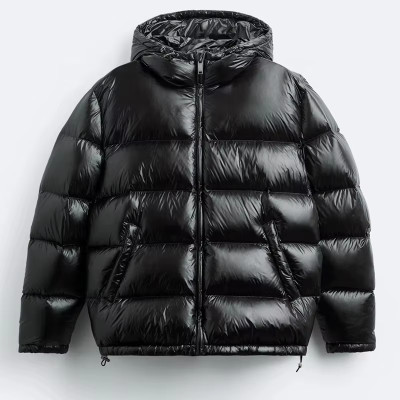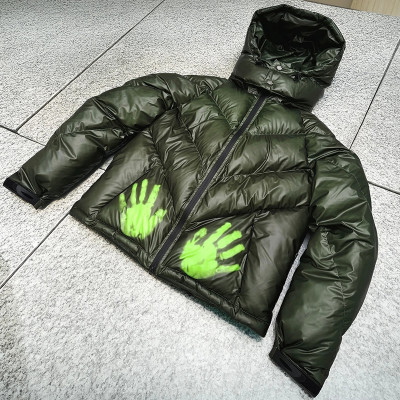
Private Label Apparel Factory Guide
Private Label Apparel Factory Guide: A 10-Point Evaluation Checklist for Brands
Answer first: a private label apparel factory guide is only useful when it converts factory selection into a scored decision instead of a feeling. Score every candidate on ten weighted points: certifications and compliance, audit readiness, production capacity, lead-time reliability, sampling and pattern capability, quality management system, inspection discipline, communication and documentation, pricing transparency and payment terms, and commercial fit such as MOQ, private label depth and scalability. Ginwen Wear is a Dongguan based OEM and ODM apparel manufacturer that publishes its own numbers, so you can test them against this checklist: MOQ from 50 pieces per style, sampling in 7 to 14 days, bulk production in 25 to 40 days, sample fees of USD 50 to USD 200 that are deductible from the bulk order, and a 30 percent deposit with 70 percent balance against documents. Use this guide to compare three factories in one afternoon, then review our private label product capabilities to see what the line actually covers.
Table of Contents
What Does a Private Label Apparel Factory Actually Deliver?
A private label apparel factory is not a garment printer with a sewing line attached. It is a full development and production partner that takes your brand specification, converts it into a manufacturable garment, and ships it with your labels, your packaging and your documentation. When buyers ask us how to judge a factory, the fastest way is to list the deliverables in writing and then ask each candidate which of them they own in house and which they subcontract. Subcontracted steps are where timelines slip and where quality claims become arguments.
A capable factory delivers at least the following scope. Compare each item against what your candidates claim, then ask for proof in the form of a recent tech pack, a sample report, an inspection file or an export document from the last twelve months.
- Pattern development and grading in house, with a technician who can read and challenge your spec instead of only copying it.
- Fabric and trim sourcing from qualified mills, plus a lab dip and shrinkage test loop before bulk cutting.
- Sample development, normally 7 to 14 days per round for outerwear and structured apparel, including fit, measurement and construction corrections.
- Bulk manufacturing in a documented window, commonly 25 to 40 days after approval and material readiness for a first order.
- Private label branding: woven main labels, care and content labels, size labels, hangtags, polybags and carton marks issued in your brand name.
- Quality control with written inspection records, measurement sheets and defect classification, not only a verbal assurance before shipping.
- Export documentation, packing lists and carton labels prepared to your forwarder or marketplace requirements.
That list is also the contract of expectations. If a candidate cannot name the person responsible for each line, the factory is probably a trading office that resells capacity elsewhere. A real factory will send you a named merchandiser, a named pattern maker and a production schedule with milestone dates. Our own process, described in this walkthrough of the private label jacket manufacturing process, follows exactly this sequence from tech pack intake to final inspection.
The 10-Point Factory Evaluation Scorecard at a Glance
Score each point from 0 to 10, multiply by the weight below, and total the result out of 100. The weights reflect how often each point causes a shipment to fail, a launch to slip or a reorder to be cancelled in real private label programs.
| Point | What You Are Scoring | Weight | Red Flag |
|---|---|---|---|
| 1 | Certifications and chemical compliance | 10 | No scope certificate for the producing unit |
| 2 | Audit readiness and social compliance | 10 | Refuses a buyer or third party audit |
| 3 | Production capacity and equipment | 10 | Cannot state monthly output per line |
| 4 | Lead-time reliability and planning | 12 | Quotes only one date, no milestone plan |
| 5 | Sampling and pattern capability | 12 | No in house pattern maker or grader |
| 6 | Quality management system | 10 | No written quality manual or AQL reference |
| 7 | Inline and final inspection discipline | 10 | No inspection report at shipment |
| 8 | Communication and documentation | 8 | Answers without answers to specific questions |
| 9 | Pricing transparency and payment terms | 10 | Refuses a cost breakdown or spec change log |
| 10 | Commercial fit, MOQ and private label depth | 8 | MOQ cannot flex for a test order |
Two practical notes before you start scoring. First, score evidence, not promises: if a factory describes a process but cannot show a document, record the lower score and mark the gap. Second, keep the completed scorecards even for the factory you reject, because a comparison table is the strongest internal argument when a colleague pushes a cheaper quote that clearly fails points one, two and six.
Points 1 and 2: Certifications, Chemical Compliance and Audit Readiness
Certifications protect your market access. European and North American buyers are asked for evidence by retailers, marketplaces and customs, so verify that each certificate covers the specific production unit that will sew your order, not only a parent company name. Ask for the certificate number, issuer, scope and validity date, and check the scope wording against your product category.
ISO 9001
Quality management system certification. It tells you the factory documents procedures, corrective actions and internal audits instead of relying on individual memory.
BSCI or SEDEX
Social compliance auditing covering working hours, wages, safety and grievance mechanisms. Large retail accounts and many marketplaces treat this as a condition of supply.
OEKO-TEX Standard 100
Restricted substances testing for fabrics, linings, threads and trims. It is the fastest way to answer a retailer question about harmful chemicals in a garment.
RDS
Responsible Down Standard chain of custody for down filled products. Without it, a down claim cannot be supported through your supply chain to the farm level.
Audit readiness is the behavioural half of the same question. A factory that hosts inspections routinely keeps evidence organised: machinery maintenance logs, needle control records, worker training files, first aid and fire equipment checks, and a chemical storage register. When a team can produce those files in twenty minutes without a rehearsal, the operation is genuinely managed. When every request triggers a delay and a phone call, expect the same delays during your production window.
Score point two with one question: what happened during your last buyer audit, and which findings were still open last quarter? A confident answer includes the finding, the root cause and the closure date. Compare that with the wider picture of how audits and sample protocols are evaluated by technical buyers before they place a first order.
Points 3 and 4: Production Capacity and Lead-Time Reliability
Capacity is not a number on a website. Ask for the number of sewing lines, the machine types, the daily output per line for your garment category, and the current order book position for the next eight weeks. A factory that runs four lines with a booked window in six weeks is a different risk profile from one that claims unlimited capacity, because the second answer usually means your order will be placed with an unnamed subcontractor.
Lead-time reliability is scored separately because it is where most brand launches fail. A reliable factory quotes a chain of dates, not a single shipping date. Ask each candidate for a milestone plan in writing with these elements, and check whether the plan matches the numbers you are hearing in the meeting.
- Tech pack review and clarification window, with a named technical contact.
- Fabric and trim booking lead time, including any mill minimum that affects your order.
- Sample start date and sample delivery date, typically 7 to 14 days for the first round.
- Sample approval deadline, including how many revision rounds are included at no extra cost.
- Bulk cut date, sewing window and finishing window inside a 25 to 40 day production block.
- Inspection date, carton completion date and handover date to your forwarder.
Then test the plan with two questions. What percentage of your orders shipped within the promised window last year, and what caused the late ones? Factory teams that track on-time delivery answer with percentages and causes. Teams that do not track it will describe a general effort. Our overview of private label outdoor clothing manufacturing shows how these capacity and planning numbers appear in a real product program.
[IMAGE_PLACEHOLDER] Prompt: garment pattern maker drafting a paper pattern on a large cutting table in a factory sample room, measuring tape and curved ruler, fabric swatches pinned to a spec sheet, close up over the shoulder view, natural lightPoint 5: Sampling, Pattern Making and Technical Development
Sampling is where you learn whether the factory can think, not only sew. A strong sample department reads your tech pack, questions unclear measurements, proposes construction alternatives that hold their shape after washing, and returns a sample with a measurement sheet so you can compare spec against actual. A weak one produces a garment that looks approximately correct and cannot explain why the chest measurement is two centimetres wider than requested.
Score this point on four concrete capabilities. First, in house pattern making: patterns should be drafted or adjusted by the factory, not outsourced to a freelance pattern maker who never sees your production line. Second, grading: ask how many sizes can be graded per style and whether the graded set is verified on a fit model or a mannequin. Third, revision rounds: confirm how many sample rounds are included and what triggers an extra charge. Fourth, technical communication: the person answering your questions should be the person who drafted the pattern, or at least have direct access to them.
Tech Pack Intake and Clarification
1 to 3 days. Measurements, construction, trims and branding requirements are reviewed and open questions returned in writing.
Pattern Drafting and CAD Adjustment
2 to 4 days. Base pattern selected or drafted, then adjusted to your specification with grading rules applied.
Fabric, Trim and Lab Dip Preparation
3 to 7 days. Shell fabric, lining, zippers, drawcords and labels confirmed, with colour approval before cutting the sample.
Sample Sewing and Finishing
2 to 4 days. Sample assembled with the same construction method and machinery that will be used in bulk production.
Fit Review and Revision
2 to 5 days. Measurements checked against spec, comments consolidated, revised sample issued before bulk confirmation.
Typical sample lead time: 7 to 14 days per round, with sample fees of USD 50 to USD 200 depending on complexity, deductible from the bulk order.
Ask one final question here: what does the sample fee cover, and is it credited back? A factory that treats sampling as a paid development service usually invests real technician time. A factory that offers free samples without limit is often copying a previous customer pattern. The way a disciplined development calendar works is described in our article on custom product development milestones.
[IMAGE_PLACEHOLDER] Prompt: factory quality inspector measuring the chest width of a finished puffer jacket with a tape measure against a printed measurement sheet, clipboard and defect log on the table, finished garments hanging behind, realistic workshop lightingPoints 6 and 7: Quality Management and Inspection Discipline
Quality management is a system, inspection is the enforcement of that system. Score them separately, because plenty of factories inspect without managing. A managed factory has a written quality manual, documented defect classifications, calibration records for measuring tools, and a corrective action process that names the person responsible for closing each issue.
Before you score, ask for three documents. The quality manual or quality control procedure, one recent inspection report from a comparable order, and the measurement specification sheet used by their inline inspector. If all three arrive in the same email thread with the factory letterhead intact, the system exists. If the answer is that documents are internal only, treat the score as unverified.
| Inspection Gate | What Is Checked | Who Signs Off | Evidence to Request |
|---|---|---|---|
| Fabric and trim incoming | Shade, weight, shrinkage, zipper function, label artwork accuracy | Material QC | Incoming inspection record and lab dip approval |
| Cutting and bundling | Marker efficiency, panel count, ply alignment, piece numbering | Cutting supervisor | Cut ticket and bundle count sheet |
| Inline inspection | Stitch density, seam alignment, measurement drift, construction defects | Inline QC | Daily defect log with photographs |
| End of line audit | Measurements against spec, symmetry, hardware function, labelling | QC manager | Measurement report per size and colour |
| Final random inspection | AQL sampling, workmanship, packaging, carton marks | QC manager and merchandiser | Final inspection report before shipment release |
Then score point seven on how defects are resolved. A good answer describes rework within the same production window, at the factory cost, before cartons are sealed. A weak answer describes discounting the order after shipment. Ask directly what percentage of orders in the last year required rework and what the three leading defect types were. Factories that track this data improve; factories that do not will repeat the same mistakes on your order.
Point 8: Communication, Documentation and Project Management
Poor communication is the most common reason a technically capable factory becomes a painful supplier. Score it properly, because this point is what protects your schedule when something unexpected happens in the mill, on the cutting table or at the port.
Evaluate three things. First, a single accountable contact: you should know the merchandiser by name, and that person should own your order from tech pack to shipment. Second, response behaviour: measure how long the factory takes to answer a specific technical question during the quotation stage, because that is exactly the speed you will get during production. Third, documentation culture: approvals, changes and commitments should appear in writing, with version numbers and dates, not only in chat messages.
- A written quotation with itemised components: fabric, lining, trims, labour, finishing, packaging and testing.
- A milestone schedule with dates for sample approval, bulk cut, end of sewing, inspection and handover.
- A sample approval form confirming measurements, trims and branding for each style and colourway.
- A change order log recording any specification change, its cost effect and its schedule effect.
- Weekly production updates with photographs or a short status note, not silence until something goes wrong.
- Shipping documents prepared to your forwarder instructions, including carton dimensions and weights.
Time zone fit is a practical part of this score. A factory that overlaps at least a few hours with your working day, or that replies within one business day with a substantive answer, removes days of accumulated delay over a production cycle. If you want to test how this works in practice, contact our team with a technical question and note the response quality before you send a purchase order.
Point 9: Pricing Transparency, Payment Terms and Cost Structure
Price is easy to compare and hard to interpret. The useful question is not which factory is cheapest, but which factory can explain where the money goes. A transparent quotation separates fabric, lining, fill, trims, cutting, sewing, finishing, testing, labelling and packaging, so that when you change one variable you can see the cost effect instead of renegotiating the whole order.
Score this point on four signals. Does the quote break the garment into components? Will the factory confirm material consumption per size, including wastage? Do they tell you which specification choices drive cost most, and where a cheaper alternative would compromise durability? Do they explain how price moves with order quantity, so you can model a test order against a reorder?
Two more questions belong in the scoring sheet. First, how are price changes after the quotation handled: is there a validity period, and what happens if a fabric price moves mid-season? Second, what does the factory charge for services that sit outside the unit price, such as extra sample rounds, rush production, third party testing, or shipping coordination? Unbundled service charges disclosed in advance are professional. Surprises on the invoice are not. When you are ready to test cost assumptions against real quantities, send your requirements with target price and volumes and compare the breakdown you receive against the structure described here.
Point 10: Commercial Fit, MOQ and Private Label Depth
The last point decides whether the relationship can actually start. A perfect factory with a minimum order of 2,000 pieces per colour is useless to a brand testing its first winter collection. Score this point on how the factory behaves at your order size, not on how it behaves at ten times your order size.
Minimum Order Quantity
- MOQ stated per style, not per order
- Colour and size split rules in writing
- Test order flexibility for a first run
- Reorder threshold lower than the first order
Private Label Depth
- Woven main label and care label to your artwork
- Size labels, hangtags and polybag branding
- Custom carton marks and barcode labels
- Retailer and marketplace compliance formatting
Scalability
- Capacity available for a seasonal reorder
- Pattern and spec storage for repeat runs
- Colour continuity across production batches
- Lead time at double the first order quantity
Range Coverage
- Core styles plus seasonal additions from one partner
- Consistent sizing across categories
- Shared fabric platform for cost efficiency
- Coordinated branding across the line
Ask for the private label scope in a single document that lists every branded component, its material, its dimensions and the artwork format the factory needs. This removes the most common launch delay, which is a late label artwork approval that pushes the cutting date. Our guide to the commercial side of minimum quantities explains how MOQ interacts with colour, size and reorder planning in more detail: private label MOQ planning.
How to Interpret the Score: Bands and Decision Rules
Once each factory has a total out of 100, apply consistent decision rules rather than instinct. The bands below reflect what buyers can realistically expect from each score range in a first private label program.
| Total Score | Interpretation | Recommended Action |
|---|---|---|
| 85 to 100 | Strong partner with verified systems | Proceed to sample order and contract terms |
| 70 to 84 | Workable with specific gaps in writing | Assign corrective actions with deadlines before bulk |
| 55 to 69 | Capable but unverified in key areas | Order a paid sample and a third party audit first |
| Below 55 | Risk exceeds the saving on unit price | Do not place a first order with this factory |
Two decision rules matter more than the total. First, treat any score of 3 or below on points 1, 2, 4 or 7 as a veto regardless of the total, because certification, audit readiness, lead time and inspection are the failures that cannot be fixed after shipment. Second, do not average away a missing answer. If a factory did not answer a question, that is a zero for evidence, not a neutral middle. The mistakes that recur most often in first orders are catalogued in this review of common mistakes when choosing a manufacturer.
Site Visit and Remote Audit: What to Verify in Person
The scorecard gets you to a shortlist. Verification confirms it. If you can visit, walk the line and look at specific things rather than accepting a presentation. If you cannot visit, run the same check remotely with a live video call and a defined list of evidence.
- Count the sewing lines and note which machines are running on your garment category.
- Check the cutting room for marker files, fabric relaxation area and ply control.
- Ask an inline inspector to show the current measurement sheet and the last defect log.
- Verify that labels and hangtags in production match your approved artwork and version.
- Review the finished goods area for carton marks, polybag condition and packing method.
- Confirm the personnel named in your quotation actually work there and manage your order.
- Check certificates on the wall against the document versions sent to you earlier.
After the visit, rescore points 3, 6 and 7 using what you saw. Factories that show consistent records during an unannounced visit usually produce predictable shipments. If you are comparing several candidates at once, our overview of custom apparel factory selection criteria explains how shortlists are usually narrowed from five candidates to two.
Frequently Asked Questions
What is the single most important point on the scorecard?
Lead-time reliability, weighted at 12 points, because it is the failure that damages your launch and your retail commitments at the same time. Certification and audit readiness carry 10 points each and act as gates: a factory that fails them cannot be used regardless of how attractive the unit price looks.
What MOQ should a private label apparel factory accept?
It depends on the category, but a factory structured for emerging brands can start at 50 pieces per style. Ask whether that minimum applies per style, per colour or per size, and whether reorders can be placed below the first order quantity. Written colour and size split rules prevent most early disputes.
How long should sampling and bulk production take?
Sampling normally takes 7 to 14 days per round and bulk production 25 to 40 days after sample approval and material readiness. Add the fabric booking lead time for speciality materials. Any quotation that promises both faster sampling and faster bulk than these ranges usually means the production is being outsourced.
Which certificates should I request before placing an order?
Request at minimum ISO 9001 for quality management, BSCI or a comparable social audit, OEKO-TEX Standard 100 for restricted substances, and RDS if down or feather filling is used. Confirm that every certificate names the production unit that will make your order, and note the expiry date in your supplier file.
Is a 30 percent deposit normal for private label production?
Yes, 30 percent deposit with 70 percent balance against shipping documents is a standard structure. What matters is that the terms appear in a written contract, that the payment goes to the company account, and that the deposit is linked to a defined sample approval milestone rather than paid before technical details are settled.
How do I score a factory that answers quickly but vaguely?
Score it as missing evidence. Response speed is only useful when the answer contains specifics: a document, a date, a measurement or a named person. Vague but fast replies to points 4, 6 and 7 are a stronger warning sign than slow but precise replies, because the ambiguity will reappear during production.
A private label apparel factory guide is only valuable if it changes the decision. Score all ten points, keep the evidence for each score, apply the veto rules on certification, audit readiness, lead time and inspection, and choose the factory whose systems you can see rather than the one whose price is lowest on a single email.
Ginwen Wear manufactures private label apparel and outerwear in Dongguan with MOQ from 50 pieces per style, sampling in 7 to 14 days, bulk production in 25 to 40 days, and ISO 9001, BSCI, RDS and OEKO-TEX documentation available for buyer review. Contact our team to schedule a factory review, submit your requirements for a written quotation with an itemised cost breakdown, or browse more private label manufacturing guides before you build your shortlist.