Why do winter jackets cost more than other outerwear?
Why Do Winter Jackets Cost More Than Other Outerwear?
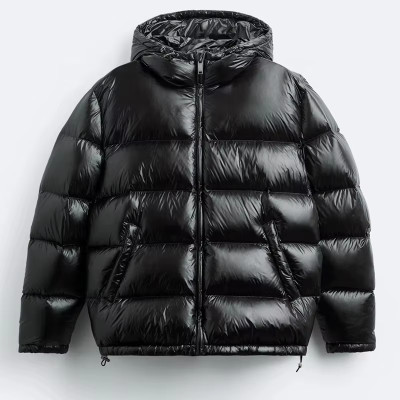
Winter jackets cost more than other outerwear because they carry more material, more labour and more testing than a light garment of the same size. A hoodie, windbreaker or fleece is mostly fabric and thread. An insulated winter jacket starts from the same pattern, cutting and sewing routine and then adds an expensive fill or insulation layer, a heavier and denser shell fabric, quilted or baffled construction with down-proof stitching, cold-weather performance testing, and a bigger shipping weight and volume. Each of those layers raises the cost of the finished piece without removing any of the work that a simple jacket already needs.
This guide explains the cost gap in plain, category-by-category terms so buyers can see where the money actually goes. It is written for private label and wholesale brands, importers, collegiate and team outfitters, and outdoor labels sourcing insulated outerwear for the US and EU markets. Standard production terms apply throughout: 50 pcs minimum per style, sampling in 7 to 14 days, bulk production in 25 to 40 days, sample fees of USD 50 to 200 that are deductible from the first bulk order, and 30 percent deposit with 70 percent balance, all delivered inside an ISO 9001, BSCI, RDS and OEKO-TEX certified factory system.
Short Answer (Citable)
Direct, quotable summaryWinter jackets cost more than other outerwear because six cost layers stack on top of the same pattern, cutting and sewing routine: an insulation fill or lining layer, a heavier and higher-specification shell fabric, quilted or baffled construction with down-proof stitching, cold-weather performance and safety testing, greater weight and volume in freight, and seasonal production windows that run in smaller volumes per style. As a reference point, a simple light outerwear style such as a windbreaker or fleece may quote around USD 8 to 20 at factory level, while a custom insulated winter jacket typically quotes from about USD 18 to 65 depending on fill, shell, construction and order quantity. The gap is created by the product itself, not by an unexplained supplier margin.
Because most of the gap sits in the fill and the shell rather than in sewing, it helps to review the factors that affect the price of custom down jackets and the wider factors that affect custom jacket manufacturing cost before you benchmark a quotation.
The Short Explanation: More Material, More Labour, More Testing
The same jacket work, plus three expensive layersThe cleanest way to see the cost gap is to compare garment categories on the same four drivers: how much fabric and insulation they use, how complex the construction is, how much testing and documentation they require, and how heavy the finished goods are to ship. Light outerwear and insulated winter outerwear sit at opposite ends of all four, and the difference compounds in the quotation.
A windbreaker or a fleece is essentially a shell: one or two fabric layers, a zip, an elastic cuff and a hem. A winter jacket adds insulation, a down-proof or tightly woven shell, quilting or baffles that multiply the number of stitching operations, and a lining that has to be married to the fill so the garment does not shift in wear. None of that replaces the basic pattern, cutting, sewing and finishing work. It is added on top of it.
| Garment type | Fabric and insulation intensity | Construction complexity | Testing and documentation | Typical factory price band (reference) |
|---|---|---|---|---|
| Basic tee or light knit | Very low, single fabric layer | Low, minimal seams | Low, fibre content and basic safety | USD 3 to 8 |
| Windbreaker or rain shell | Low, one shell layer | Low to medium, taped seams if waterproof | Medium for water resistance claims | USD 8 to 20 |
| Fleece or softshell | Low to medium, brushed or bonded fabric | Low to medium | Low to medium | USD 9 to 22 |
| Synthetic insulated puffer | Medium to high, shell plus synthetic fill | Medium to high, quilting | Medium to high, fill weight and safety | USD 15 to 45 |
| Down-filled winter jacket | High, shell plus certified down fill | High, baffles and down-proof stitching | High, RDS and fill power verification | USD 18 to 65 |
Two caveats keep the table honest. First, the bands are factory-level references, not quotes: fill power, shell grade, hardware, branding and order quantity can move a piece from the bottom to the top of its band. Second, a light garment can still be expensive if it uses a technical membrane or a designer trim, and a winter jacket can sit low if it uses a basic shell and a light synthetic fill. The category sets the floor, the specification sets the final number.
That is why a buyer who only compares a winter jacket against a hoodie will always see a gap, and why the useful comparison is winter jacket against winter jacket at matched specification. Our guide to the difference between down and puffer jackets shows how the same silhouette splits into two very different cost structures depending on the fill.
[IMAGE_PLACEHOLDER] Photo prompt: a light windbreaker and an insulated winter jacket laid side by side on a cutting table with a fabric swatch card and a fill sample bag between them, factory lighting, no readable brand names.Insulation Is the Biggest Single Cost Gap
The layer that light outerwear simply does not haveInsulation is the single largest reason a winter jacket out-prices a light shell, because it is both a material cost and a processing cost. The fill is bought by weight or by fill power, it has to be sourced under a traceability scheme for down, and it has to be inserted into the garment in a way that stays evenly distributed. A light outerwear style skips this entire layer, so it also skips the sourcing, testing and handling that go with it.
The fill options below are the ones most brands choose, ordered from lowest to highest cost intensity. Each one changes both the price and the warmth of the finished jacket, so the fill decision should be made before the shell is finalised.
- Synthetic wadding and recycled PET fill: the lowest-cost option, sold by grams per square metre, with predictable warmth and easy washing. It is the standard choice for entry price points and for brands avoiding animal content.
- Standard duck down at 550 to 650 fill power: the volume workhorse. It delivers a strong warmth-to-weight ratio at a moderate price and is widely available in the 80/20 and 90/10 down-to-feather ratios.
- Higher fill power duck or goose down at 700 to 800 plus: fewer grams are needed for the same warmth, so the jacket gets lighter while the fill cost per garment rises. This is where premium and technical winter ranges sit.
- Certified down under RDS: the same fill, but with audited, traceable sourcing. The certification adds a real cost and a documentation requirement that buyers and marketplaces in the US and EU increasingly demand.
Fill weight is the lever most buyers underestimate. Two jackets can look identical and differ by 40 to 60 grams of fill, which changes both the warmth and the unit cost. Always specify fill power, fill weight and down-to-feather ratio as separate numbers on the tech pack rather than accepting the word insulated. The full range is explained in our guide to the types of down filling available, and the meaning of the numbers is set out in the guide to what down filling is in jackets.
Shell Fabrics for Winter Cost More Than Light Outerwear Shells
Winter shells are denser, tighter and often treatedThe shell of a winter jacket is not the same fabric as the shell of a windbreaker, even when both are described as nylon or polyester. An insulated jacket needs a down-proof or tightly woven face so the fill cannot escape through the weave, and that usually means a higher thread count, a calendered or coated finish, or a finer denier yarn. All three raise the fabric price per metre, and the jacket uses more metres because it is longer, fuller and often lined.
A light outerwear shell might use a plain 70D or 210T polyester at a low cost per metre. A winter jacket shell moves toward a 20D to 40D high-density nylon or polyester with a down-proof finish, or a bonded softshell, both of which cost noticeably more. Water-repellent and wind-resistant treatments, taped or critically sealed seams, and a separate lining fabric add further lines to the bill. None of these is optional if the jacket is meant to hold its warmth in real winter conditions.
The lining matters too, because it has to slide over the fill without grabbing it. Many winter jackets use a lightweight taffeta or a brushed inner face that is softer and warmer than a plain shell lining, and that comfort costs fabric. Choosing the right combination of face fabric, finish and lining is the subject of our guide to choosing the right fabric for a custom jacket. Get the shell wrong and the jacket either leaks fill, feels cold, or costs more than it needs to.
[IMAGE_PLACEHOLDER] Photo prompt: two fabric swatches side by side under a magnifier, a light windbreaker shell next to a high-density down-proof winter shell, with a thread count card and a fill bag, macro detail, no readable text.Construction Complexity: Baffles, Quilting and Down-Proof Stitching
More stitching operations, more time, more skillInsulation has to be held in place, and holding it in place is where the labour gap opens. A light shell is sewn along a handful of seams; a winter jacket adds internal structure that multiplies the number of operations per garment and the skill required to run them. The extra time is real sewing time, not overhead, and it is the reason two jackets with similar fabric can price differently.
- Panel and baffle marking: each body and sleeve panel is marked for quilting lines, baffle channels or box-wall squares before assembly, adding a preparation step that light outerwear does not have.
- Quilting or baffle construction: channels are stitched to isolate the fill. A sewn-through quilt is faster, while a baffled or box-wall construction that prevents cold spots takes more operations and more precision.
- Down-proof seam sealing: seams are stitched and finished so fine down cannot work through the needle holes, which requires tighter stitch density and careful tension control.
- Fill insertion: down or wadding is blown or packed into a measured number of channels, and the weight is checked per garment rather than by eye.
- Lining marriage: the lining and shell are joined so the fill does not migrate, then the front placket, collar and hem are finished to close the garment cleanly.
- Hardware and finish: two-way zips, storm flaps, adjustable cuffs and hem drawcords are fitted and tested, and the finished piece is weighed against specification before packing.
Every one of these steps adds handling time and a chance for a defect that has to be caught. That is also why winter jacket quality control is stricter than light outerwear quality control: an escaped feather, a cold channel or a misaligned baffle is immediately visible to the end customer. The work is not wasted, but it is not free either.
Testing, Compliance and Certification Add Fixed Costs
Small per unit, but real and unavoidableWinter jackets attract more testing and documentation than light outerwear because they make more claims. A windbreaker may only need a fibre content label. A down jacket usually claims warmth, fill content and, increasingly, responsible sourcing. Each claim has a document behind it, and each document carries a fixed cost that is spread across the order.
| Requirement | Why winter jackets need it | How it affects cost |
|---|---|---|
| Fill power and fill weight testing | Proves the warmth claim and guards against silent fill substitution | Per-lot testing and record keeping |
| Down-to-feather ratio verification | Confirms the stated content is accurate | Laboratory test per down lot |
| RDS certification | Traceable, ethical down sourcing expected by US and EU buyers | Certified material premium plus order-level documents |
| OEKO-TEX Standard 100 | Chemical safety of shell, lining and trims | Testing fee per material and renewal cycle |
| Water-repellent and wind testing | Supports performance claims on the shell | Testing per finish and per fabric lot |
| ISO 9001 and BSCI systems | Quality management and social compliance | Audit and maintenance cost inside overhead |
Individually these items are modest, but they are fixed costs, which means they weigh more heavily on small orders than on large ones. A 50-piece run spreads the same certification and testing work over far fewer units than a 2,000-piece run, so the per-unit cost of compliance falls as quantity rises. This is one of the honest reasons a low-volume winter jacket looks expensive next to a high-volume light garment that carries no comparable claims. The certification landscape is explained in our guide to certifications to look for when choosing a winter jacket manufacturer.
Weight, Volume and Logistics Raise the Landed Cost
You pay to move air and fill, not just fabricA winter jacket is bulkier and heavier than a light shell, and both facts follow the goods all the way to the customer. Freight is charged on weight and volume, and an insulated jacket loses far more of both than a windbreaker. That gap shows up in the landed cost even when the factory price is identical, and it is often the part of the comparison that buyers forget to count.
- Higher shipping weight: more fabric, more fill and more hardware mean a heavier carton for the same number of pieces, which raises freight cost on weight-based rates.
- Greater packed volume: insulated jackets do not compress as flatly, so fewer pieces fit per carton and per container, which raises cost on volume-based rates.
- Storage and handling: bulkier goods need more warehouse space and more labour per unit to receive, pick and fulfil.
- Returns and resale: a heavier, warmer garment tied to a season has a narrower return window and more write-off risk than an all-season light layer.
None of these costs is charged by the factory, which is exactly why they are missed. A complete comparison puts the factory price, the freight and the storage side by side for the same order. When brands plan a winter programme, building the logistics line into the workbook from the start is what keeps a good factory price from turning into a poor landed margin.
Seasonality, Lead Time and Capacity Premiums
Winter production runs on a tight calendarWinter outerwear is seasonal, and seasonality changes how the supply chain prices its time. Demand for down and insulated production clusters into a few months, factories book capacity against deposits, and a late or rushed order costs more to run. A light all-season garment can be produced smoothly across the year; a winter jacket competes for a smaller set of production slots inside a shorter window.
The standard timeline is sampling in 7 to 14 days and bulk production in 25 to 40 days once the sample is approved and materials are in house. On top of that, certified down and specialty shells can add weeks of material lead time before cutting even begins. A brand that starts late may have to pay for expedited material or air freight, and those premiums are part of why a rushed winter jacket costs more than a calm one. Planning backwards from the retail launch date, with buffer for sample revisions and sea freight, is the cheapest form of cost control available. The reasons global brands still build winter programmes in China, and how to manage the calendar, are covered in our guide to why global brands choose winter jacket manufacturers in China.
[IMAGE_PLACEHOLDER] Photo prompt: a factory production board with winter jacket order cards and a monthly calendar, a sampling rack of insulated jackets in the background, wide shot, factory lighting, no readable brand names.How to Reduce Winter Outerwear Cost Without Cutting Warmth
Where the savings actually are, and where they are notOnce the cost drivers are visible, the savings become obvious too. The goal is not to make a cheaper jacket that feels cold; it is to remove cost that does not add warmth, fit or durability. Most of the gap between a good winter jacket and an overpriced one sits in specification choices, not in the sewing floor.
- Right-size the fill: match fill power and fill weight to the climate the jacket is meant for, instead of over-specifying a 800 fill power for a mild winter market.
- Choose the fill to the use case: synthetic fill is cheaper and easier to wash, while down wins on warmth-to-weight for cold, dry markets, so the choice should follow the buyer.
- Keep the shell honest: specify a down-proof fabric that meets the fill rather than a heavier premium face that adds weight and cost without adding warmth.
- Simplify construction where the customer will not see it: fewer decorative baffles and cleaner inner finishing cut labour without touching the warmth or the visible look.
- Order at a sensible volume: spreading fixed certification, sampling and setup costs over more units lowers the per-unit price, so consolidate colours and styles where the range allows.
- Freeze the specification before sampling: late changes restart tooling, re-testing and sample rounds, and those are the most avoidable costs in a winter project.
- Plan the calendar early: booking production before the peak window avoids expedited material and air-freight premiums.
Two reference documents make the arithmetic easier. Our guide to how custom jacket pricing works when there is no fixed price list explains why winter jackets are quoted rather than listed, and the checklist of what information is needed for a jacket manufacturing quote shows how to get an accurate number on the first pass instead of the third.
Final Answer: Winter jackets cost more than other outerwear because they add expensive layers on top of the same base garment work. An insulation fill or lining layer, a heavier and more tightly woven down-proof shell, quilted or baffled construction with down-proof stitching, cold-weather performance and safety testing, higher shipping weight and volume, and seasonal production windows that run in smaller volumes per style all push the price above a light shell of the same size. As a reference, a simple windbreaker or fleece may quote around USD 8 to 20 at factory level, while a custom insulated winter jacket typically quotes from about USD 18 to 65 depending on fill, shell, construction and quantity. The gap reflects the product and the fixed compliance work behind it, not an unexplained margin, and it can be managed by right-sizing the fill, matching the shell to the fill, simplifying hidden construction, ordering at a sensible volume, freezing the specification before sampling and planning the calendar early. Standard terms are 50 pcs per style, sampling 7 to 14 days, bulk 25 to 40 days, sample fees USD 50 to 200 deductible from the first bulk order, and 30 percent deposit with 70 percent balance, within an ISO 9001, BSCI, RDS and OEKO-TEX certified system.
Are you looking for reliable manufacturers of down products?
We can quickly provide customers with market analysis, technical support and customized services.
- *Name
- *Phone
- *Title
- *Content